 UK Fournier ClubAffiliated with
Club Fournier International
Just 4' Fun…
Buying a single‑seat motor glider from an English club field and flying it home to Sweden, four countries and one very bad afternoon over Holland later.
In the spring of 2003 I found myself wanting to add to the flying fun our little Piper Cub, SE‑AWL, already provided. After turning the idea over for a while I settled — partly thanks to my gliding background — on a Fournier motor glider, or something like it. I was in touch with a Danish owner about his two‑seat RF 5 "Sperber," but it had sold to England just a week before I called. Then in June a single‑seat RF 4 turned up on the "Club Fournier International" classifieds, and I contacted the seller, a man named James. An interested buyer was due to view it within days, and after that I heard nothing back, so I assumed it had gone.
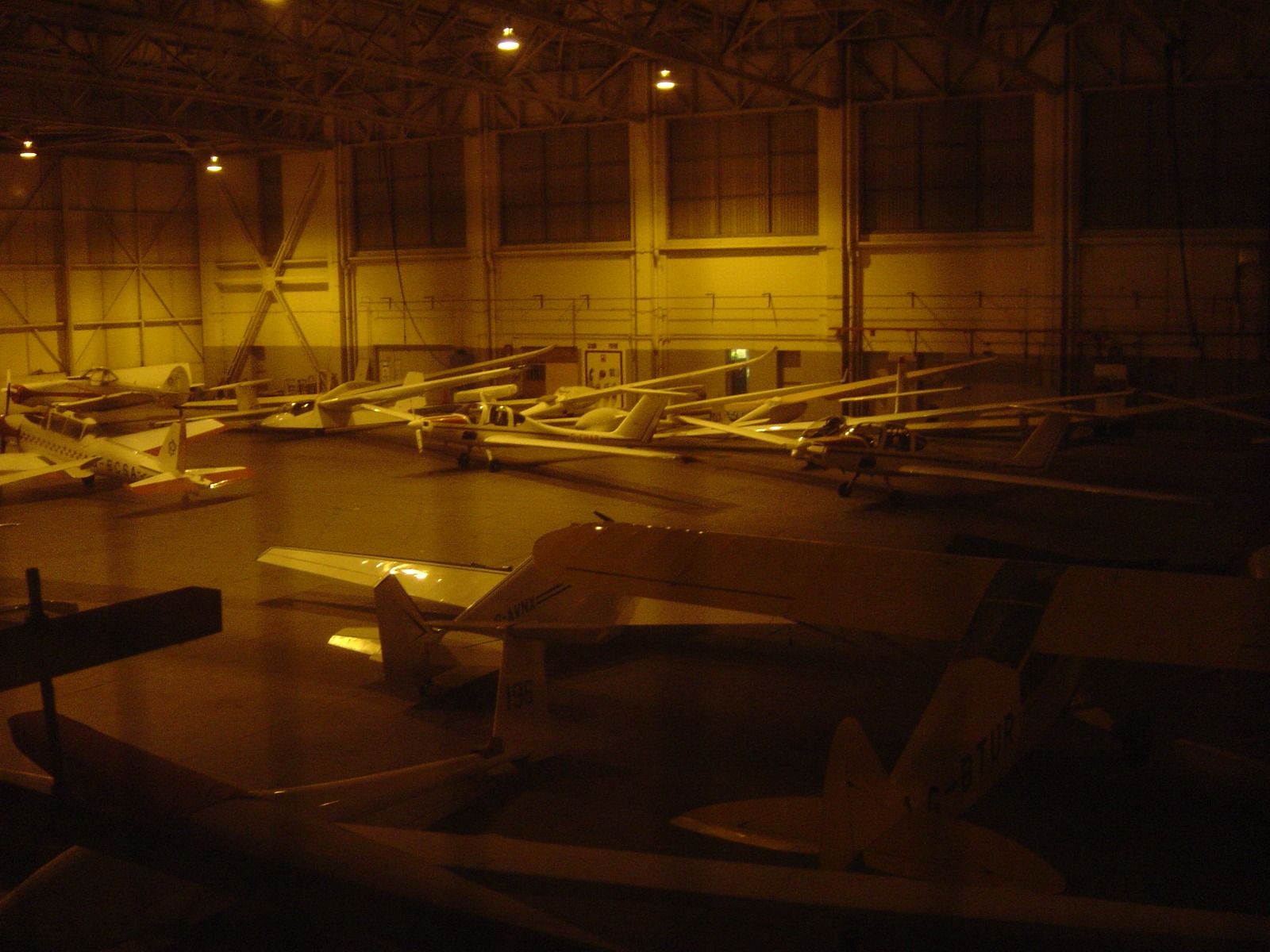
In September I saw SE‑XSK — at the time the only RF 4 in Sweden — visiting Eslöv, and it was enough to send me back to James for another try. "You're in luck — the RF 4 is still here!" he wrote, and I was thrilled. It turned out James flew as a co‑pilot for the newly launched Duo Airways, based in Birmingham. Getting to see the aircraft was a small expedition in itself: Ryanair to Stansted, the Underground to Victoria, and then a slow train that eventually rattled in from a quiet platform bound for Bicester, by way of the endearingly baffling British rail network. James picked me up at the station — Bicester sits about 20 km northeast of Oxford, home to a historic RAF airfield with a couple of vast 1930s hangars, and to both an RAF gliding club and the Oxford University Gliding Club.
Finding the Aircraft
That evening we flew a circuit in a Jodel, climbing out to admire Oxford lit up below in the dusk, and I managed a genuinely smooth landing in the half‑light. "Good — you've clearly done that before, you'll have no trouble with the '4," James said, before adding at the bar a little later, to general amusement, "and you can now consider yourself night‑rated on Jodels, too…"
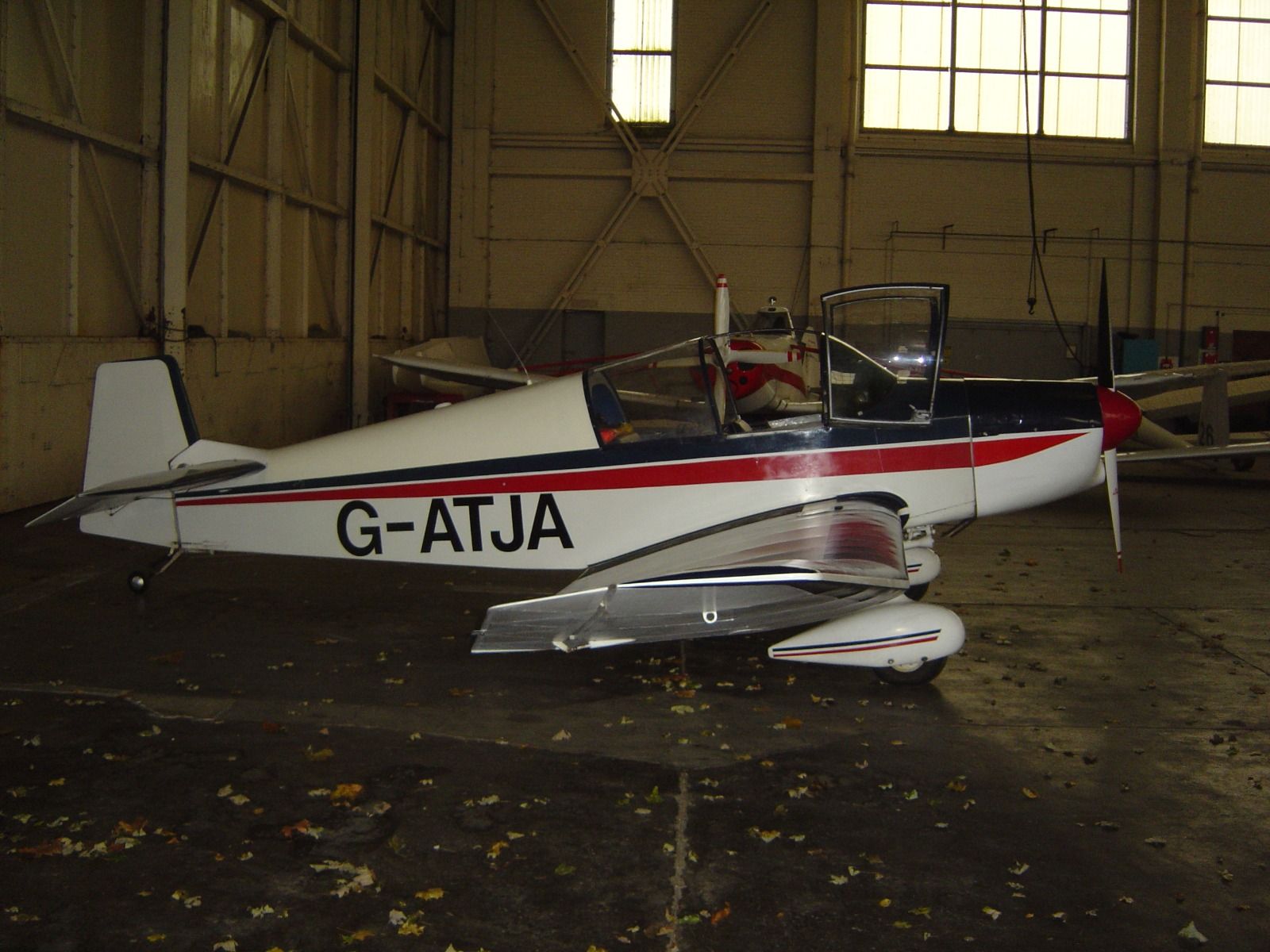
With a pint in hand we strolled into the hangar to look over the real reason for the trip. The RF 4 seemed to be in good order as far as I could tell — after a thorough going‑over with a mirror and torch, the only fault I could find was a pair of loose screws on the wing‑root fairing. I took a large number of photographs to help me remember every detail.
Bonfire Night
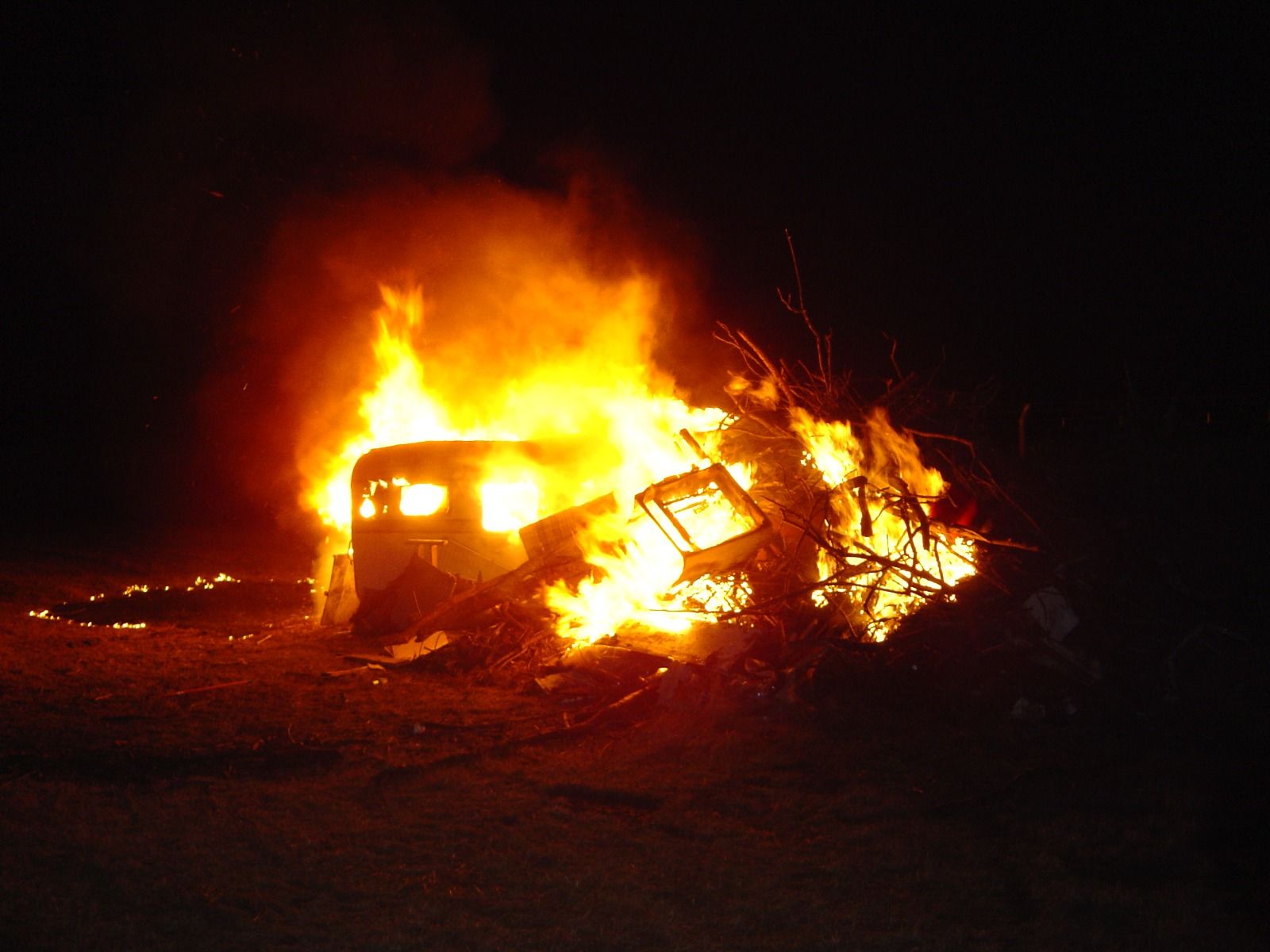
That evening happened to be Bonfire Night — a sort of autumn Walpurgis, with fires lit across the countryside. The airfield staged a proper one, and in keeping with local tradition the two most decrepit caravans in the park were put to the torch as well. A pig turned on a spit outside, and everyone wandered out at intervals to carve off a piece and carry on the revelry in the glow of the embers.
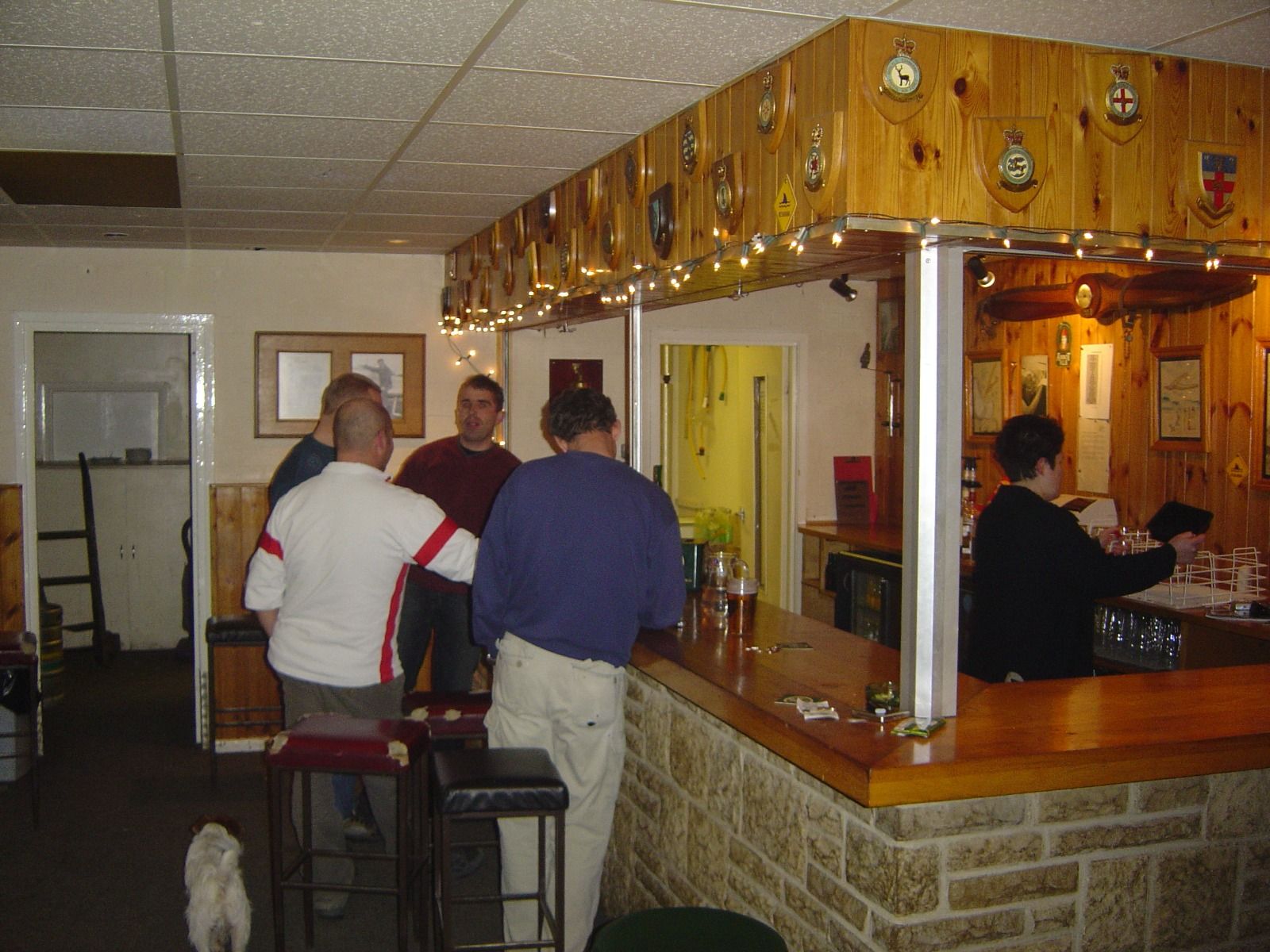
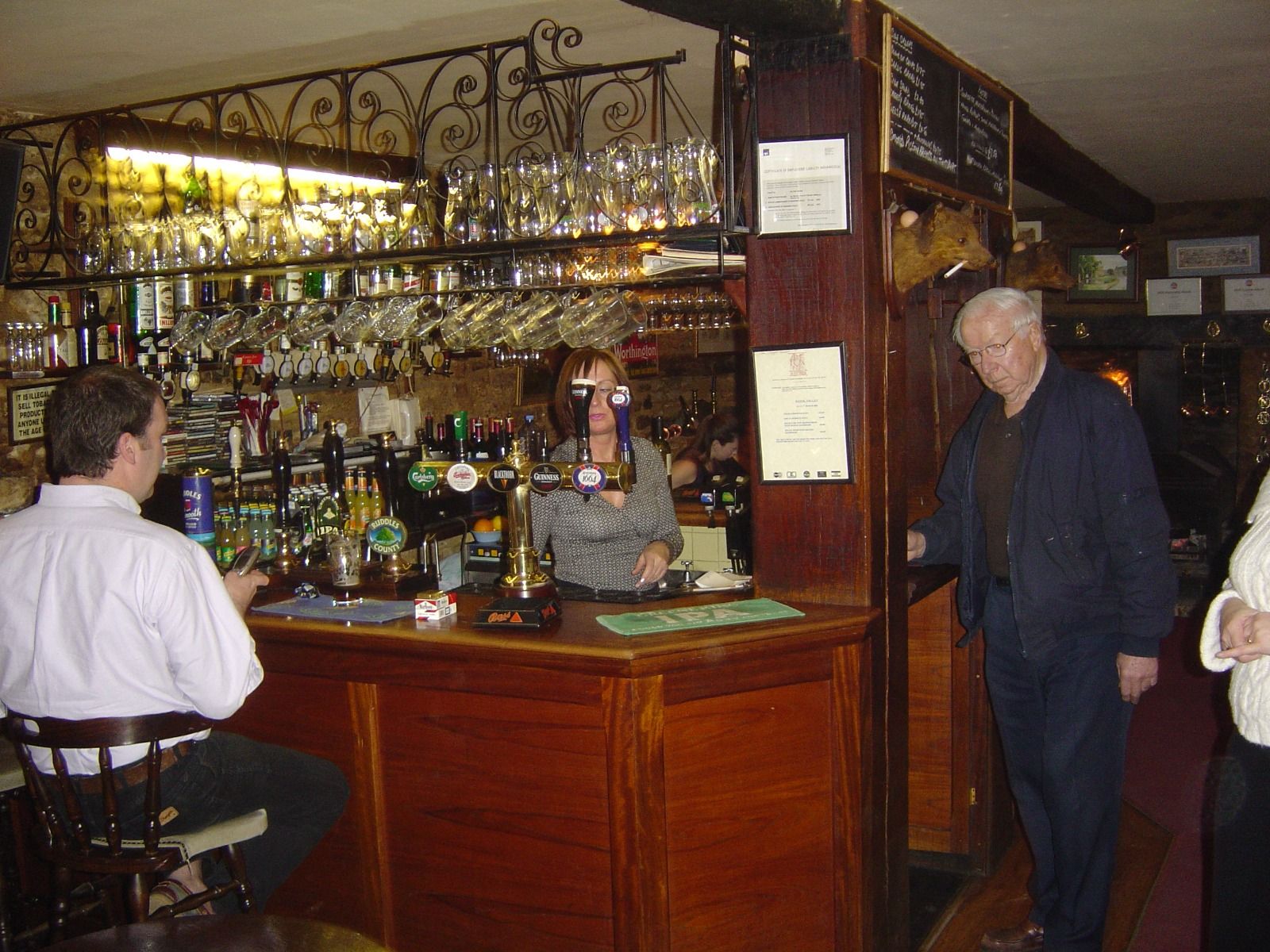
I said something admiring about the rustic charm of the club bar, and was promptly marched off to the village pub, "The Swan," to experience proper English pub culture. It turned out to be even more rustic than advertised: smartly dressed local ladies mingling at the bar with mud‑spattered, horse‑scented steeplechase riders celebrating the fox's demise by "blowing the froth off a couple."
Over breakfast the next morning we agreed a price, and I handed over a deposit cheque before flying home on a heavily subsidised Duo flight from Birmingham, complete with a three‑course dinner on board.
Winter Postponements
Now it was "just" a matter of flying the RF 4 home. I badly wanted to fly the delivery myself, but winter weather in northern Europe rarely cooperates, and it isn't always possible to book a week off exactly when the skies allow a VFR crossing of half a continent. Months of email followed — mostly about the weather, but also about James's forearm, broken during a skiing holiday in France when he skied straight into a cliff face. The X‑ray he emailed over showed a serious break held together with an impressive number of plates and screws. "Well James," I wrote, "that French surgeon of yours certainly likes screwing." "And you know what, Jörgen," he replied, "the mountain didn't even move."
At the end of February a genuinely promising high‑pressure system appeared in the forecasts, right as I had time off work. The emails intensified, and finally a text arrived from James: "It's a go, go, go!" I booked an evening flight to Birmingham for Friday the 27th and watched the weather anxiously on the way over — a few clouds, but nothing too troubling. James met me at the airport and we drove down to Bicester, where a determined group of five or ten regulars kept the club bar going, heavy metal at full volume, while we worked through a couple of beers past midnight.
First Flights in the Cold
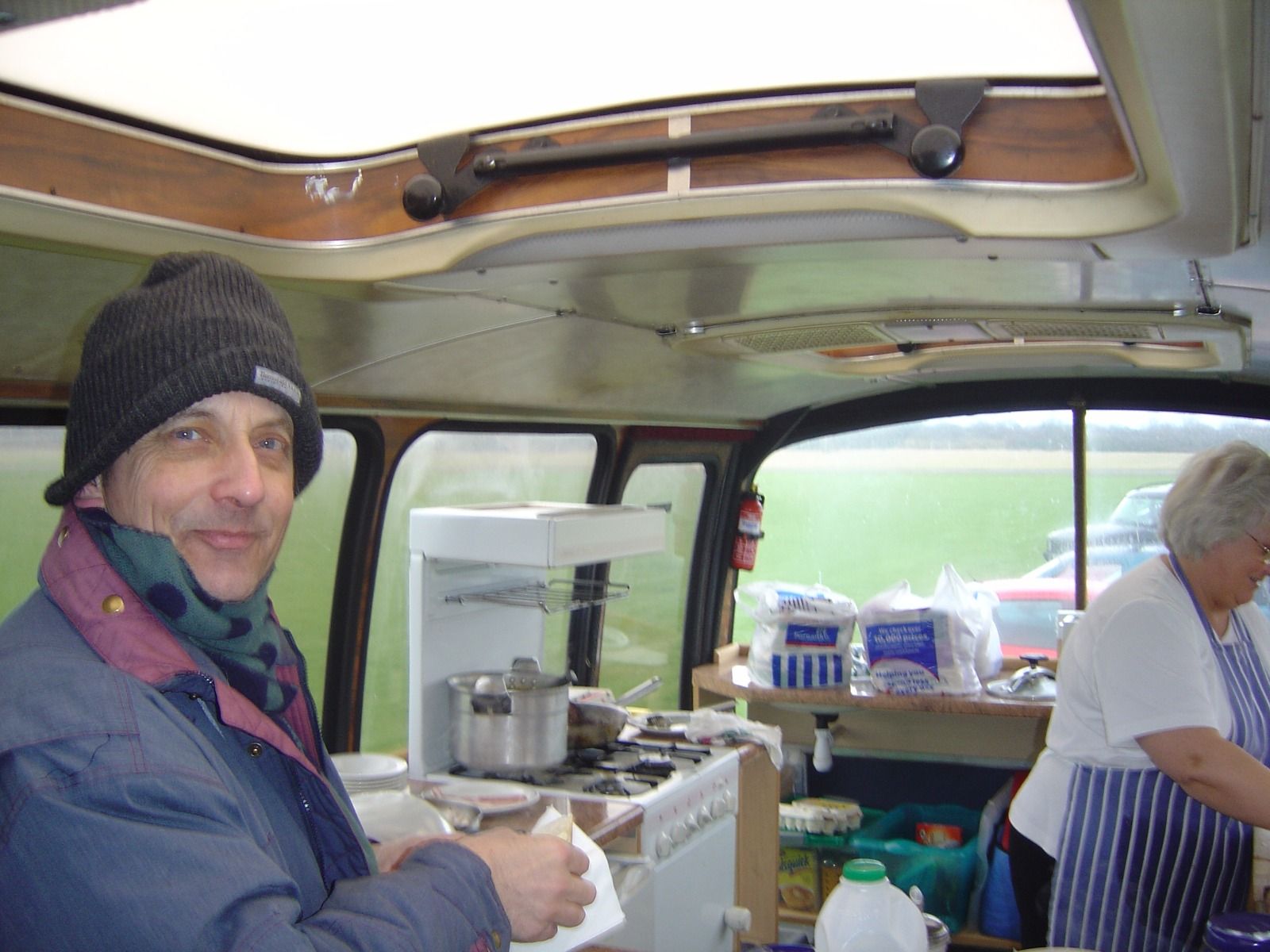
The next day the weather was middling: low cloud and a bitter north‑easterly sweeping the field. The glider pilots were out training on the winch, keeping warm in a gas‑heated bus that had been converted into a canteen, where a very talkative lady served coffee, tea, eggs, bacon, beans and burgers while extracting everyone's favourite breakfast, nationality and marital status in the process. James and I had a hearty brunch, after which I went through the RF 4's checklists and speeds.
Given the season, my absurdly light luggage — one 30‑litre backpack with wool underwear, a lambswool jumper, a spare sweater, double wool socks, a hat and Gore‑Tex jacket and trousers — turned out to be exactly right, and I wore most of it for the rest of the trip.
After handing over the balance ("Seems you've just bought yourself an RF 4, Jörgen") I made my first take‑off, just to fly a circuit. The field was hard and dry from the frost, the grass long and rough, and I had to taxi at more than half throttle to keep moving.
“Bicester, November X‑ray ready for take‑off for some circuits.”
“November X‑ray, no winch launch imminent, circuits at your discretion.”
Noted — stay clear of the winch launches and the landing gliders. Fortunately I was used to busy international glider fields like Feringe. The acceleration was nothing to write home about, but the field was kilometres long, and after a couple of hefty bounces off the frosty tufts I was airborne at around 50 mph, then held it low and accelerating for a good while before I felt able to climb away at a safer 70 mph in the choppy air. Once settled at 1,000 ft, my first impression was of light, sensitive controls and lovely harmony between them. The landing‑gear lock — a slightly fiddly thing tucked under the right knee, invisible to look at — felt reassuringly positive once I got used to it, and the closed, baffled cowling keeps the carburettor supplied with warm air, so on approach you really only need to remember the gear. The airbrake is nowhere near as effective as on a modern glider, working more like a spoiler, but the aircraft stays easy to fly as long as you don't fuss over both airbrake and throttle at once. That first take‑off felt a touch wobbly with such sensitive controls, but the aeroplane never felt anything but well in hand.
Climbing out after a bumpy second bounce, the fuel cap — a "float on a wire" design, just like the Cub's — worked itself loose. I kept climbing while it dangled at an angle from the filler neck, and radioed it in.
“Bicester, November X‑ray returning with a loose fuel cap…”
“Roger that, taxi to the launch point and we'll fix it for you.”
The cap stayed put until landing, whereupon the controller himself jumped out and screwed it back on before I'd even shut down the engine. They seemed rather practised at that particular manoeuvre, I thought, and resolved to check the cap more carefully from then on.
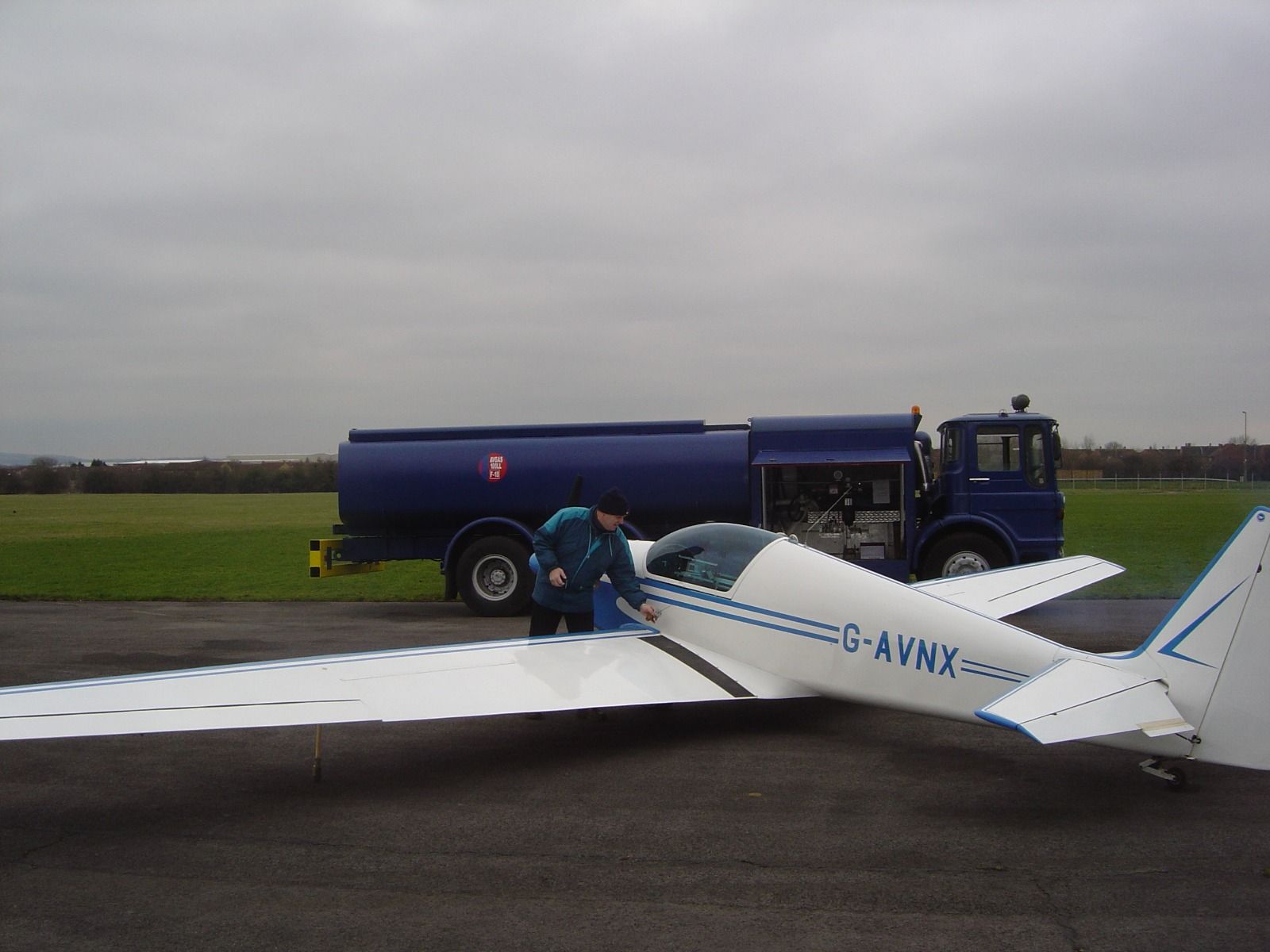
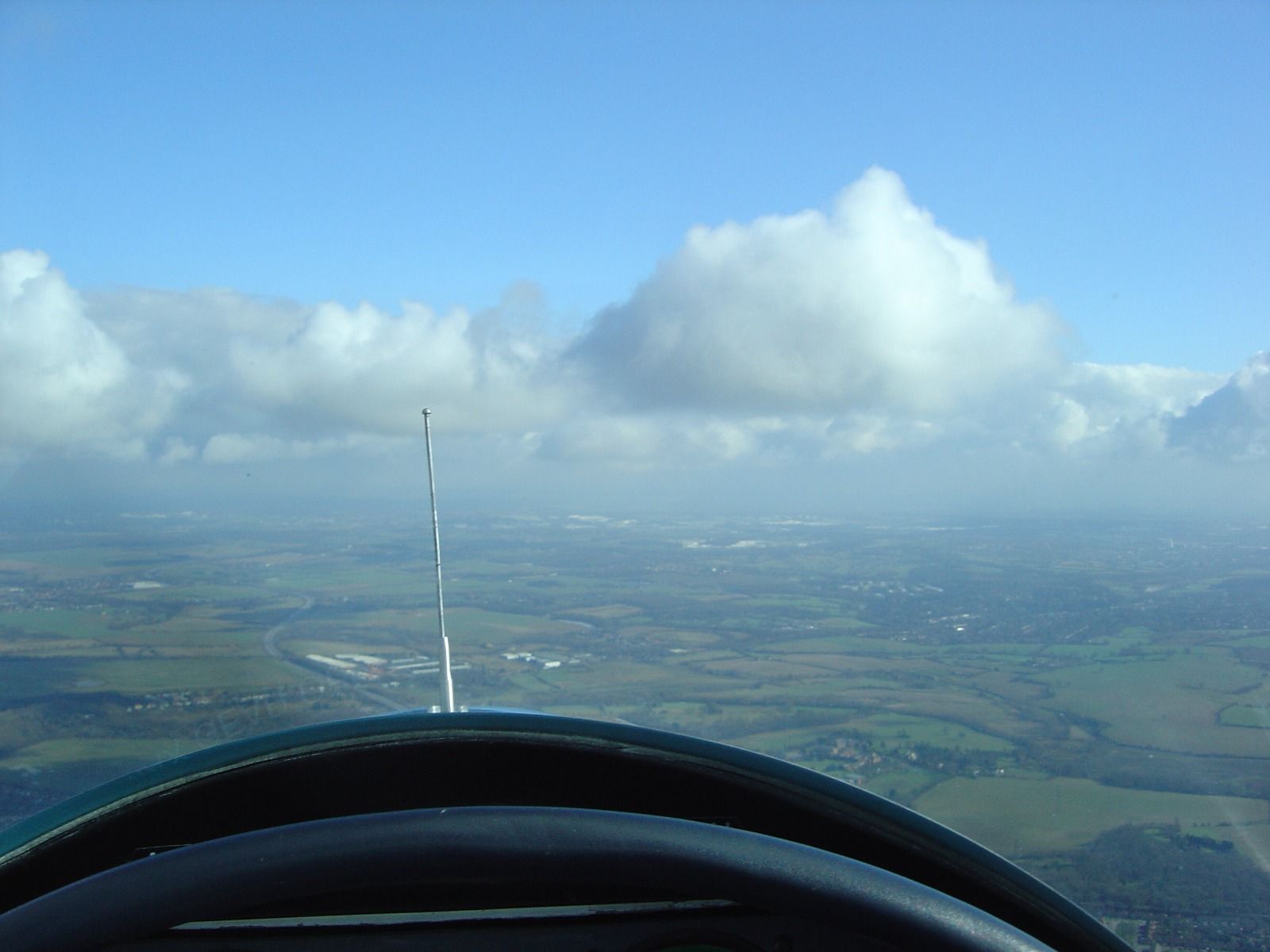
James's friend Roger, the former co‑owner, took a farewell flight while we refuelled. Cloud base was still barely above 1,000 ft, and snow showers dotted the horizon. We checked the internet and James rang some meteorologists he knew in Birmingham: a pseudo low had spun up over the warm North Sea, driving snow showers onshore across eastern England and Holland — a pattern the locals reckoned could persist. Not encouraging for a ferry flight. James's sister‑in‑law and Roger planned a trip in the Jodel, and I tagged along in the Fournier to get familiar with the surroundings; the "Channel hop" down to Lydd that James had planned to escort me on was now clearly off. Instead we flew east towards London, where James wanted to show me the gap between Stansted's zone ("go through there and you'll get shouted at") and the Heathrow and Docklands zones ("go through there and you'll be shot down in flames") that VFR traffic without a transponder can slip through. Snow showers lined the route, and at one point, wrestling with the map, I asked over the radio whether we shouldn't turn right to stay clear of the Stansted TMA. The Jodel banked hard, and I heard James chuckle: "Yeah, you know — women drivers…" We were below the TMA the whole time, as it turned out; I suspect he was more interested in teasing his sister‑in‑law than in my navigation. Impressive cumulus clouds were building to the north and south of us by then, and I took a few photographs before going back to fighting with the map.
We got as far as the Bovingdon beacon before the low cloud and snow showers turned us back to Bicester, with just under two hours in the RF 4's logbook for me. That evening the club held a meeting to transform itself from an RAF‑patronised operation into an independent association — Windrushers Gliding Club — conducted in properly spirited parliamentary style, complete with "Hear, hear." A few of us went on to a village pub, The Fox Inn, for smoked salmon and local ale, in the company of David Stratton, who as chief designer of the giant Saunders‑Roe Princess flying boat told us they'd eventually grown almost used to multiple simultaneous engine failures — though with ten engines, he allowed, there was plenty to spare.
The Weather Window: Bicester to Calais
Sunday morning brought butterflies. Cloud persisted, the internet forecast was lukewarm, and radar still showed heavy snow over south‑east England and the Channel. Just before lunch I had almost talked myself into a Duo flight home and postponing the delivery — I'd already flown in and paid for the aircraft, after all. James said on the phone that he'd have been tempted to press on and see how far we got, but that he fully respected my wanting a better forecast.
Then, right at lunchtime, the cloud broke into scattered patches. I faxed a flight plan to Calais and, reasoning I could always turn back, took off from Bicester at 12:50 pm into bright sunshine and cheerful waves from the glider pilots.
“London Information, Golf Alfa Victor November X‑ray.”
“Golf November X‑ray, London Information, pass your message.”
“Climbing out of Bicester on a VFR flight plan for Calais, Golf November X‑ray.”
“Golf November X‑ray, roger. What's your first reporting point?”
“Eehh — Bovingdon, Golf November X‑ray.”
It was a comfort to fly a route I already half knew while I wrestled the plastic‑wrapped map in the cramped cockpit, the print far too small for beacon names. When the controller asked for my QNH, I realised I'd forgotten to note it — not a great start when carrying the wrong pressure setting can put you into controlled airspace without knowing it. Lesson filed: keep a pen and pad within reach for waypoints, pressures and frequencies while on a flight plan.
Visibility was excellent, with scattered cotton‑wool cloud, and I thoroughly enjoyed the view over Oxford's spires before crossing the wooded ridge into open farmland. Radio traffic was heavy but manageable, and after about 40 km I reported Bovingdon at 1,500 ft. There were few landmarks beyond the M25, so I split my attention between the map and a scatter of unnamed GPS waypoints, and got so absorbed that I forgot to call my next reporting point until asked. I crossed the River Lea, then the Thames bridges, with a genuine snowstorm visible off to the south, right over London City Airport and the Docklands — somewhere I neither wanted nor was allowed to go. A four‑engined BAe 146 passed overhead descending steeply for City Airport; I didn't envy him the approach.
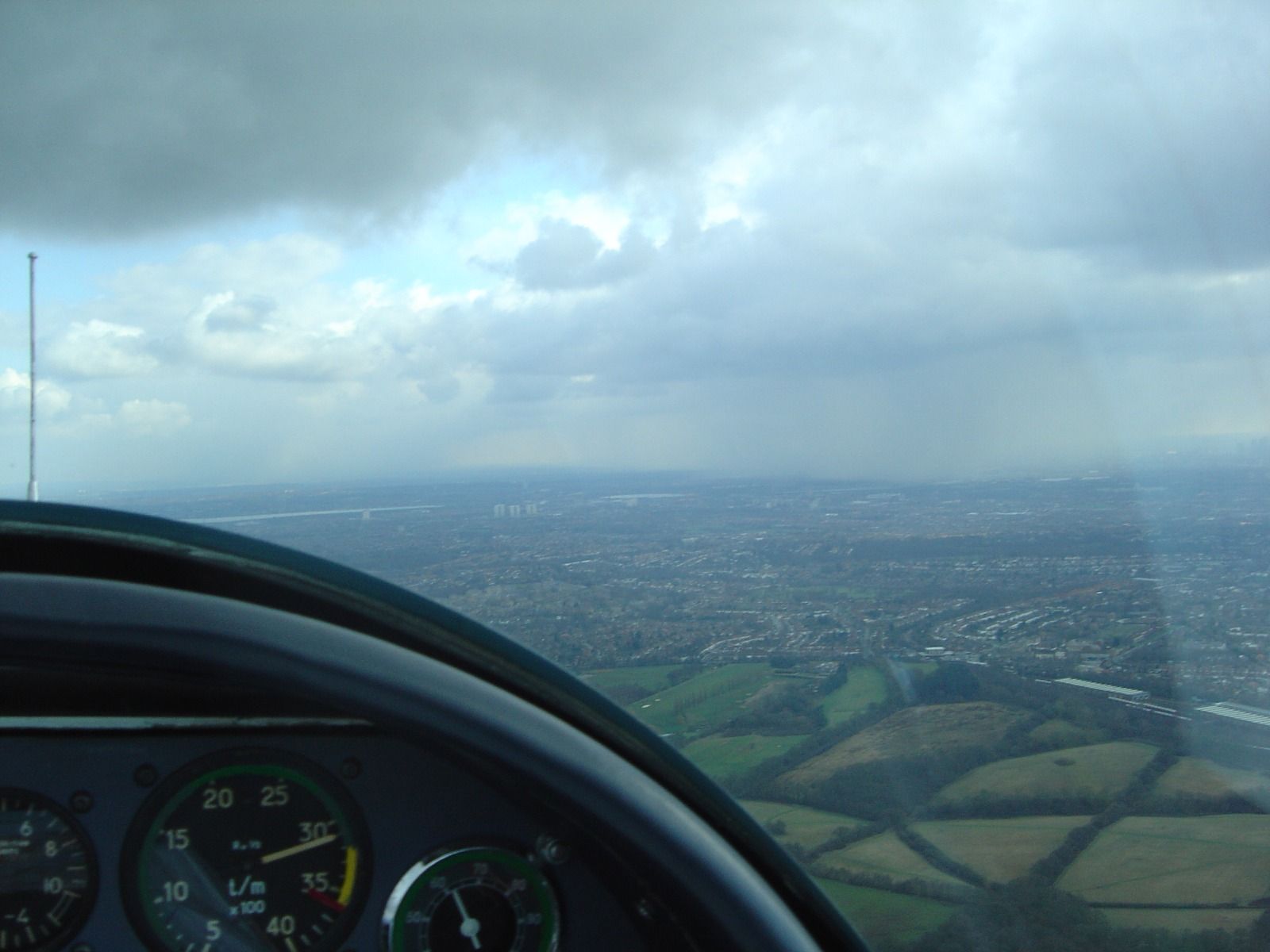
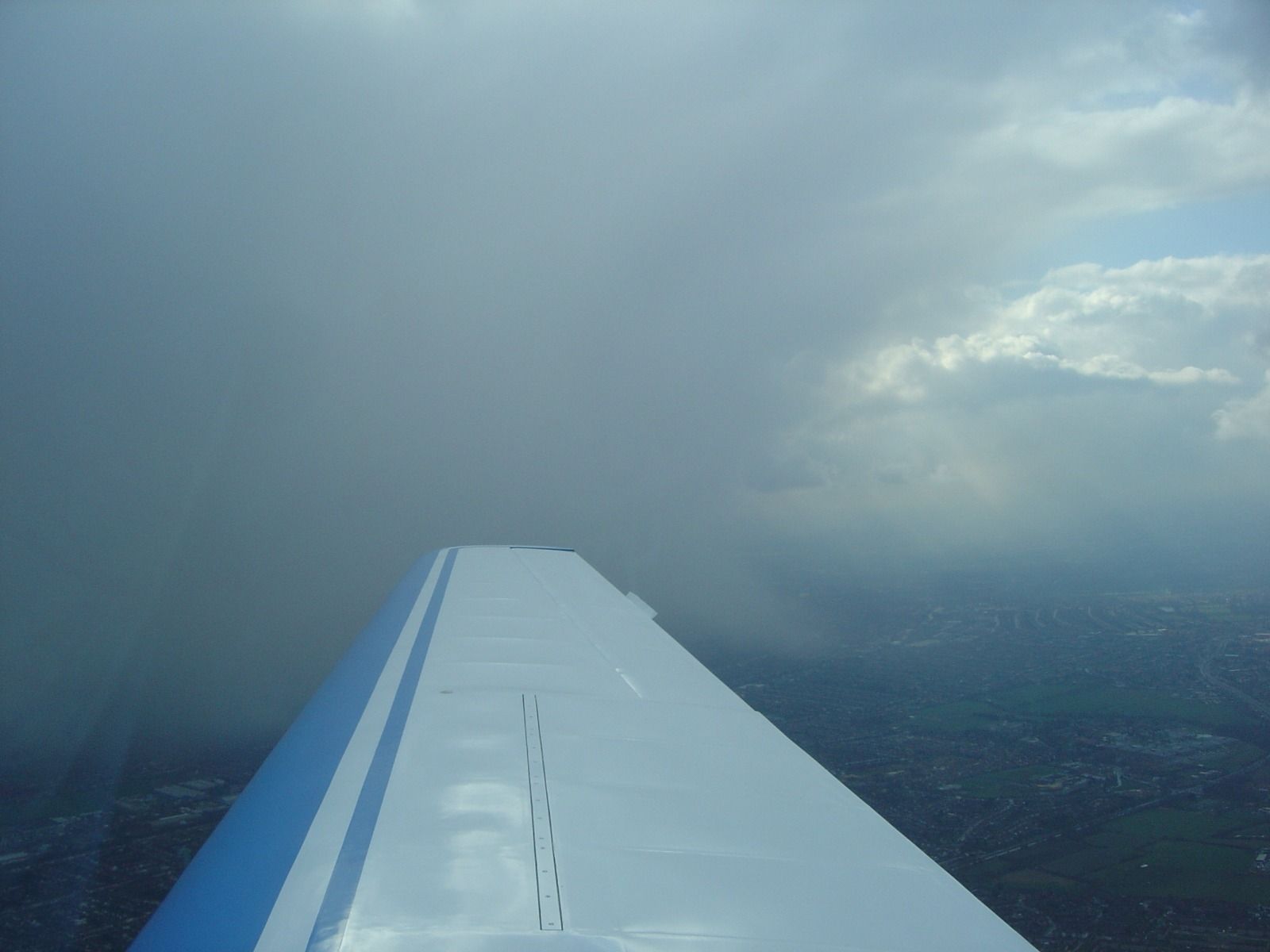
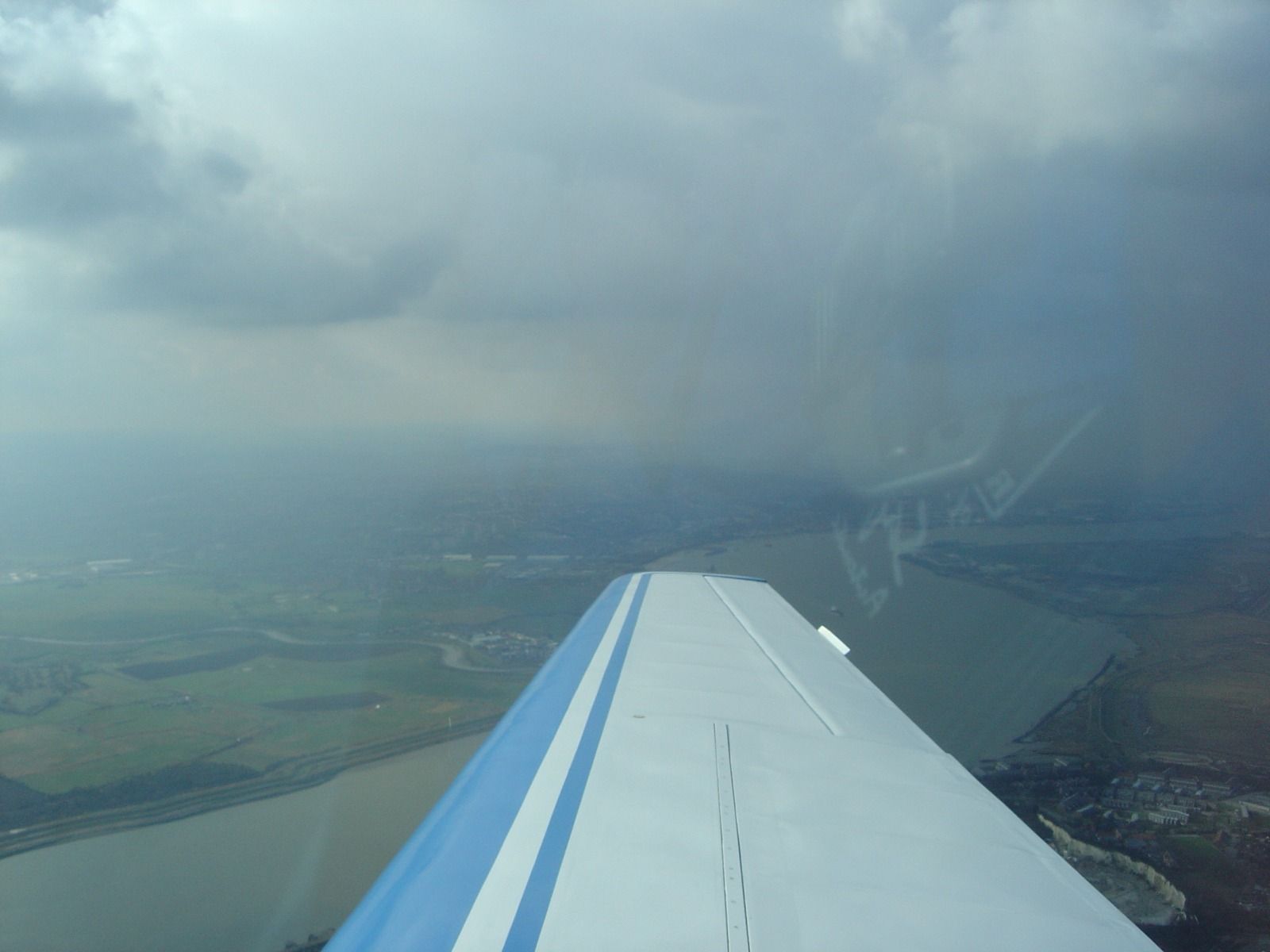
Past Gravesend and on towards Dover, the cloud thickened slightly and the haze grew. Shortly after Chatham, following the M2, I mistook the historic Manston airfield for Dover on the GPS's zoomed‑out view before sorting myself out. A French pilot came up on the frequency in heavily accented English, working his way through the Channel at three thousand feet bound for Southampton, and I pictured a cockpit full of concentration on his end to match my own.
“London Information, 5 minutes to Dover, Golf November X‑ray.”
“Golf November X‑ray, roger. Do you wish to climb before the crossing?”
Sensible of her to ask, and rather professional given she likely had no idea what kind of aircraft I was flying: a single‑ignition touring motor glider has no dual‑magneto redundancy, so your safety margin is really about altitude and glide range rather than engine reliability. Dover to Calais is 35 km across open water, and an RF 4 gliding at roughly 1:20 needs about 1,000 m of height to reach land from mid‑Channel if the engine quits. I'd already climbed to 2,500 ft to check the cloud base, which had thankfully lifted, so I asked for — and got — a climb to 4,000 ft, reporting the exit point "RINTI" on the France–England boundary.
At 3,200 rpm, right at the edge of the yellow arc, I climbed out towards the coast. Hazy but with good visibility, I soon passed over the white cliffs of Dover, glowing like a pleated ribbon in the sun, and circled a couple of times to photograph what was probably the most distinctive landmark of the whole trip.
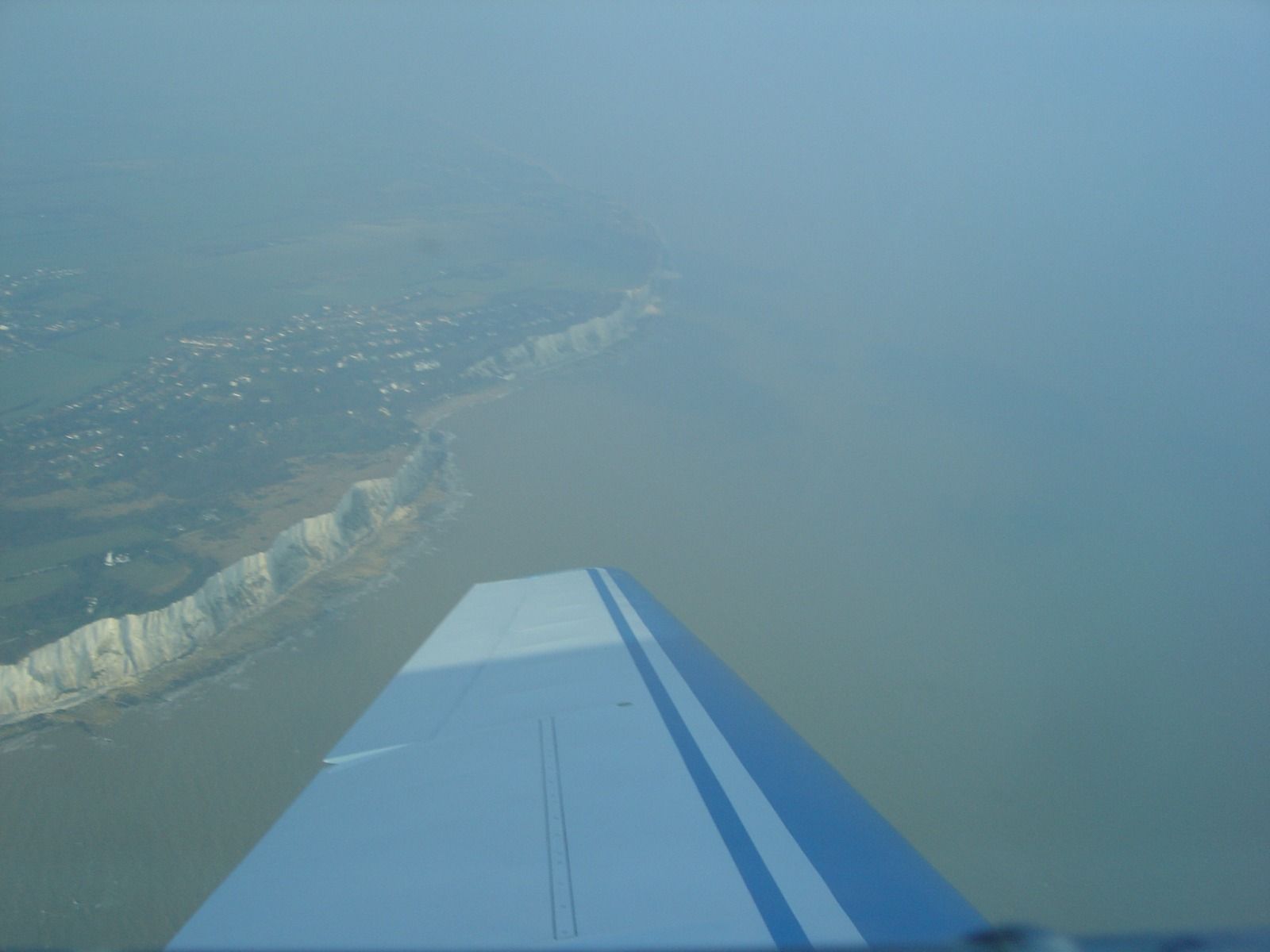
No Me 109s in the sun this time. The French coast wasn't visible when I set a compass heading for Calais; RINTI never showed up on the display, and as the haze thickened the horizon began to blur. With no artificial horizon aboard, it might have been unsettling had I not picked out the white wakes of ferries criss‑crossing the Channel to hold my orientation by. Then, quite suddenly, I broke through a temperature inversion and the horizon snapped back into focus.
Sixty‑four years earlier, plenty of pilots crossed this same stretch of water listening to shot‑up engines and wondering whether they'd have to swim — and if so, whether anyone would come. I had rather smaller worries: whether the weather would hold all the way home, and if not, where I'd put the aircraft down.
Soon the French coast appeared in the sun — pretty enough for a few more photographs — and I reported feet dry two minutes out. London Information handed me over with a cheerful "have a nice flight and good afternoon," and I dropped the nose towards Calais.
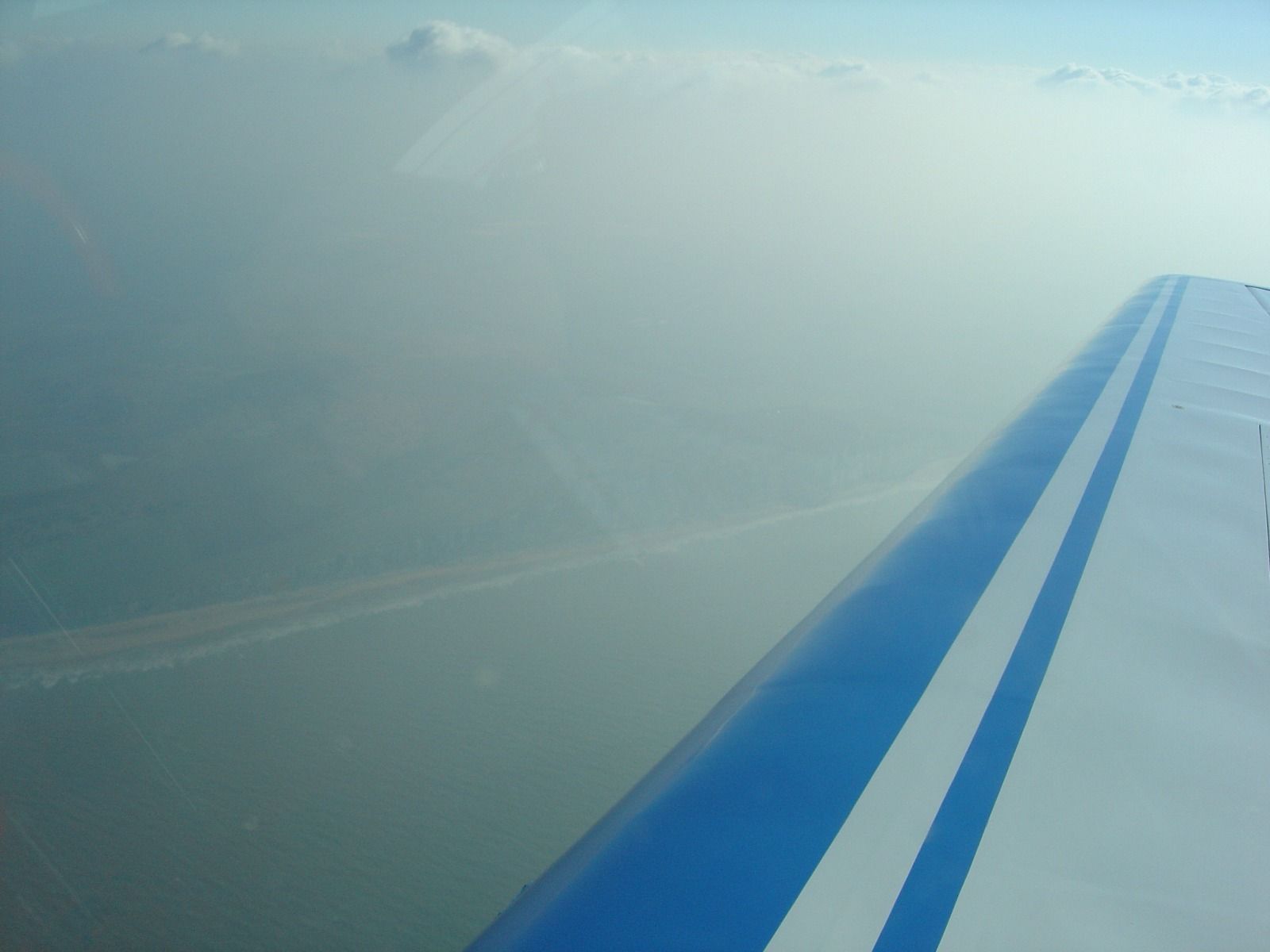
Calais Tower turned out to run at roughly double the speed of my school French, delivered in the brisk, slightly exasperated cadence of an instructor drilling a slow student.
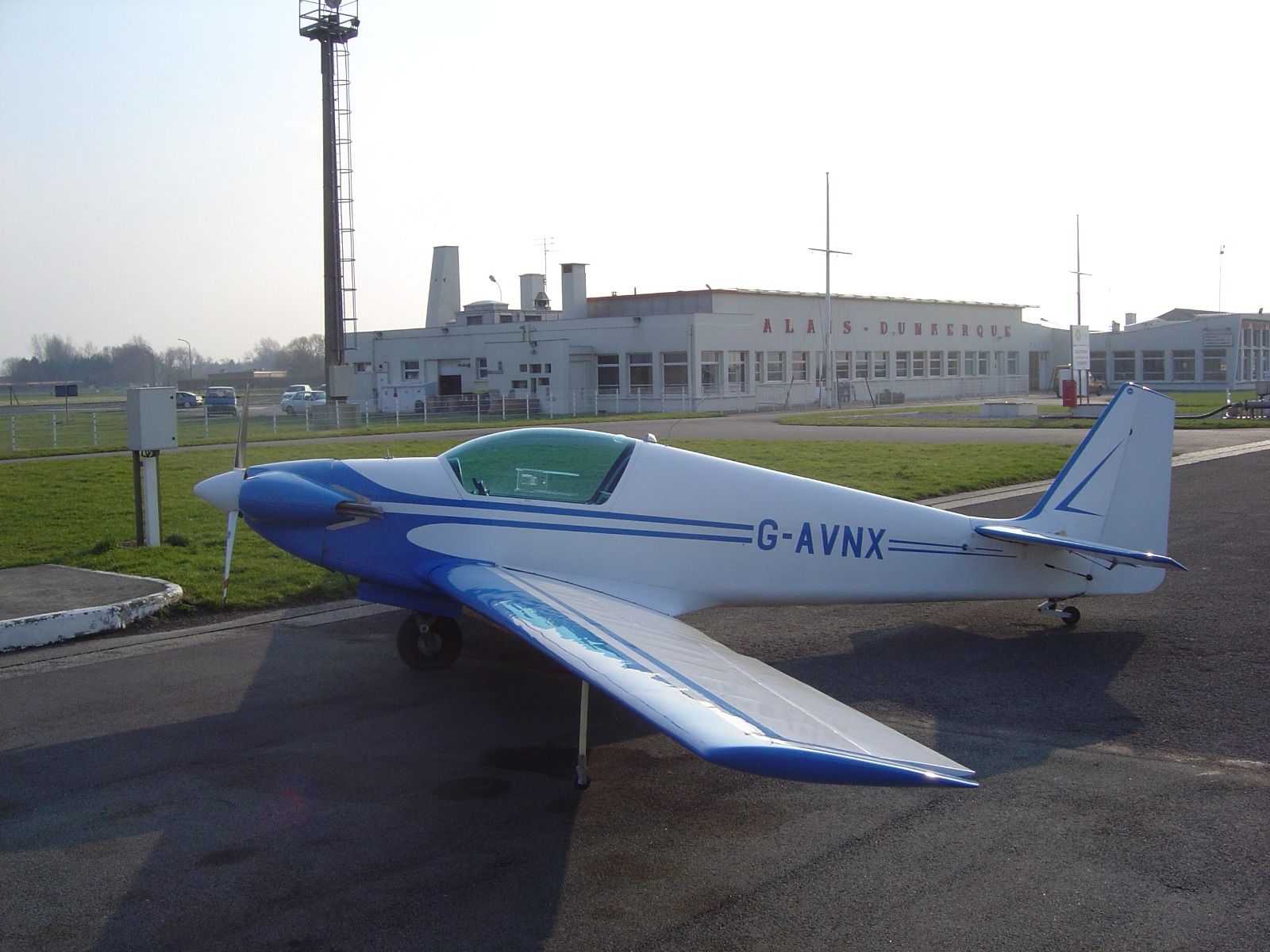
I found the field amid the chaos of the harbour, was sequenced in as number two, and made a clean landing on the hard runway — my first ever on the RF 4 — one hour and forty‑eight minutes after leaving Bicester. Inside the terminal building, packed with locals, I allowed myself the thought that a proper "landing beer" would have gone down very well, and made do with a half instead. The weather was still holding and a French Robin pilot who'd just come over Belgium reported good conditions, so I decided to press on. Filing the next leg in the tower took some doing amid a queue of pilots and a controller trying to work the radio and paperwork simultaneously, but eventually I was cleared for Hoeven, a small field in Holland, with alternates noted in southern Holland and at Ostend.
France to Holland: Chasing the Light
Airborne again with a headwind and a smooth runway, I climbed out along the beautiful flat coast in the afternoon light, munching a carrot for lunch. Calais Tower reminded me to keep clear of the nuclear power station at Dunkirk.
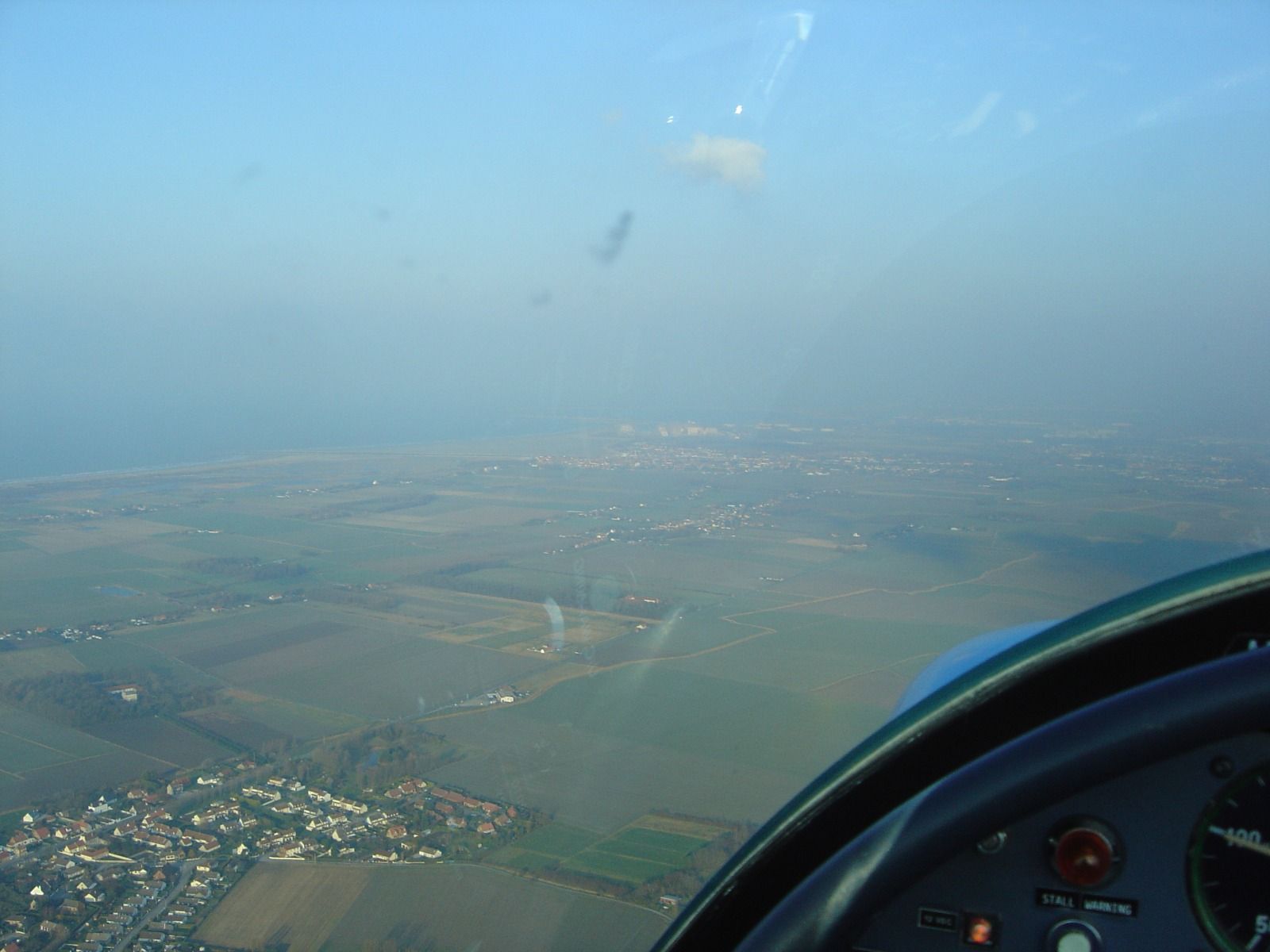
I thought, not for the first time on this trip, about the same stretch of coast sixty‑four years earlier: forty kilometres from Calais to the Belgian border was roughly the width of the corridor the British Expeditionary Force was squeezed into before the evacuation at Dunkirk. I took a few more photographs and carried on.
Along the Belgian coast the only traffic I could hear was a training aircraft bouncing circuits at Koksijde, whose tower turned out to be closed; they redirected me to Ostend instead.
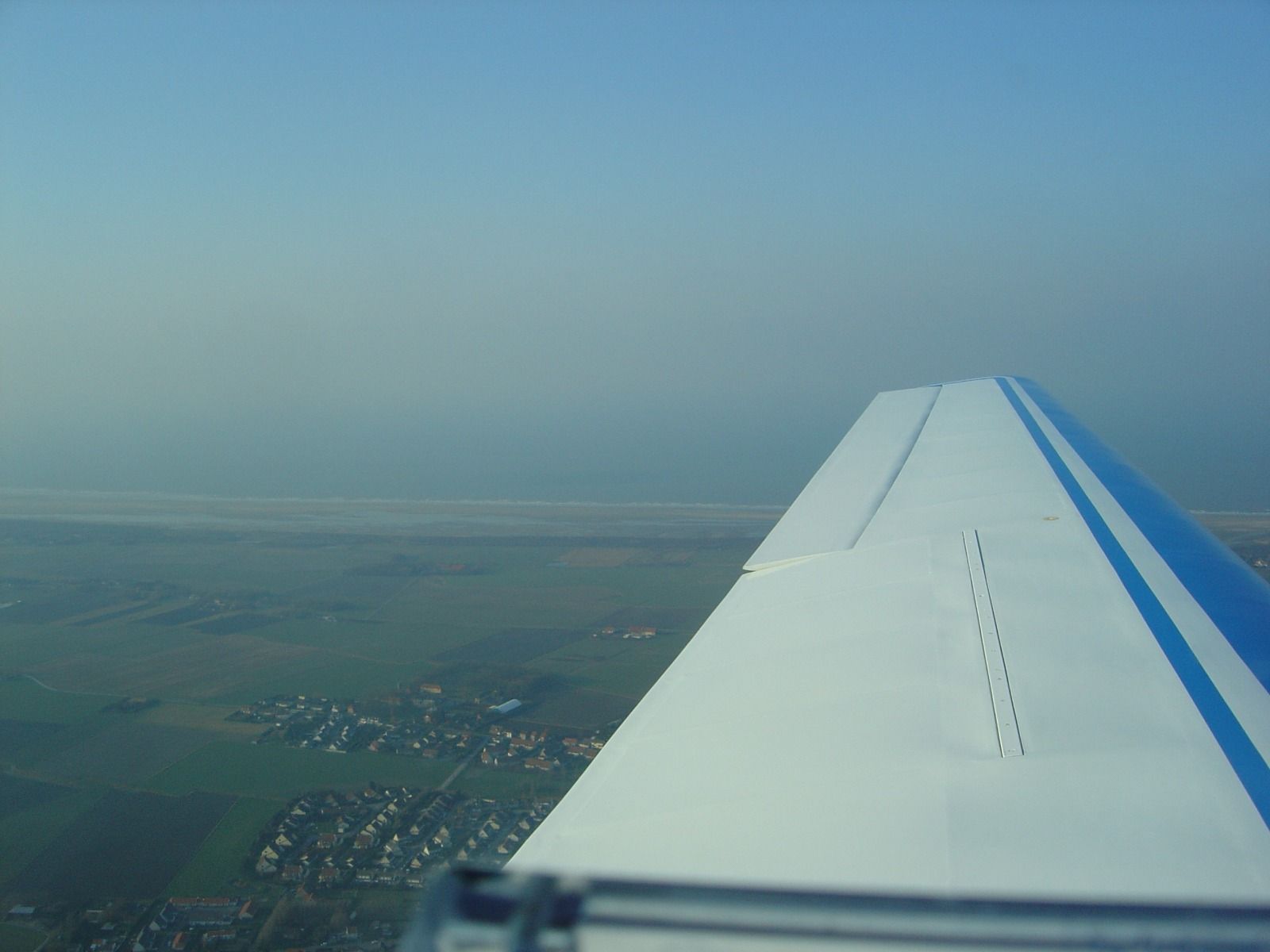
Ostend cleared me through their zone along the coast and asked me to squawk 7000 — a request I had to decline twice, having no transponder — and to report a point called "Charlie Oscar Alfa," which I couldn't immediately place on the chart. It was only later that I worked out this was a radio beacon right on the Dutch border, used as a standard handover point — a lesson in itself: cross‑border reporting points are not always obvious from the map, and it pays to look them up in advance. Around the same time I noticed the voltmeter glowing red on transmit; a battery gremlin I'd hear more from later.
Past Antwerp's estuary and the towers marking its southern shore, the engine chugged along as steadily as ever — "well," as James put it later, "the engine doesn't know it's over water." As I approached the Zeeland peninsula a huge cloud loomed out of the haze, its base well below my cruising height. I eased down and sped underneath it, easing the throttle back to avoid over‑revving, and began skirting the cloud to the north in search of a way round.
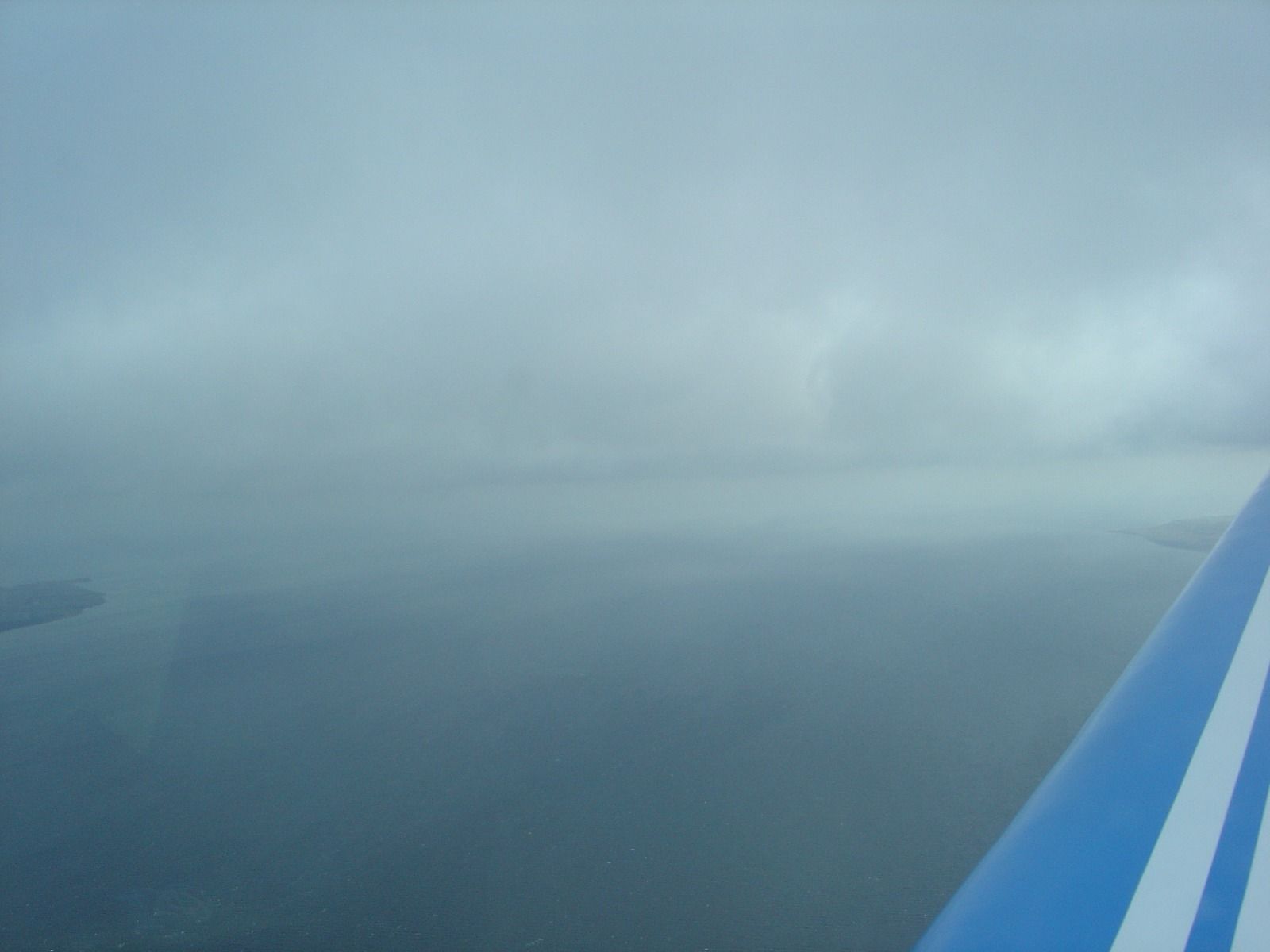
The Diversion to Rotterdam
Cloud gathered along the route, darkening the sky well before actual sunset. Down to 1,200 ft along the Oosterschelde, I hopped across to the tip of the Tholen peninsula, where the ground below was suddenly white with snow. Hoeven had warned that morning of a slippery, snow‑covered runway; clearly the weather there had been worse than Bicester's forecasts suggested. With Belgium behind me offering nothing in the way of alternates, and the GPS showing me just outside the zone around "Woensdrecht," a controlled field, I reasoned a snow‑cleared asphalt runway would be easier to find than a snow‑covered grass strip, and turned towards it.
The moment I crossed the coastline it began to snow — lightly at first, then harder. Cloud base dropped, the horizon blurred, and ground visibility fell to a few kilometres. By 300 ft it was obvious I wasn't going to find even the largest airfield in these conditions.
"NO," I said aloud to myself. "This is NOT going to work. I have to SEE — now I'm turning around."
The RF 4 turns quickly and easily, and I was grateful for it. Checking the compass — roughly 120 degrees — I rolled into a steep 180‑degree turn, keeping a farmhouse below me and the airspeed indicator both firmly in view to hold my spatial orientation. Levelling out on the reciprocal, roughly 300 degrees, I used the same farmhouse, plus trees and outbuildings, to find my way back out over Grevelingen bay, where the weather was calm and clear enough to climb back to 1,000 ft in wide circles while I worked out what to do next.
I had visibility again and more than an hour's fuel, but barely an hour of daylight, and every alternate I'd filed lay inland, under the same bad weather. Feeling more than a little foolish, I accepted that I needed help.
“Dutch Mil, November X‑ray.”
“November X‑ray, go ahead.”
“I've been forced to turn back in snow showers and all my alternates are covered in bad weather. Do you have an alternative for me? November X‑ray.”
My voice, when I heard it played back in my own head, sounded a good deal smaller and shakier than I'd have liked. The controller's tone sharpened at once — slower, more alert, entirely focused on me.
“November X‑ray, what is your current position?”
“I'm about five miles northeast of the control zone around Woensdrecht, November X‑ray.”
“November X‑ray, wait one.” (pause, under ten seconds) “November X‑ray, I suggest you go to Rotterdam — Rotterdam, an international airport. Proceed north.”
Relieved but still shaken, I flew north, unsure which of three lettered airfields on the GPS's zoomed‑out display was actually Rotterdam, and had to ask for the identifier — "Ecco Hotel Romeo Delta" — which I wrote down in unsteady letters on the map, along with the tower frequency, read back twice because the string of numbers caught me off guard. Below lay Grevelingen bay and the island of Schouwen; cruising at 3,200 rpm and 110 mph, I headed north as the light kept fading and the voltmeter kept glowing red every time I transmitted.
Rotterdam Tower talked me in with real patience — a calm, unhurried voice that asked for my position, then simplified the question: did I have water beneath me? A bridge? That, they said, would be Hollands Diep; continue on a heading of 020. At one point they asked me to key the mic for a few seconds so they could take a bearing — a service I doubted they used often — while I eyed the reddening warning light and wondered how much battery I had left. Street lights were coming on below as dusk deepened, making the built‑up sprawl harder, not easier, to read. Chimneys to my left; more chimneys everywhere. Then the harbour on the Nieuwe Maas, with its tall stacks and cranes to clear, and finally — the runway, lit, dead ahead, with the tower off to the left.
“Rotterdam, field in sight, November X‑ray,” I reported, with real relief in my voice.
“November X‑ray, we don't have you visual yet, but proceed.”
“November X‑ray, contact. Continue over the runway for a left downwind, runway zero‑six, number one.”
Gear down, latch confirmed after the usual three or four attempts, base leg reported a little early — old habits from flying the Cub — and cleared to land with the wind at 330/8. It was foggy but not fully dark, and both the runway lights and the PAPI made the approach easy to judge. I touched down softly, and a "follow‑me" van in yellow and black checks guided me to a stand on the business‑jet apron, next to a Cessna Citation, where I climbed out and pushed the little RF 4 into place by hand under the bemused gaze of the ground crew.
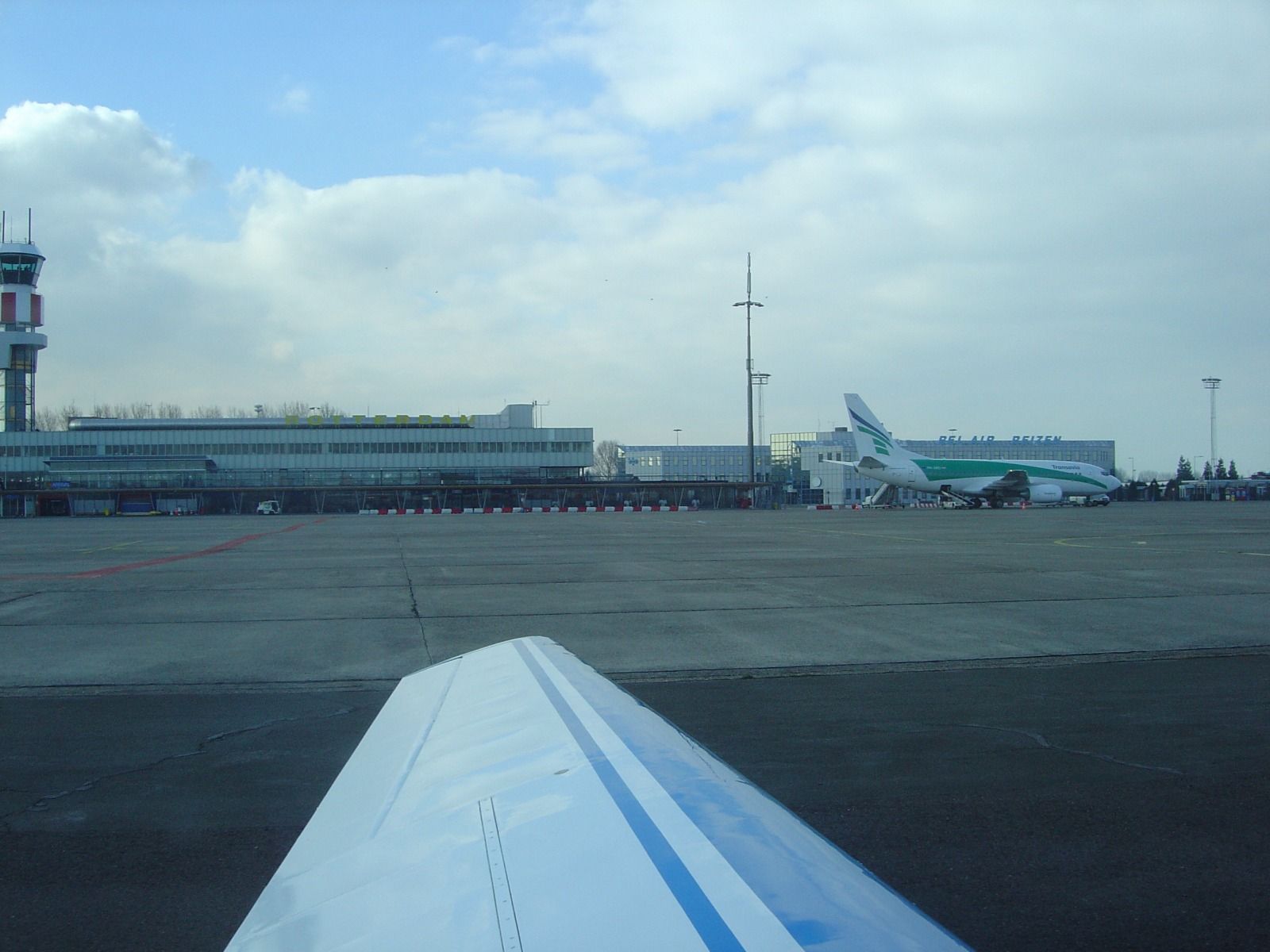
Stepping through the polished glass doors of the Rotterdam Jet Centre in my Gore‑Tex, hat and backpack, looking every bit like something the cat had dragged in, I was met by two immaculately turned‑out receptionists with a coffee and a mint wafer. Standing at the marble counter, I felt like the star of an advert for unexpected houseguests. A phone rang behind the desk — the tower, wanting to confirm they had spoken to the pilot of November X‑ray, and to say, kindly but firmly, that under their rules the diversion had to be logged as an incident. "I don't think anyone will blame you," the controller said, "and hopefully we can improve the service if we learn something from it." I was too grateful to be down safely to worry much about paperwork.
I checked into the airport hotel — not the cheapest option, but hotel beds were apparently scarce that night and I wasn't in the mood to economise after the day I'd had — called James and our mutual friend Mattias to let them know where I'd ended up, and was met with James's disbelieving laughter down the phone: "Rotterdam?? Ha! How on earth did you get there?" "Well," I told him, "I didn't exactly get there on earth, you know…" Dinner and a well‑earned pint followed, in the company of two newly qualified British Airways pilots deep in conversation about their Dash 8 type rating, who grew visibly more respectful once they realised I'd navigated the whole way with nothing but a map, a compass and a handheld GPS.
A Second Morning, and On Toward Germany
Frost and a thin skin of snow covered the aircraft the next morning; I swept it off, set it in the sun to finish melting, and pulled the batteries so a member of the ground crew could lend me his own charger.
With full internet access at the Jet Centre and a thick stack of TAFs, I spent a couple of hours building a picture of the weather ahead: the high pressure I'd hoped to ride was now sitting nicely over Holland, but a weak front over north‑west Germany threatened lower cloud and rain, with real uncertainty over how far I'd get.
With help from the reception staff I worked out a flight plan to Leer, just over the German border, refuelled — to the visible astonishment of the fuel operator, who couldn't believe how little I'd used since Calais — and, after six blades of hand‑swinging the propeller, got the engine started and lifted off around noon.
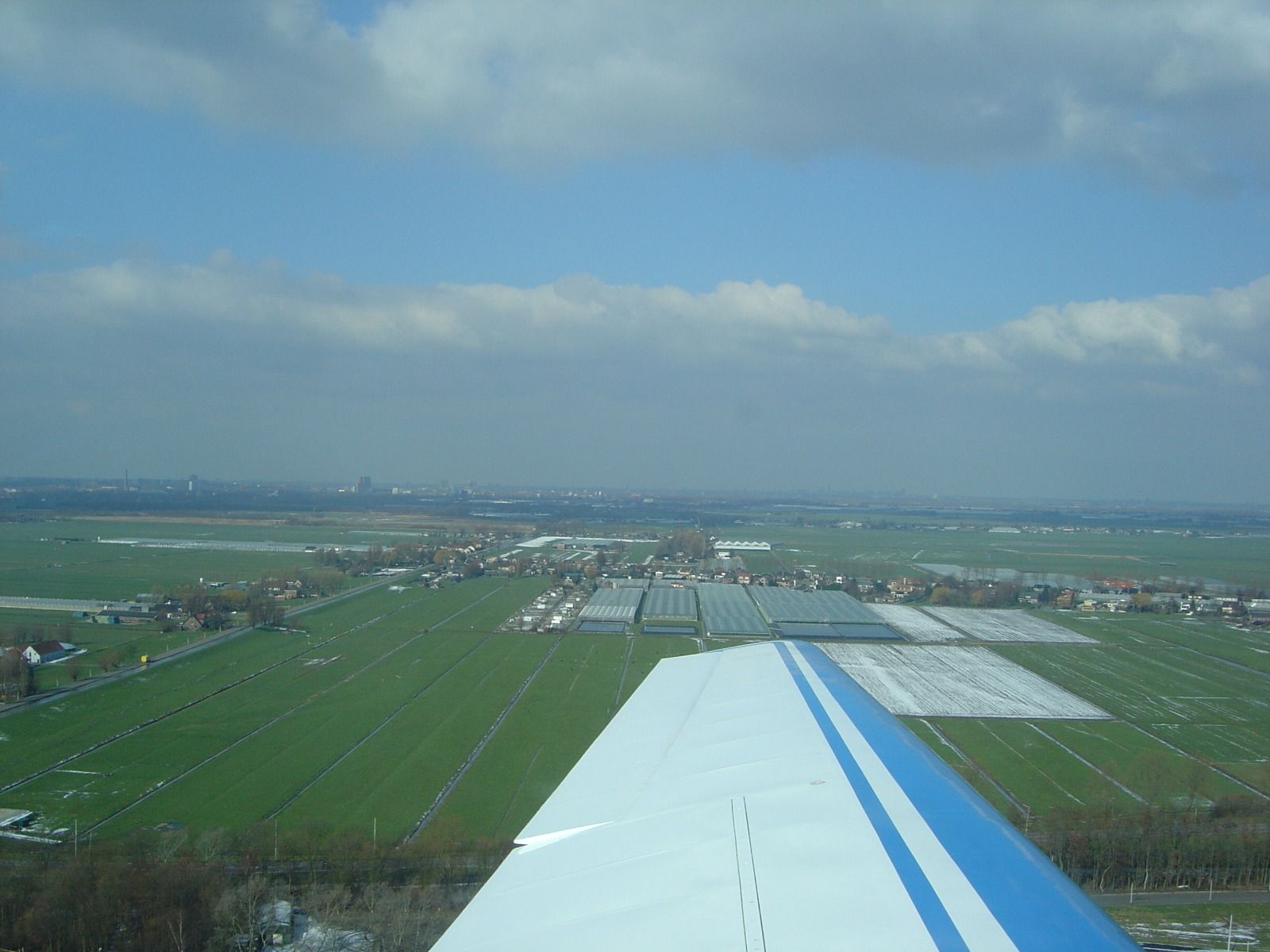
Cleared for a "Mike departure" I didn't recognise and had to admit as much — sometimes it pays to stammer honestly at the right moment — I was quizzed gently on my heading and altitude before being allowed to carry on. Somewhere over the sparkling network of Dutch canals — sunbeams breaking through the cloud onto a patchwork of drained polders — Rotterdam came back once more, this time to ask whether a fuel cap found lying at the depot was mine. It wasn't — mine, this time, was firmly in place — and a stammering flight‑school Cherokee owned up instead, to my considerable relief that I wasn't the source of the poor controller's troubles for once.
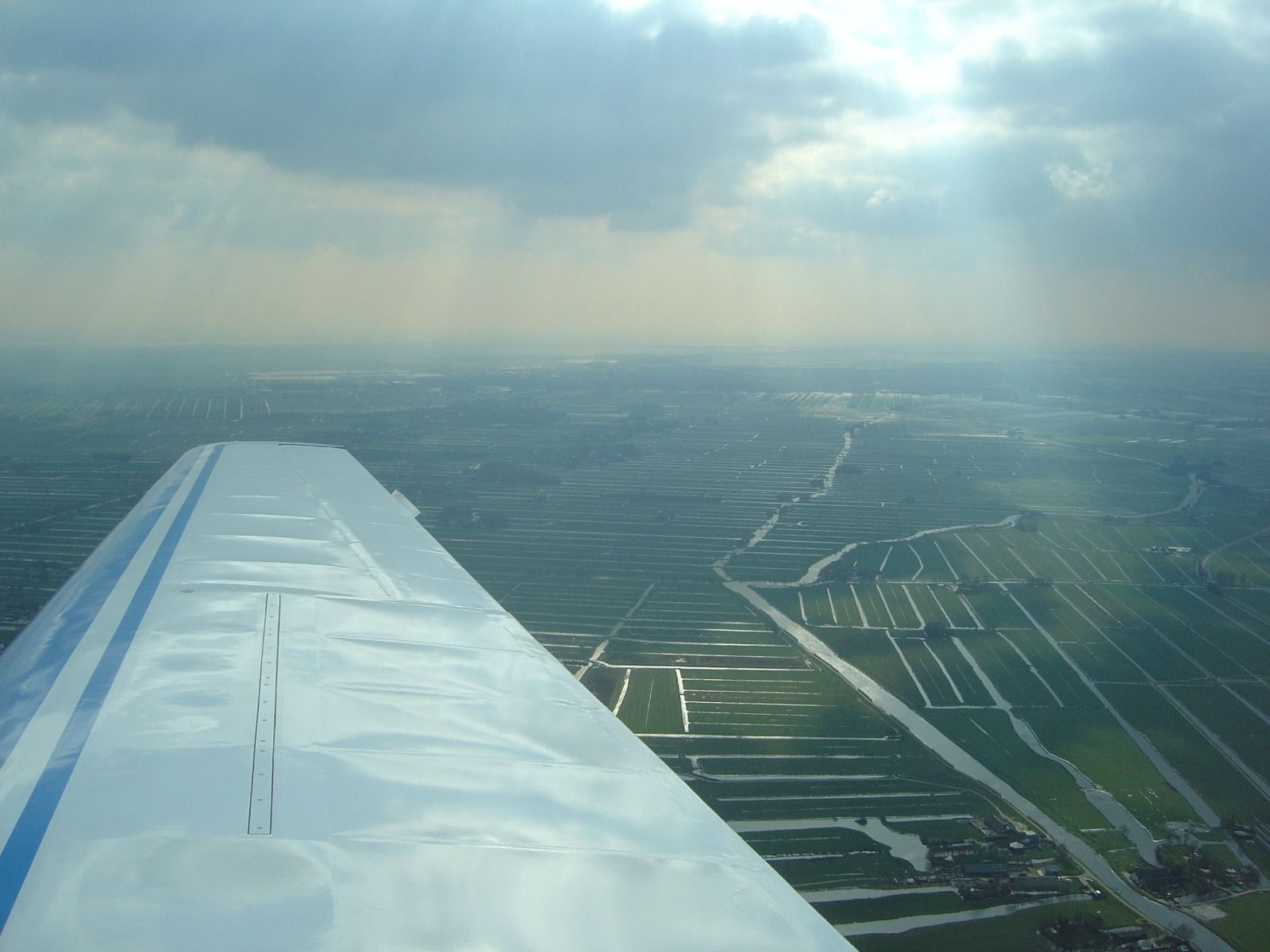
Over Gouda, "home of cheese," and on past Hilversum and the Gooimeer, the country unrolled in bright sunshine — canals, polders, and eventually the airfield at Hoogeveen, larger and better paved than my out‑of‑date map suggested. Cloud began to thicken again beyond it, and I traded fine weather for welcome shade, though visibility held up well enough for VFR. Somewhere around here I had to change maps mid‑flight in the cramped cockpit — never a graceful manoeuvre, and one that shows up as an untidy wobble on the GPS track log. Near the mouth of the Ems, marking the Dutch–German border, I called ahead to close my flight plan at Leer, glad to be free of the paperwork and able to fly the rest of Germany without one.
Leer, and the Low Cloud into Flensburg
Leer's small asphalt field appeared more or less on schedule, and a stiff crosswind made both the landing and the subsequent taxiing a wrestling match with rudder, brakes and throttle. Inside the terminal building I found a serious young airport manager, a curious younger colleague, and a jovial, red‑cheeked local gentleman who turned out to own a well‑kept Cessna 172, bought — he told me proudly — with the proceeds of selling his farm. On hearing about my battery troubles, he bundled me into his Volkswagen Golf, drove to the nearest hardware superstore for a charger, and had the aircraft's batteries on charge within the hour, sparks and all.
The forecast for the rest of the route was solid overcast at 1,000–1,500 ft with light rain across northern Germany. Since no flight plan is required for VFR flights within Germany, I decided to press as far as conditions allowed, with Flensburg — and James's pre‑plotted route, complete with ten‑minute markers — as the notional destination, some two hours' flying away.
The leg up the North Sea coast past Wilhelmshaven and Cuxhaven was flown low, around 1,000–1,300 ft, in a stiffening crosswind that dropped my groundspeed from over 110 to around 85 knots. There are plenty of wind turbines along this stretch of the German coast, and I wasn't very high above them.
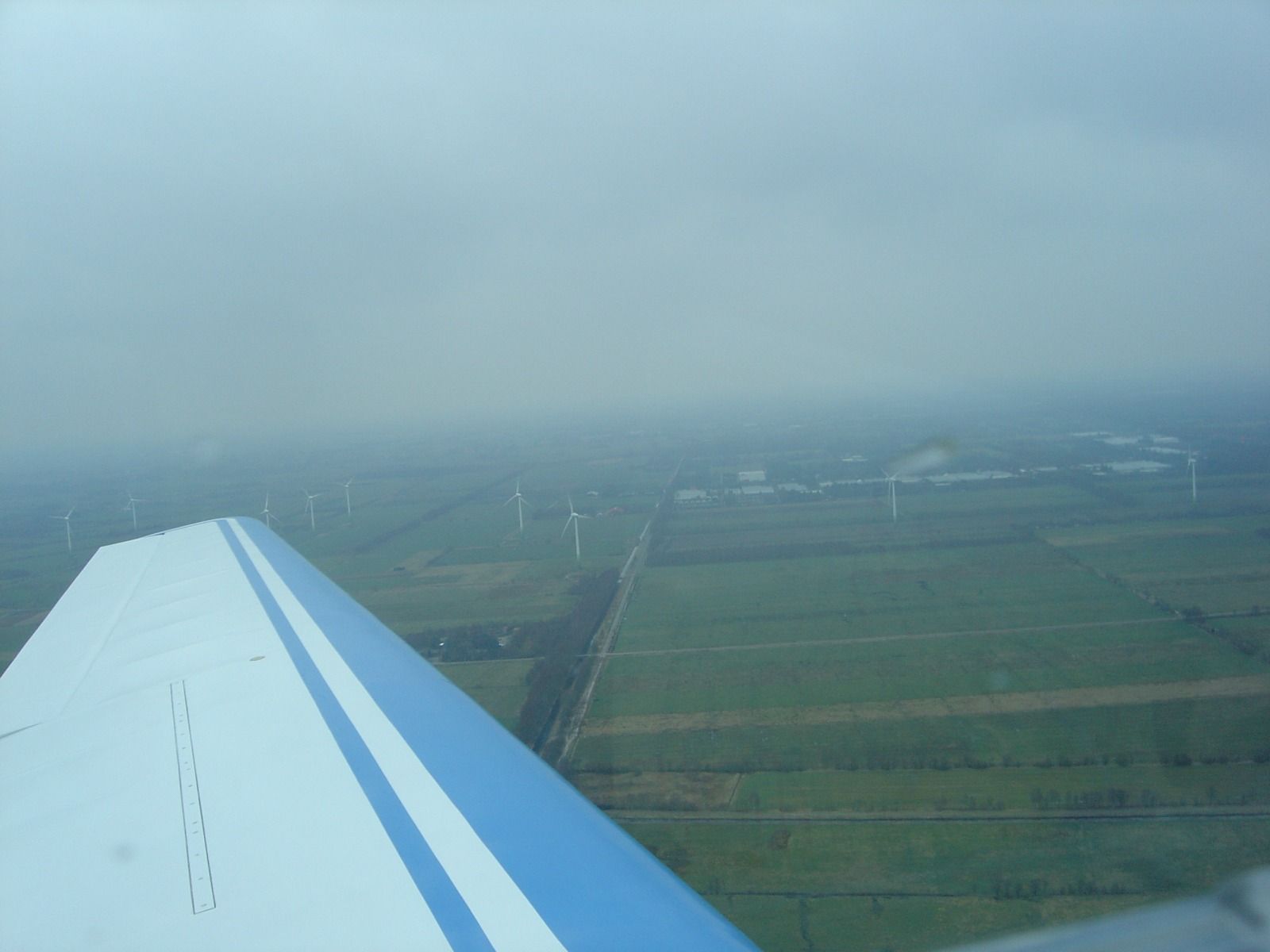
Small lakes and the coastline gave enough reference to navigate by, and I hopped the outer Elbe estuary — a short ten‑kilometre crossing — without ever quite entering cloud. As I neared the Danish border the cloud base kept sinking; light drizzle set in, visibility narrowed, and the terrain rose gently into forest.
At one point, skimming low over the treetops with the throttle held back to avoid over‑revving, I said aloud, to nobody in particular, "I'm too old for this…" — though at least, unlike the day before, I still had reasonable forward visibility over the cowling.
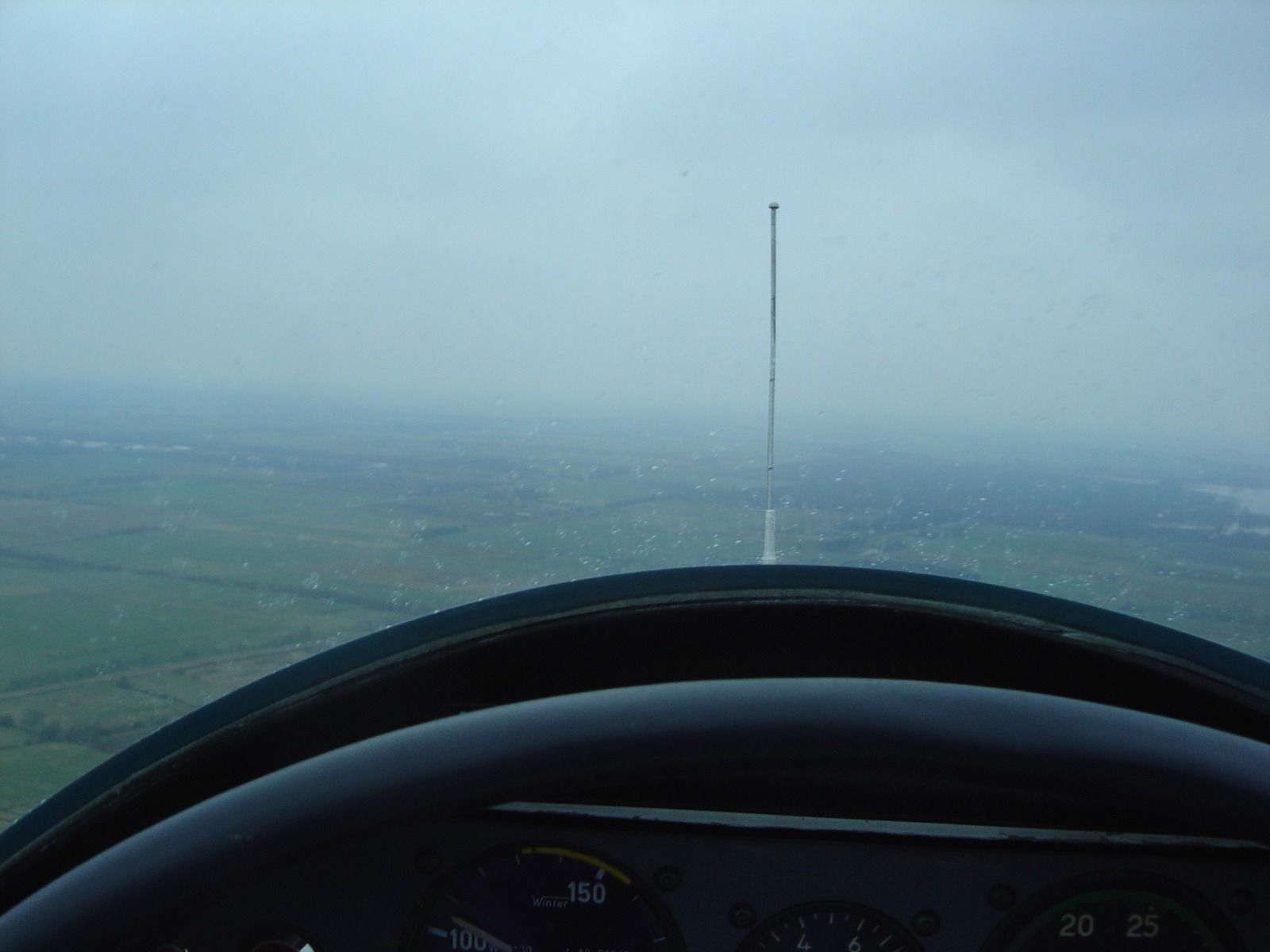
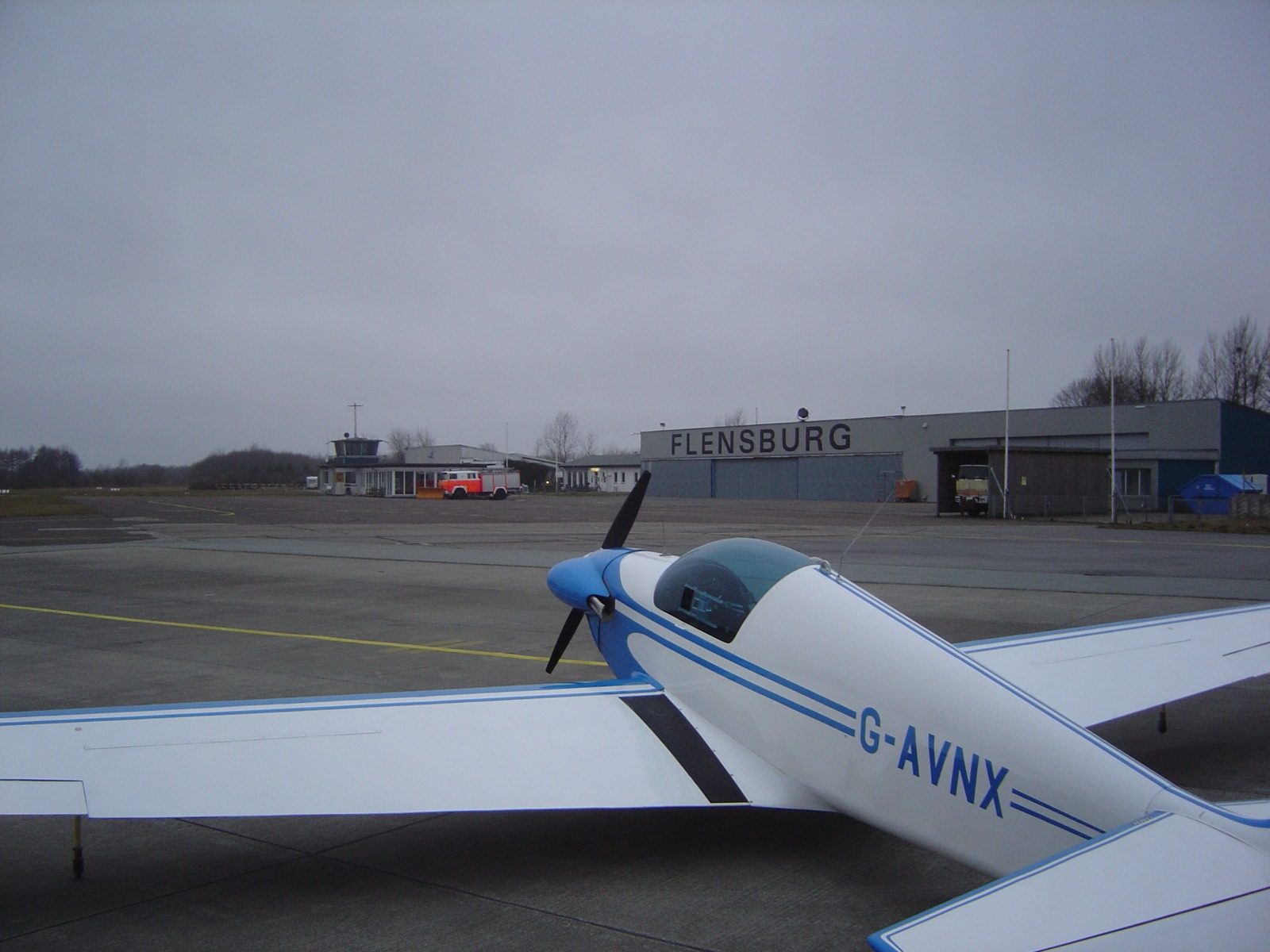
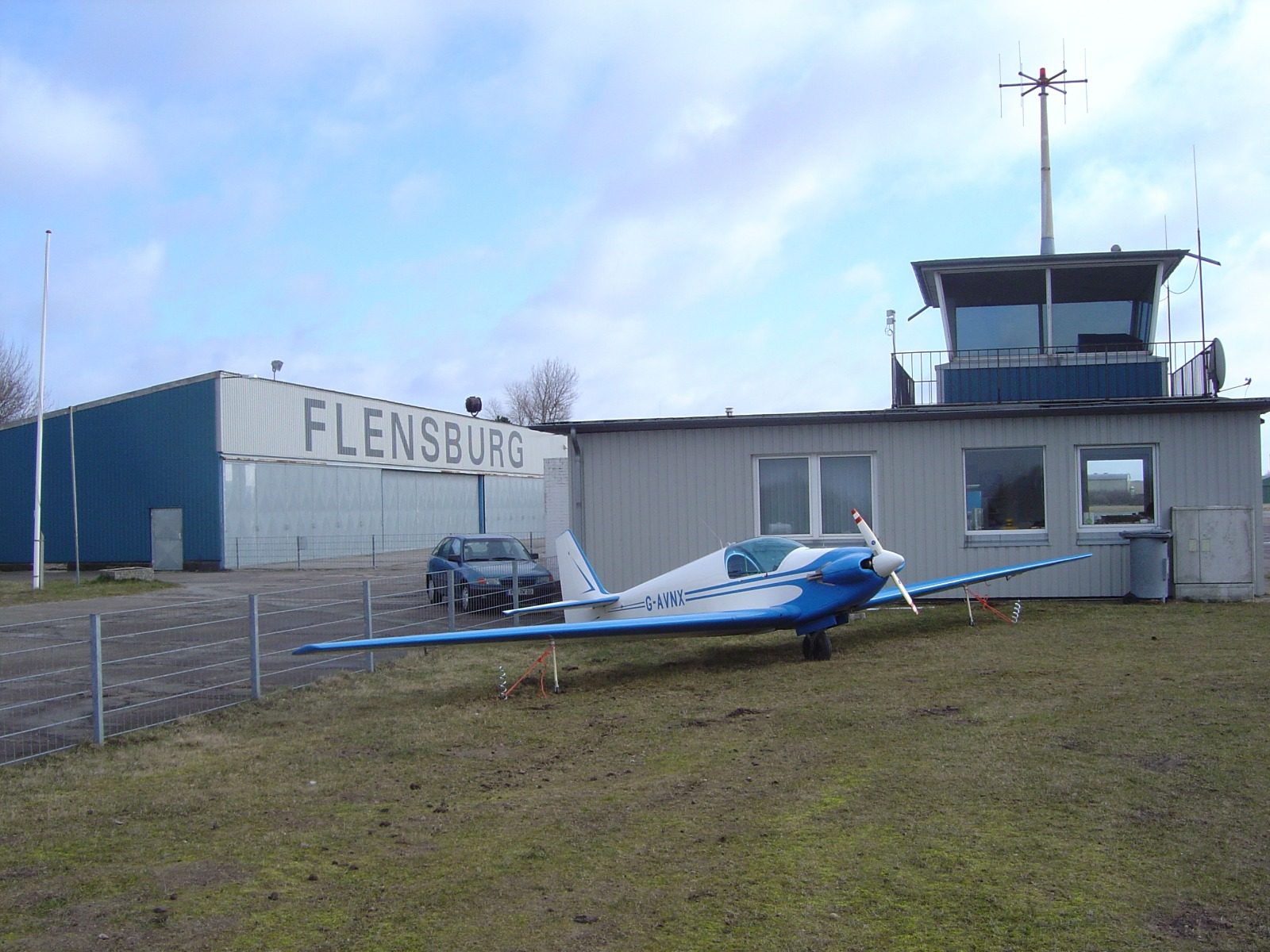
Flensburg confirmed a 1,000‑ft ceiling with no rain, and I pressed on at low level with the voltmeter glowing red again and long since switched to the second battery, uneasily aware of how much I was relying on the GPS. Cutting a corner of the control zone on James's plotted line, I belatedly spotted the chart symbol for a 424‑ft antenna somewhere nearby, and scanned the darkening treeline uneasily until the ground finally began to fall away and Flensburg's Schäferhaus field appeared at two o'clock — though with a lower ceiling than the tower had reported minutes earlier. Advised the grass strip was uncut, I took runway 28 instead, landing in a stiff crosswind that turned out gentler than feared, and rolled out cleanly down the centreline.
Refuelling in the wind was its own small battle, and I anchored the aircraft with borrowed ground stakes behind the terminal building on the advice of the airport manager. A lady finishing up the day's logbook entries drove me into town, recommended a cheap, unglamorous hotel right in the centre, and cheerfully waved off my thanks — "you never know, I might land on your home field one day and need the favour returned." Dinner was a middling halibut in a near‑empty restaurant, followed, in a small act of rebellion against my own principles, by a McDonald's sundae. My mobile phone, mysteriously blocked from working in Germany, allowed just enough of a window to fire off a couple of status texts home before it locked me out entirely.
The Final Crossing: Denmark and Home
The last morning dawned under grey cloud of uncertain height and a gusty south‑easterly. After an awkward moment taxiing — sent the wrong way down a taxiway I couldn't actually use, and then unable to hold a straight line against the crosswind at all — the airport manager came jogging out in his shirtsleeves and slippers, took a firm grip on the wingtip, and walked me down the taxiway and onto the runway himself, entirely unbothered by the cold. I saluted him, slightly sheepishly, on the way past.
Climbing out over the city and the sea, visibility was noticeably better than the previous day, and Flensburg handed me straight through to Copenhagen Control without needing to involve German ATC at all — apparently a known shortcut. Sønderborg, contacted next, cleared me through their zone at 1,000 ft with a warning about a low cloud layer just above me and, a little later, about a rescue helicopter on a training flight nearby, whose pilot reported wryly that he was himself in cloud at the same altitude. I never did see him.
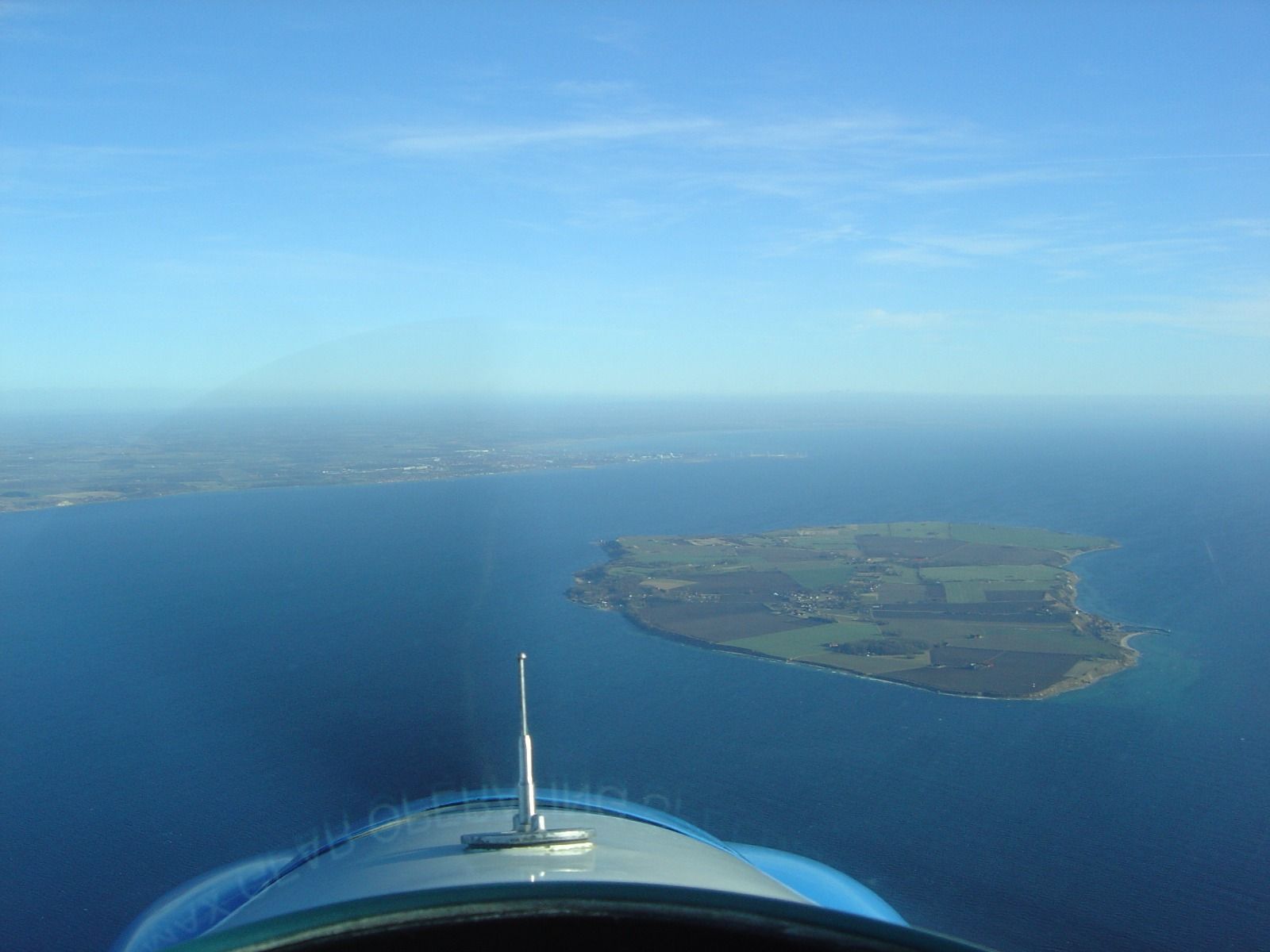
Out over the island of Als and the archipelago beyond, the ten‑kilometre hop across to Ærø felt almost routine — I'd flown the same stretch the previous summer in the Cub during a club tour of Denmark, and however illogical, familiarity took the edge off the water crossing completely. The cloud began breaking into real blue holes as I pressed on towards southern Funen, climbing to nearly 1,500 ft, and by the time I reached the Great Belt Bridge I was up at 2,500 ft over a scattering of small clouds, with a vast blue gap opening ahead over Zealand.
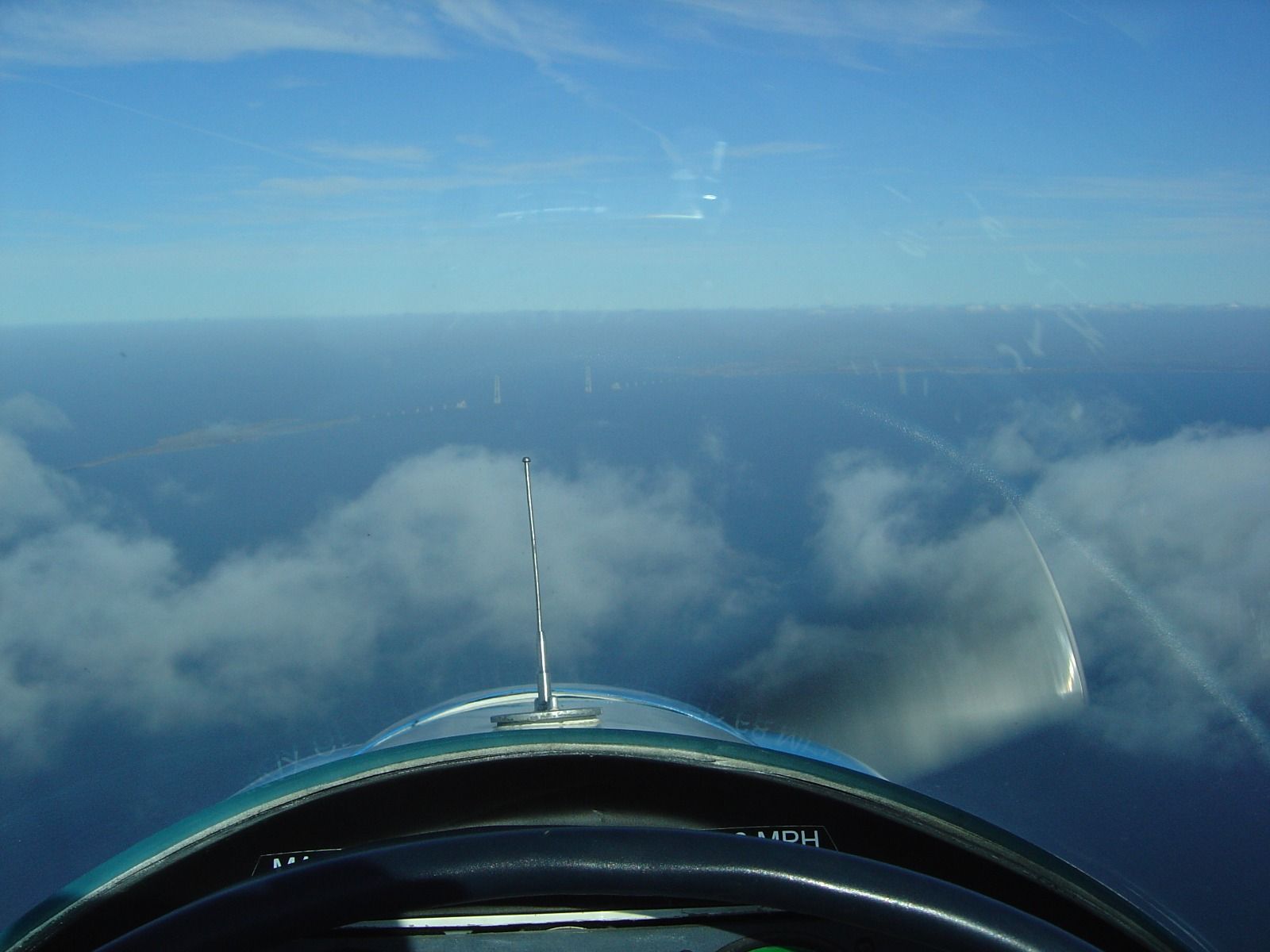
Handed from Copenhagen Control to Roskilde and back again as I skirted the edges of the Copenhagen TMA, I asked Kastrup Approach for a climb to 2,500 ft to cross the Øresund with a little more margin — a formality, really, since it's barely ten kilometres from the Danish coast to the island of Ven, and less again from Ven to Sweden. It was, all the same, an indescribable relief to watch the Swedish coastline resolve out of the haze. I couldn't resist a steep turn to get the little island of Ven — sitting in the strait "like a jewel," as it always does in decent light — into a photograph, which earned me a slightly terse instruction from Kastrup to descend and clear their frequency; whether for annoyance at the manoeuvre or simple traffic separation, I never found out.
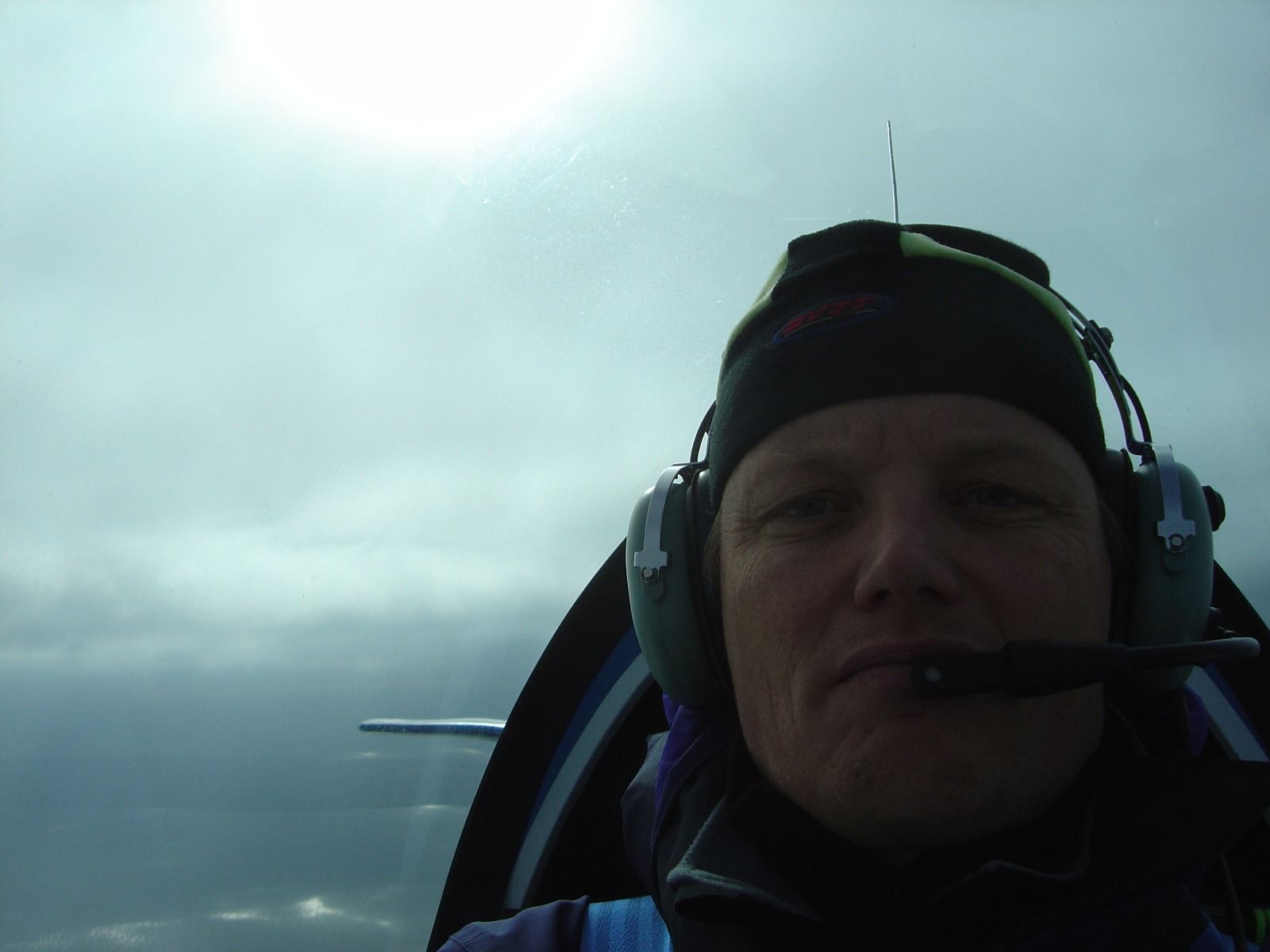
Unable to recall Malmö Control's frequency, I called Sturup instead, closed my flight plan with a cheerful young controller, and crossed the coast near Landskrona — home, at last. I flew on past Viarp towards Eslöv to check for hangar space, but circling at 500 ft I caught the unmistakable glint of standing water on the grass strip and decided against it, muttering to myself that I hadn't flown all the way from England just to nose the aircraft into a waterlogged field. I turned back for Landskrona's tarmac instead, landed without drama after two hours and twenty minutes in the air, and taxied in to park by the fuel pumps. A club member ran me to the station, where I called Mattias at what we'd taken to calling "Stångby Control" and sent James a text to let him know I was down safely, on Swedish soil, in one piece.
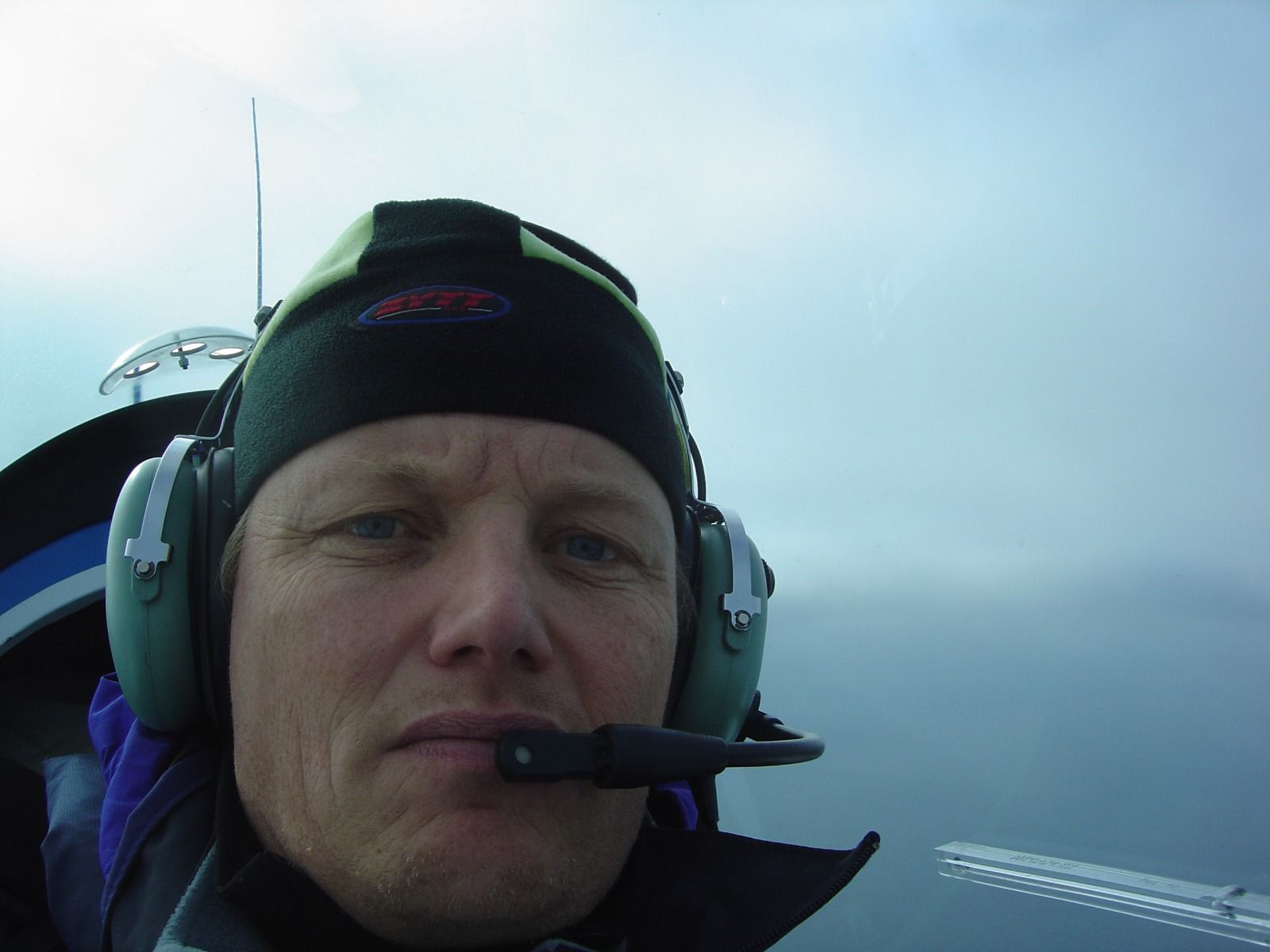
The Last Few Kilometres
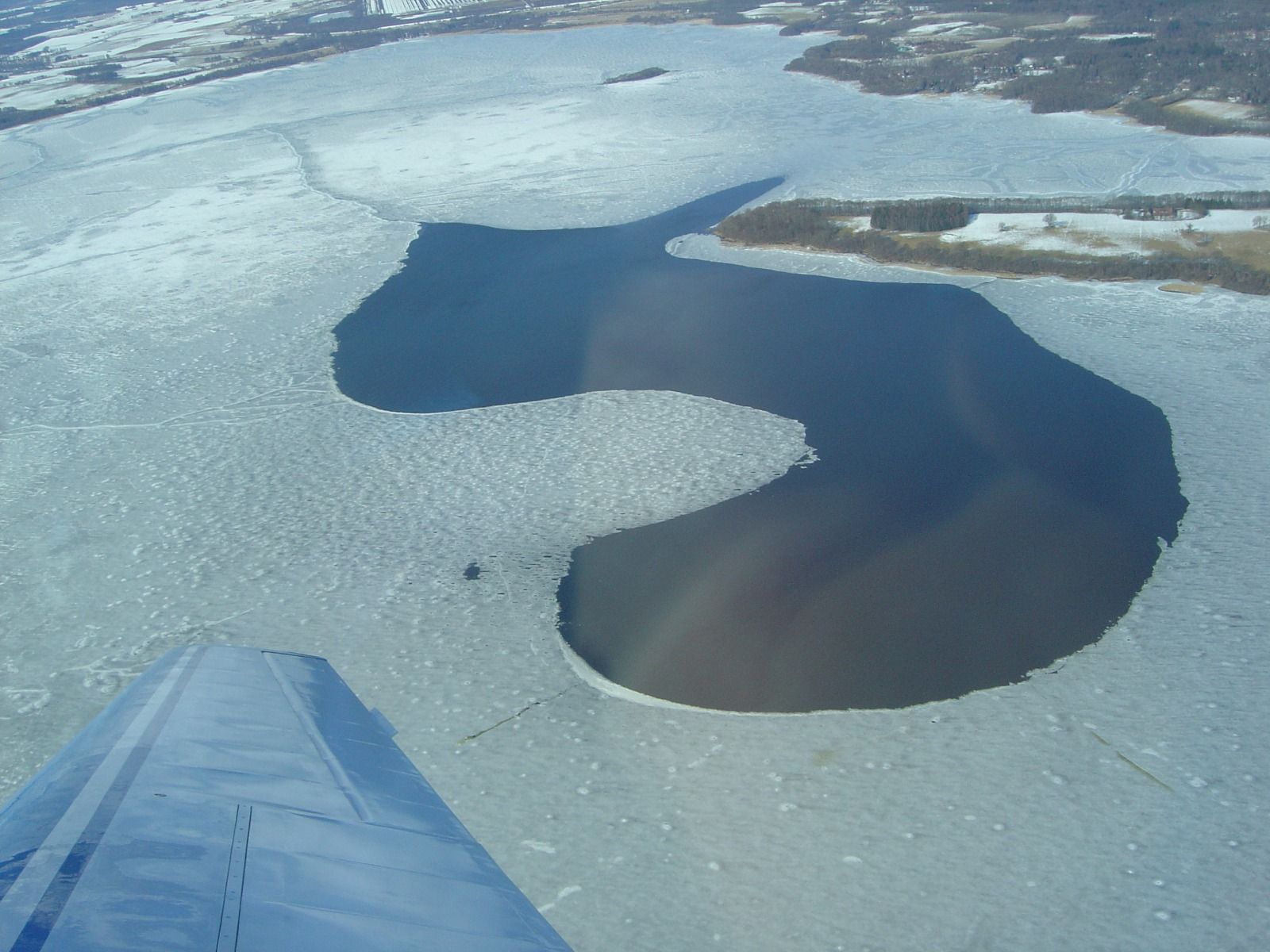
The next day I drove out to Bjällerup to check the runway — dry, with a steady but manageable crosswind — then cycled to Lund and took the train to Häljarp, where Ulf Axelsson, the RF 4's previous owner, met me and drove out to Landskrona‑Viarp. After Ulf had given the aircraft the requisite once‑over of appreciative noises, I refuelled and took off for the very last leg, with the temperature still below freezing and the air beautifully clear. I flew a detour up over the Ringsjön lakes to check the ice — Östra Ringsjön solidly frozen, Västra Ringsjön showing a large patch of open water at its northern end — before turning south for Bjällerup.
I skirted the edge of the Sturup control zone, circled a roundabout at its north‑west corner rather more than strictly necessary — well aware a friend was watching from his office window at the Ericsson building nearby — and called up Sturup for clearance into Bjällerup.
“Hasslanda, 1,000 feet, for landing at Bjällerup, Niklas Xerxes,” I requested.
“Niklas Xerxes, cleared into Bjällerup below 1,500 feet, QNH 1027.”
I flew an initial pass over the field to check the wind, found it steady, and set up a clean second circuit. The landing itself went perfectly — but the moment the aircraft rolled to a stop, it weather‑vaned hard into the wind and simply would not be persuaded to taxi, swinging insistently out towards the surrounding farmland no matter what I tried. Climbing out to investigate, I discovered why: both tailwheel springs were missing, which explained a great deal about the awkward ground handling all the way from England. There was nothing for it but to push the RF 4 the last four hundred metres to the hangar by hand, through thick grass, thoroughly out of breath by the time it slid neatly into place.
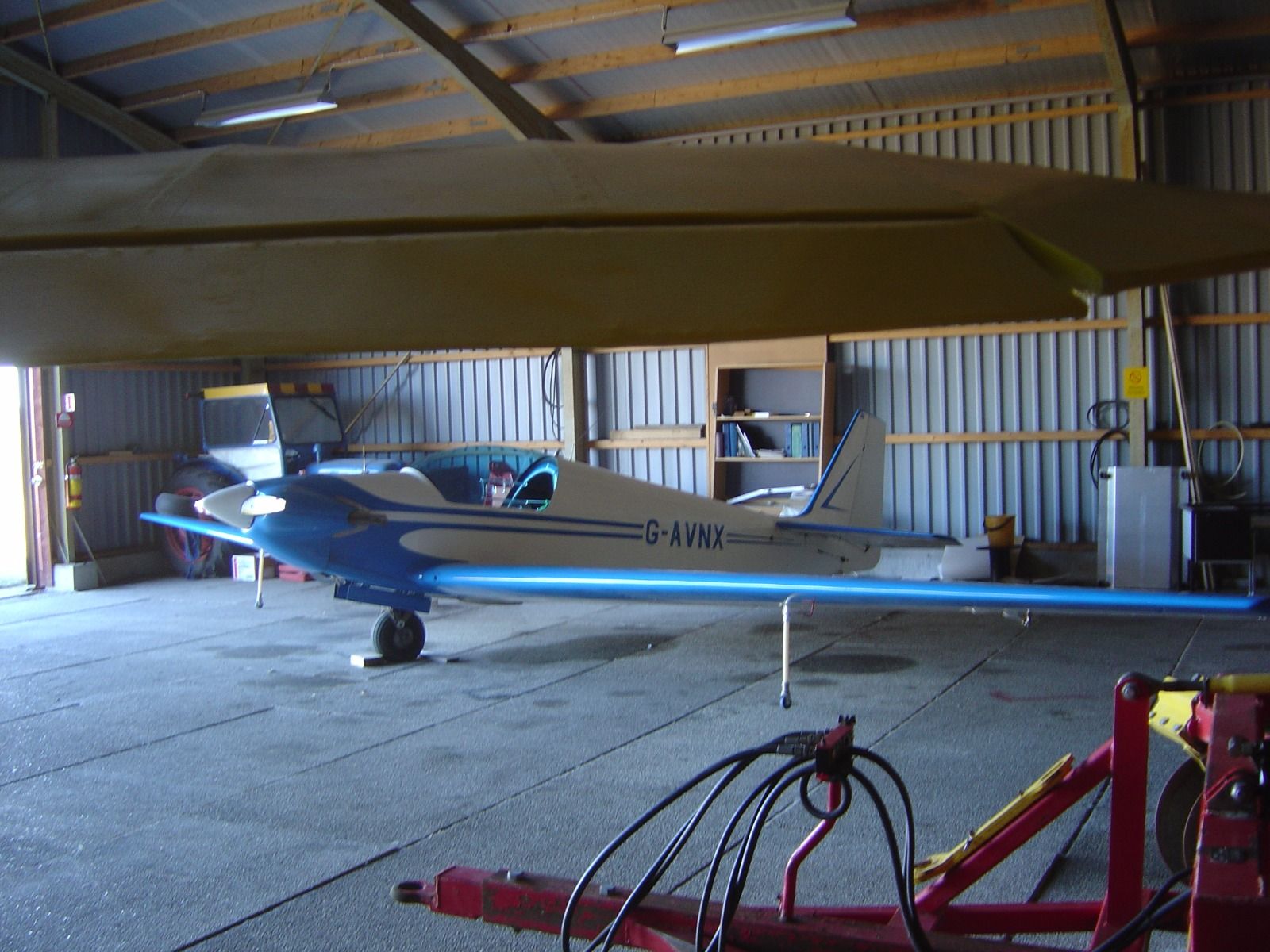
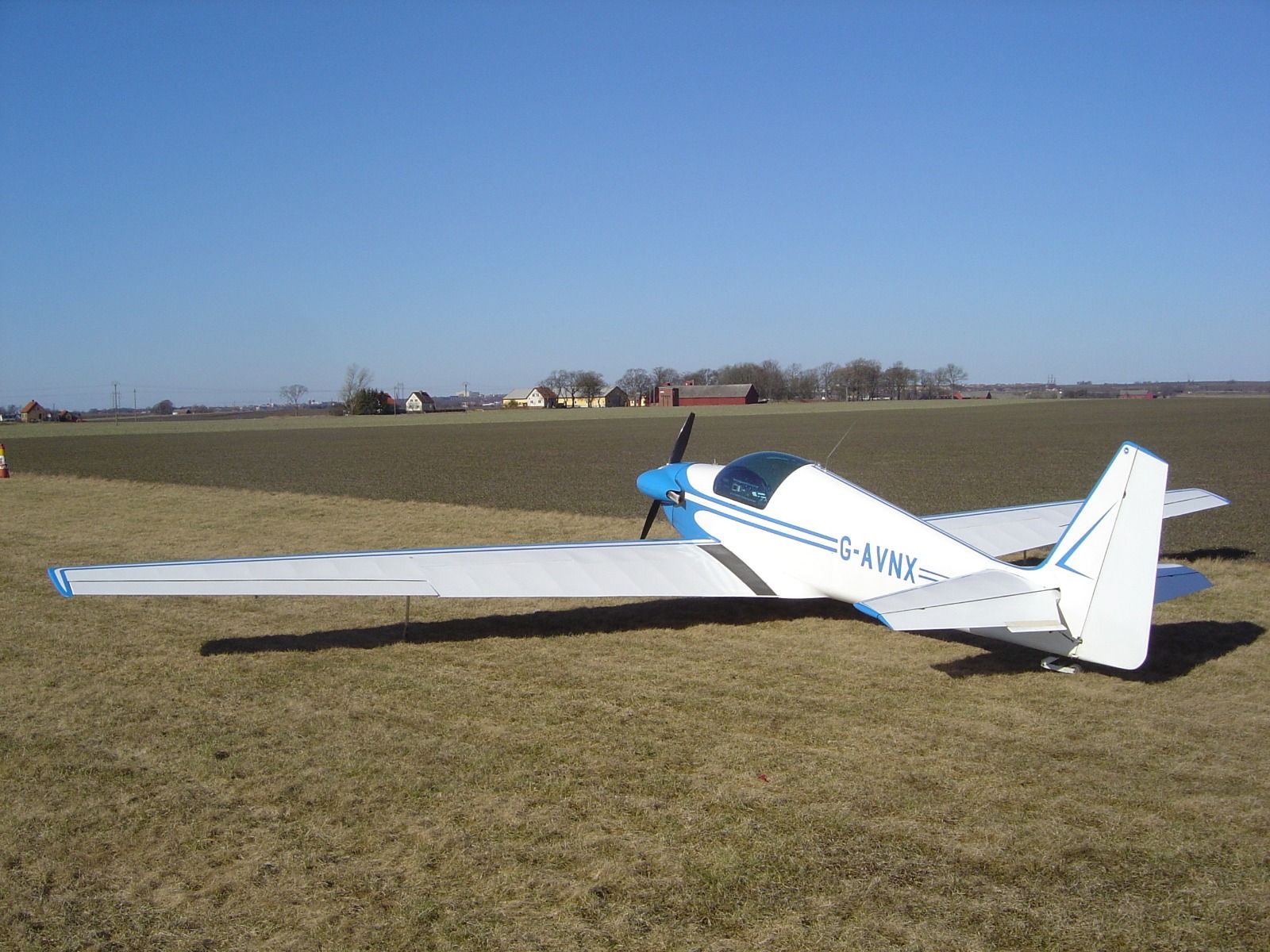
My phone buzzed — Mattias, who'd evidently been keeping watch, with a text that simply read: "Awesome!!!" Thoroughly satisfied, I closed up the hangar and texted James the news, including the small matter of the vanished tailwheel springs. His reply came back almost instantly: "God, you must have been flying low! Those springs are off a bed at Bicester — I'll get you some new ones. Have a good trip to the US, we're off to find some sun. The weather here is terrible…"