Flew beautifully, never got certified
While waiting on German state funding for the RF6, Sportavia tried to answer aerobatic pilots asking for a shorter-span, more powerful single-seater. Fournier's design office put around 1,800 hours into it, and the RF7 flew for the first time on 26 February 1970 — a complete technical success by every account.
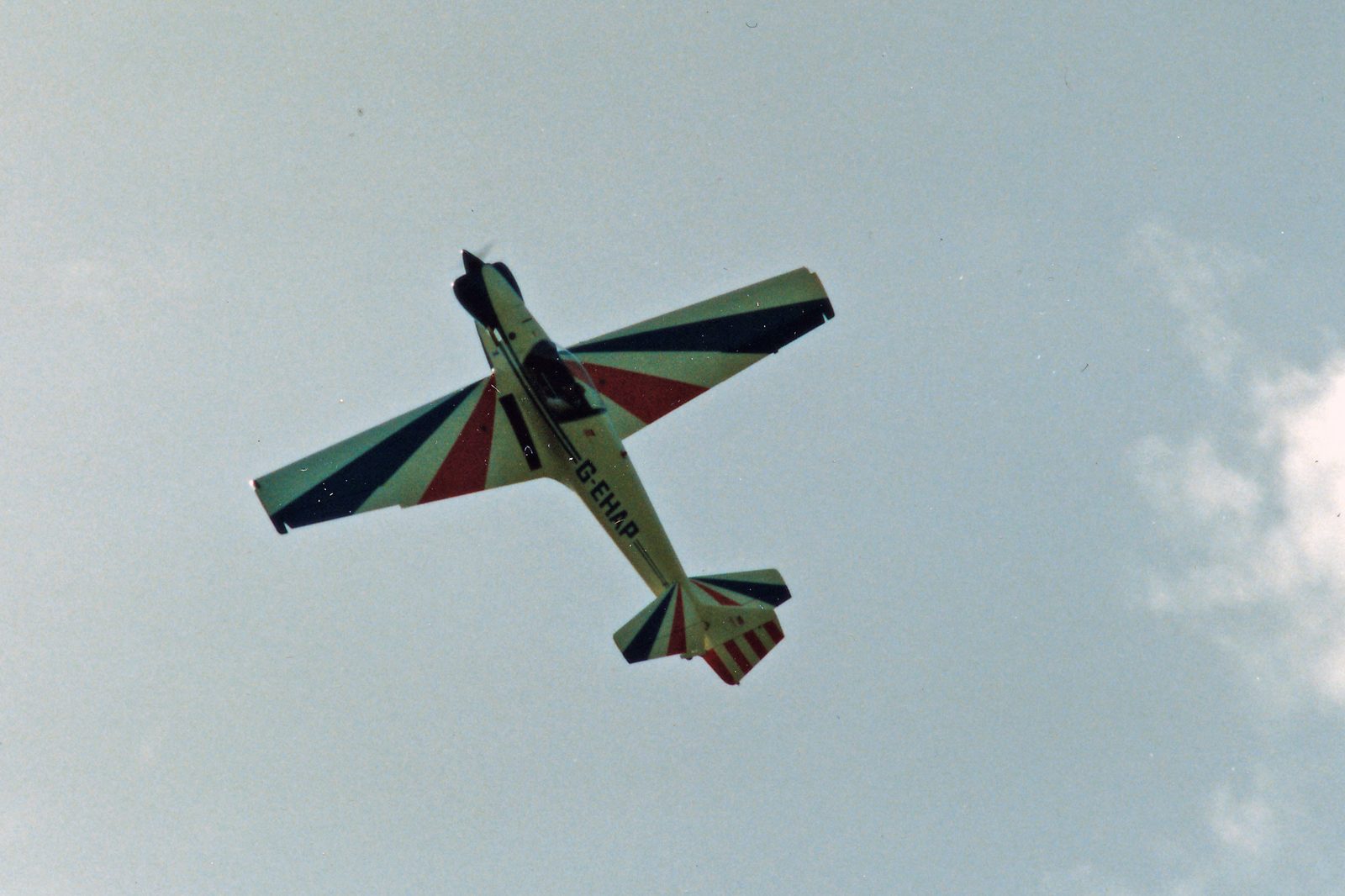
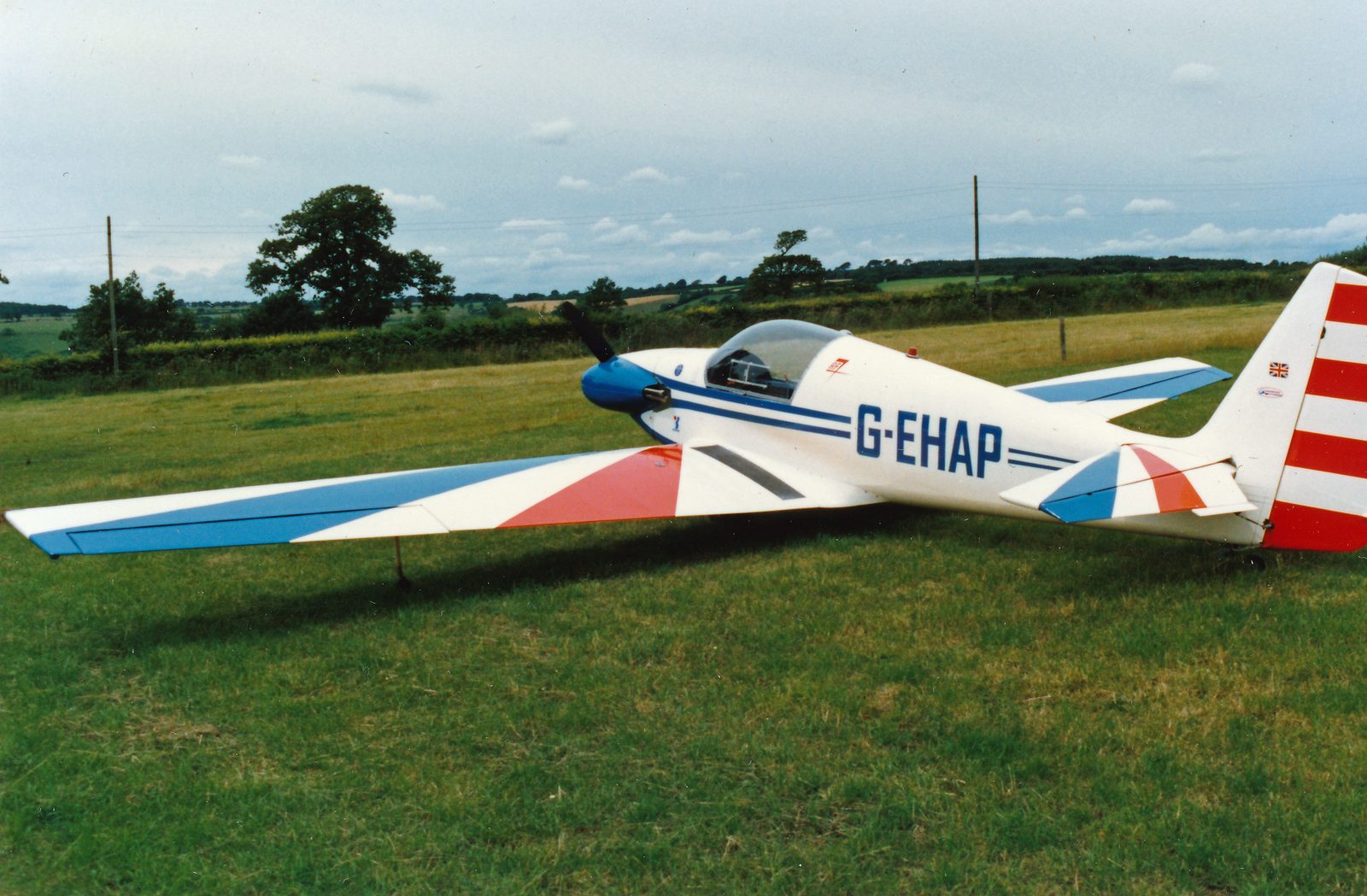
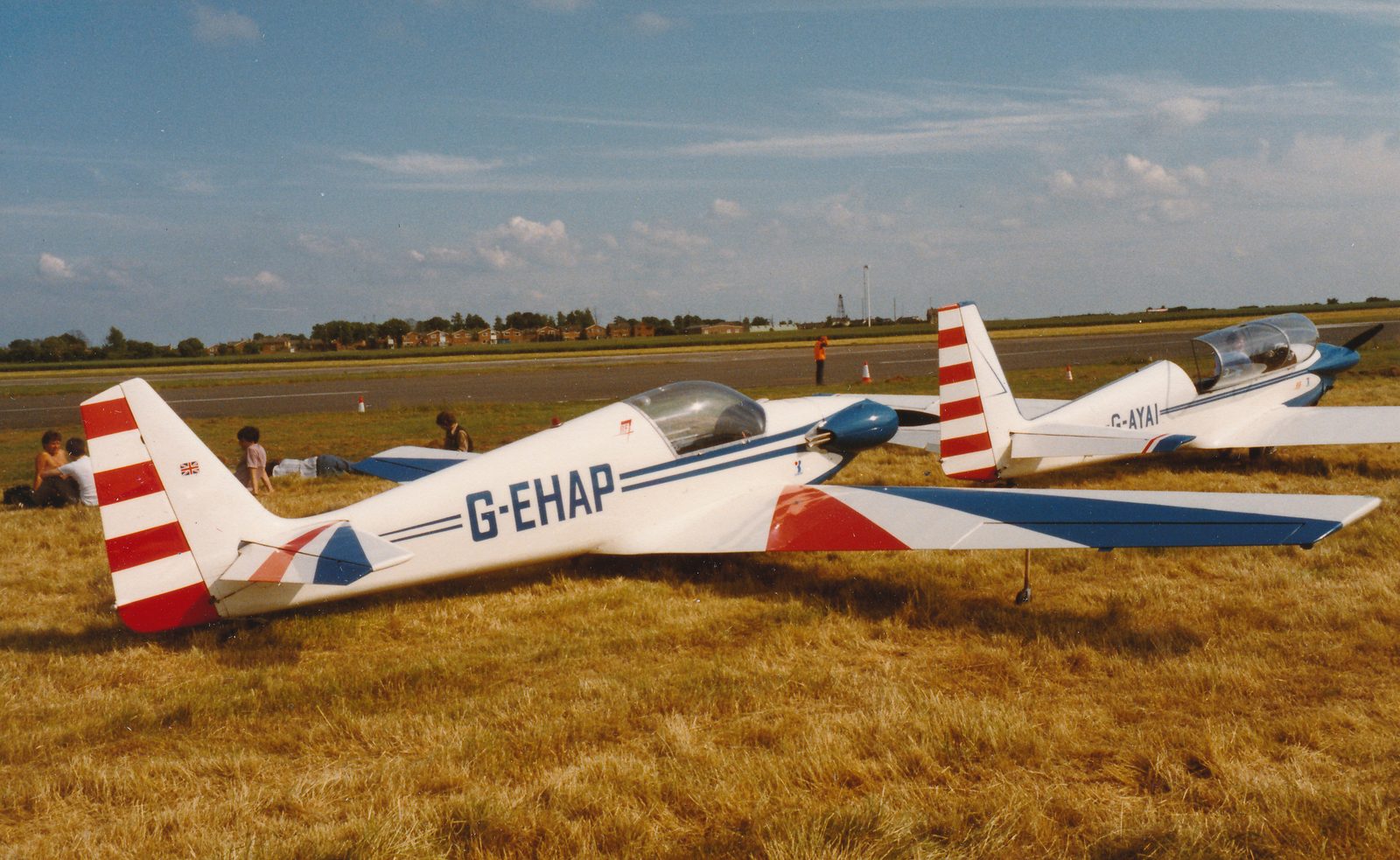
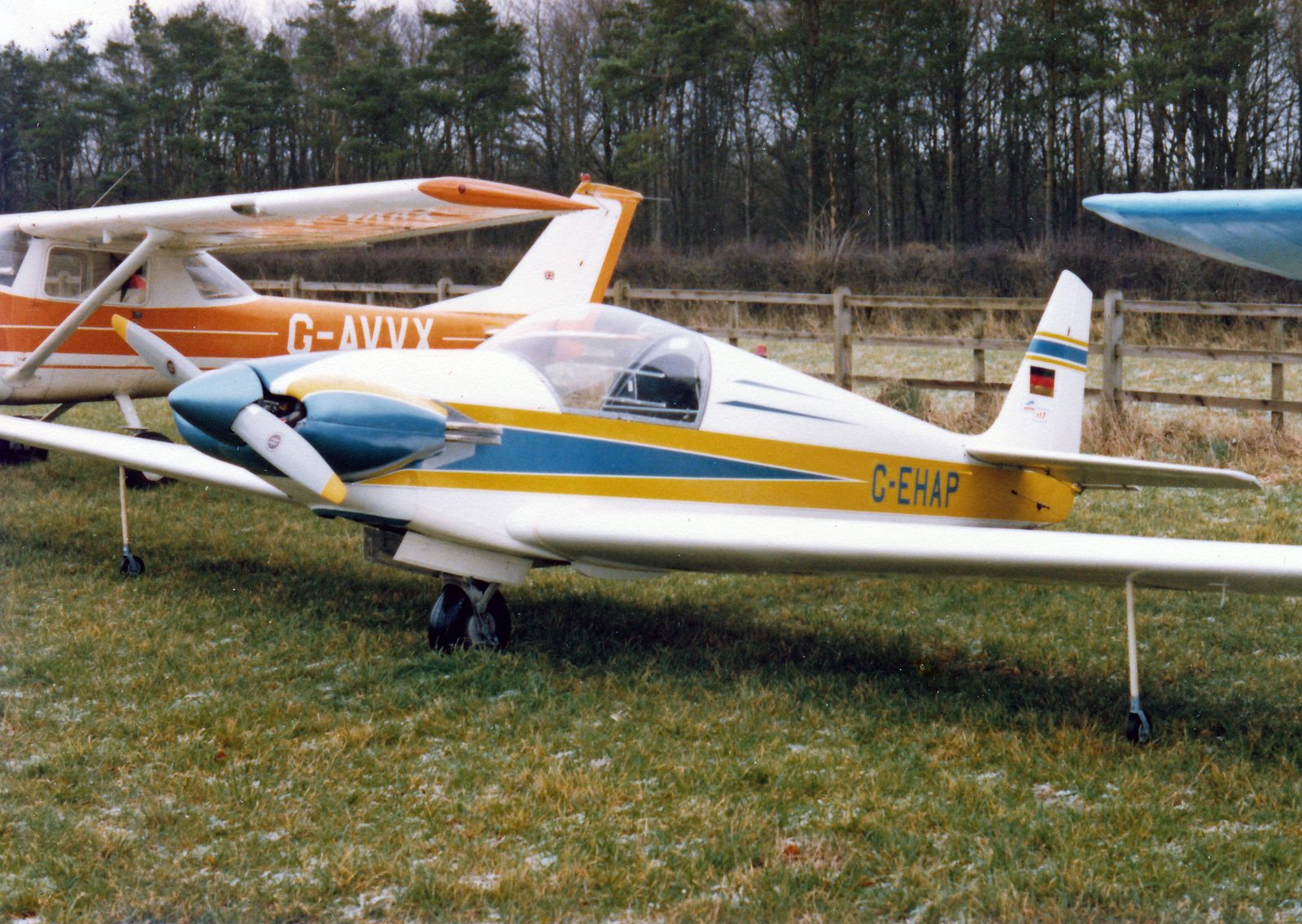
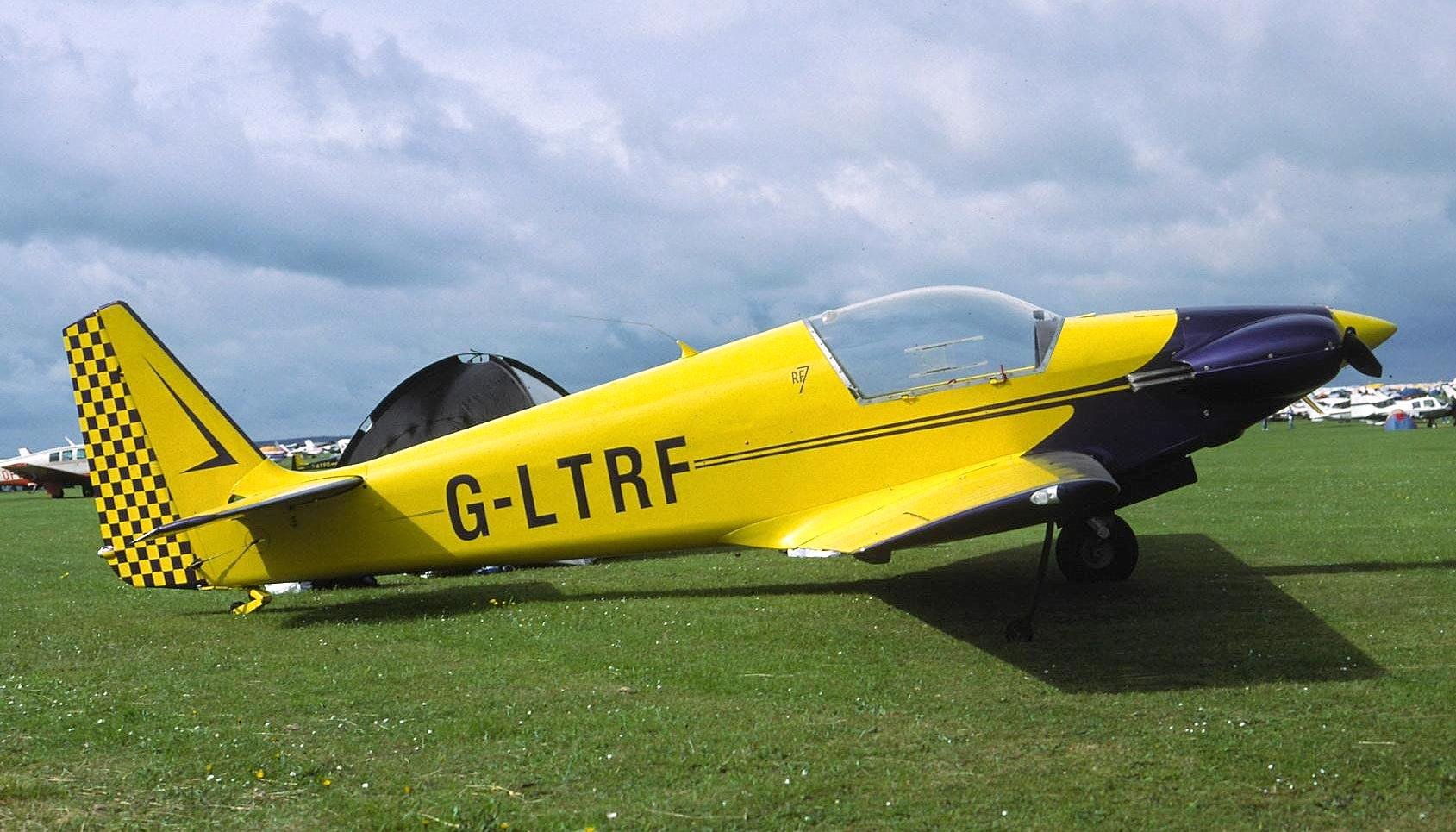
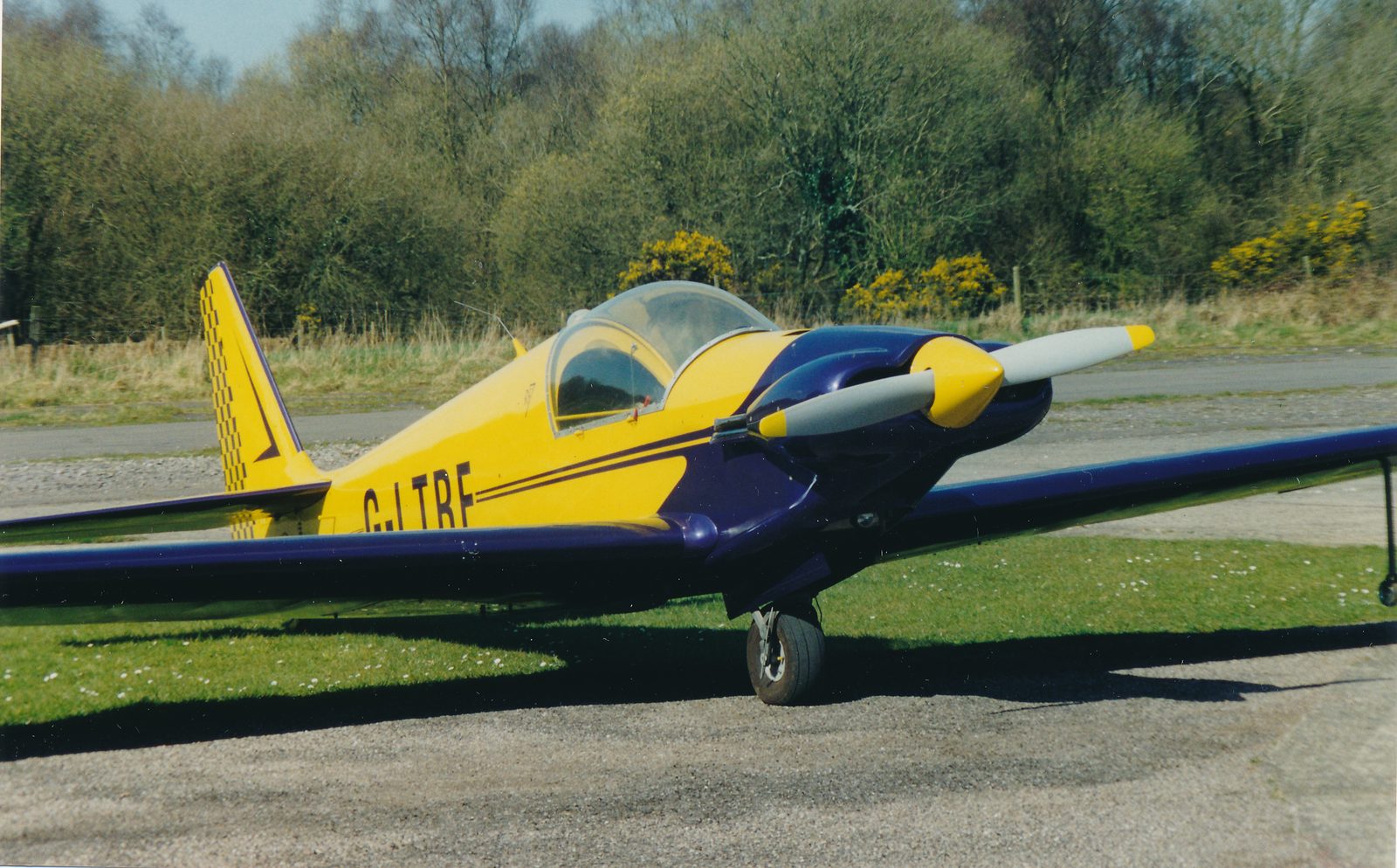
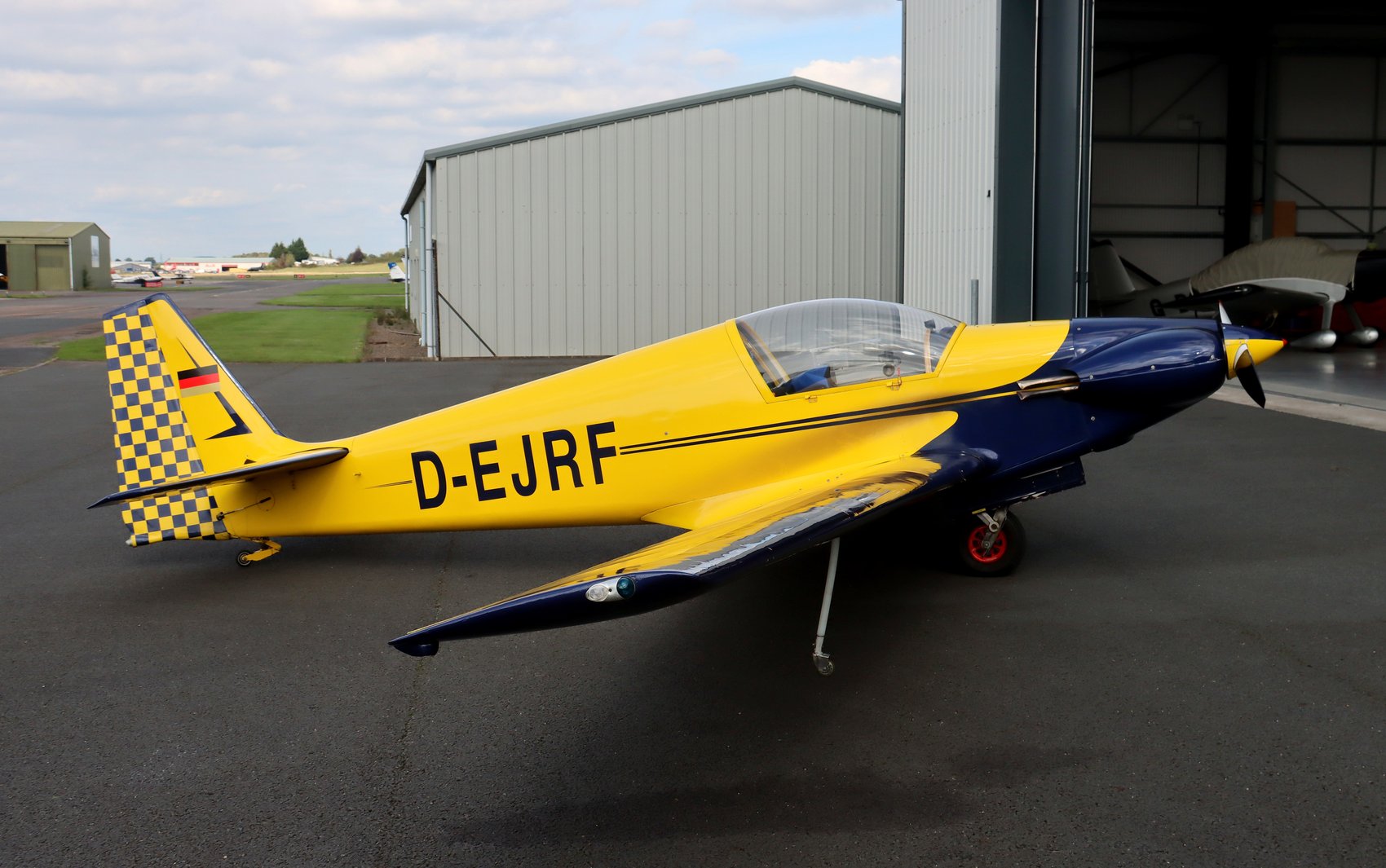
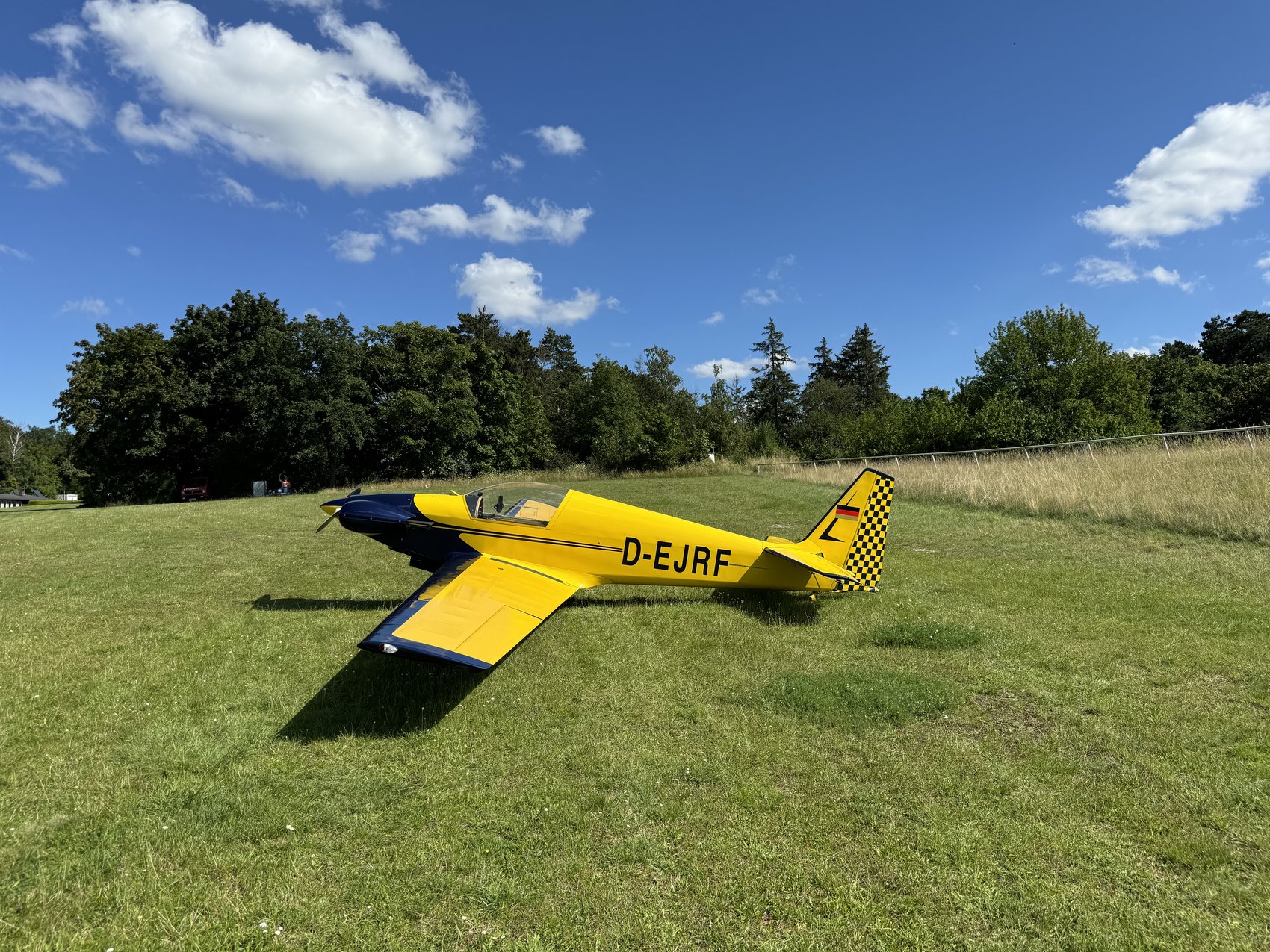
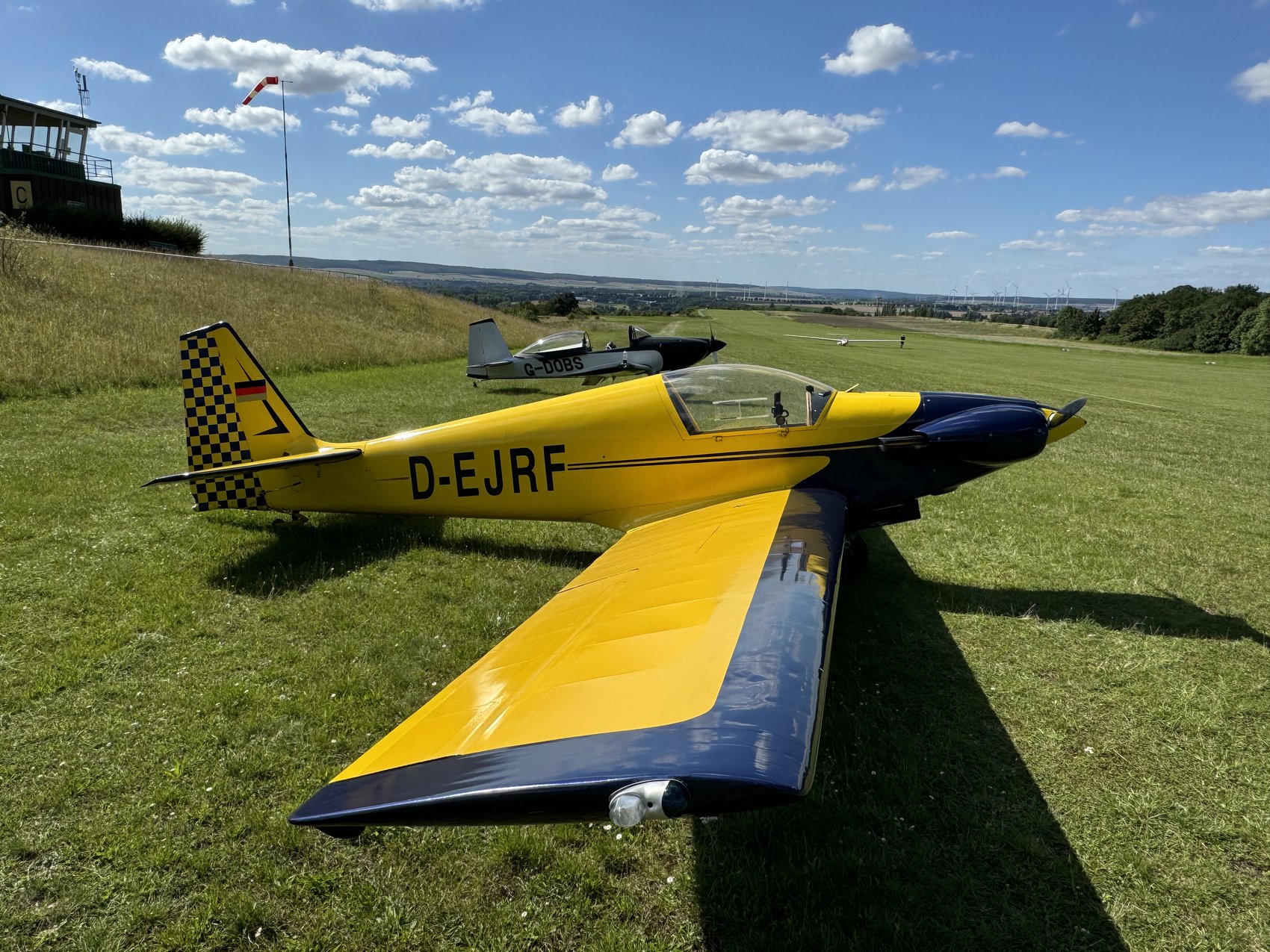
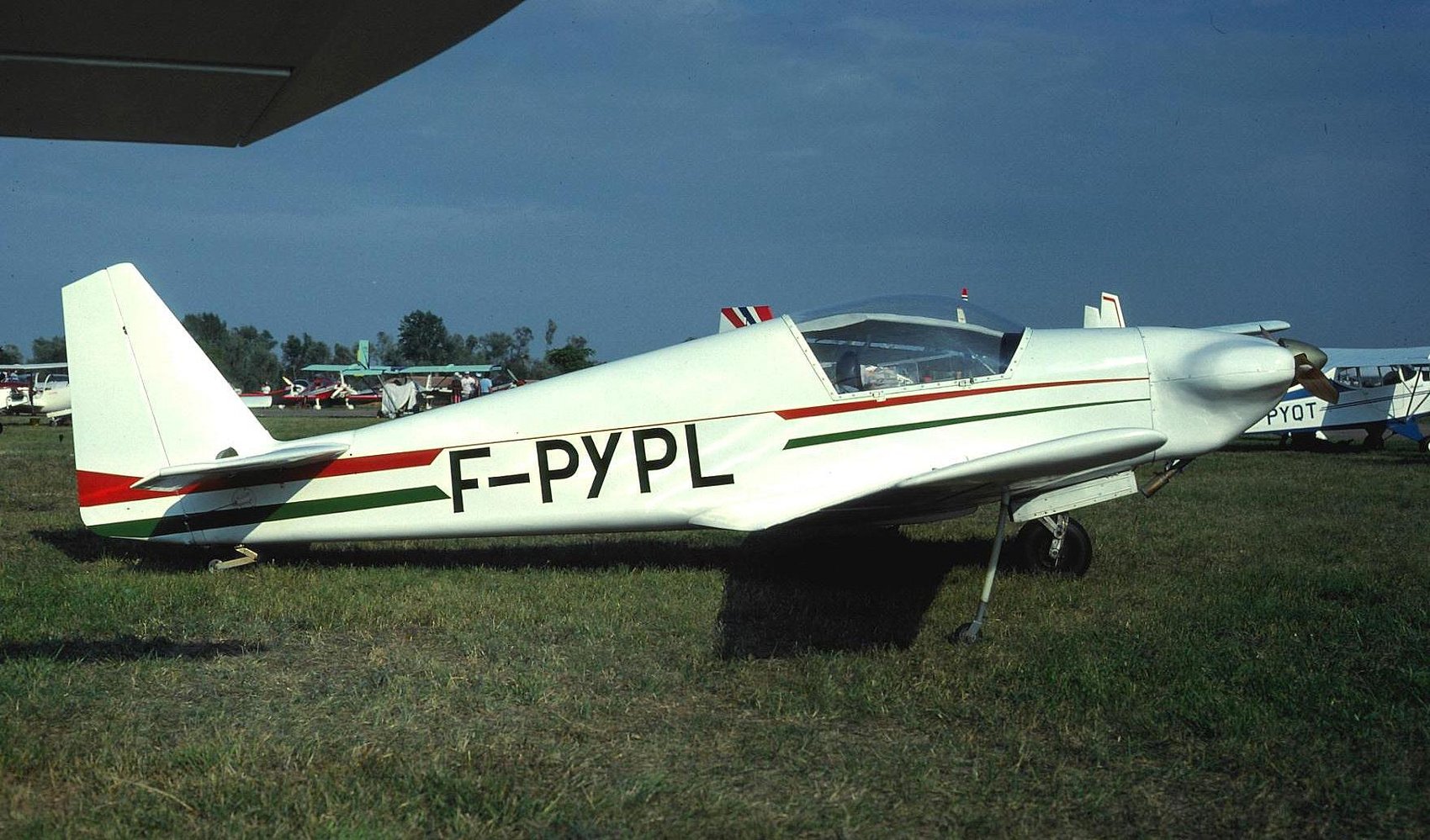
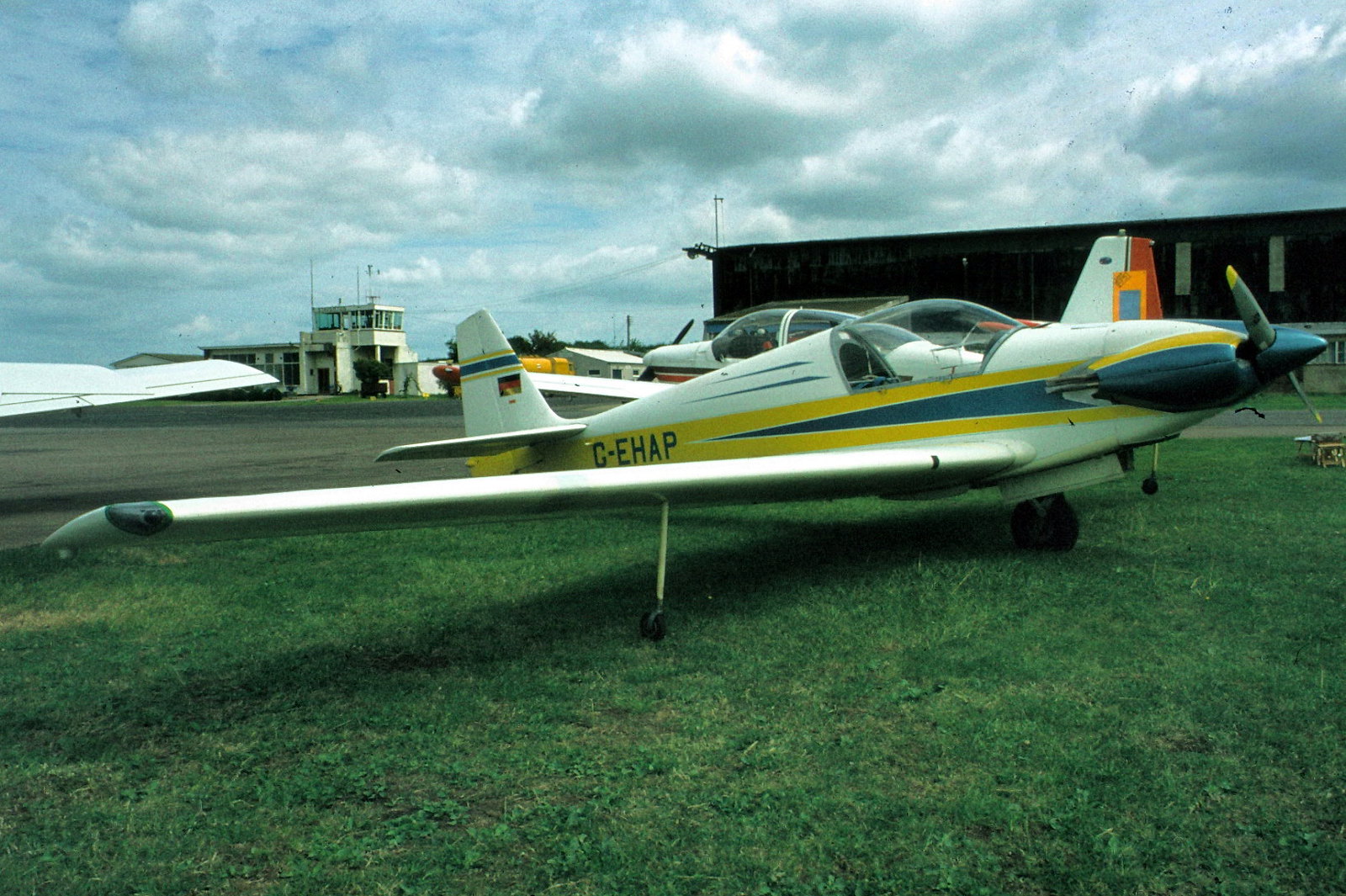
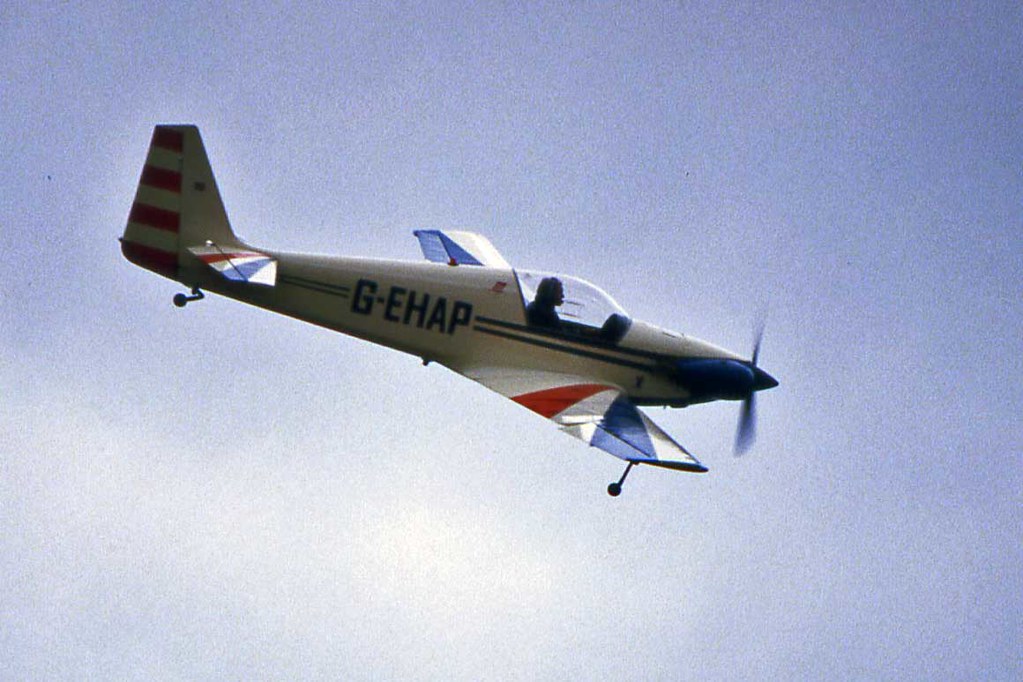
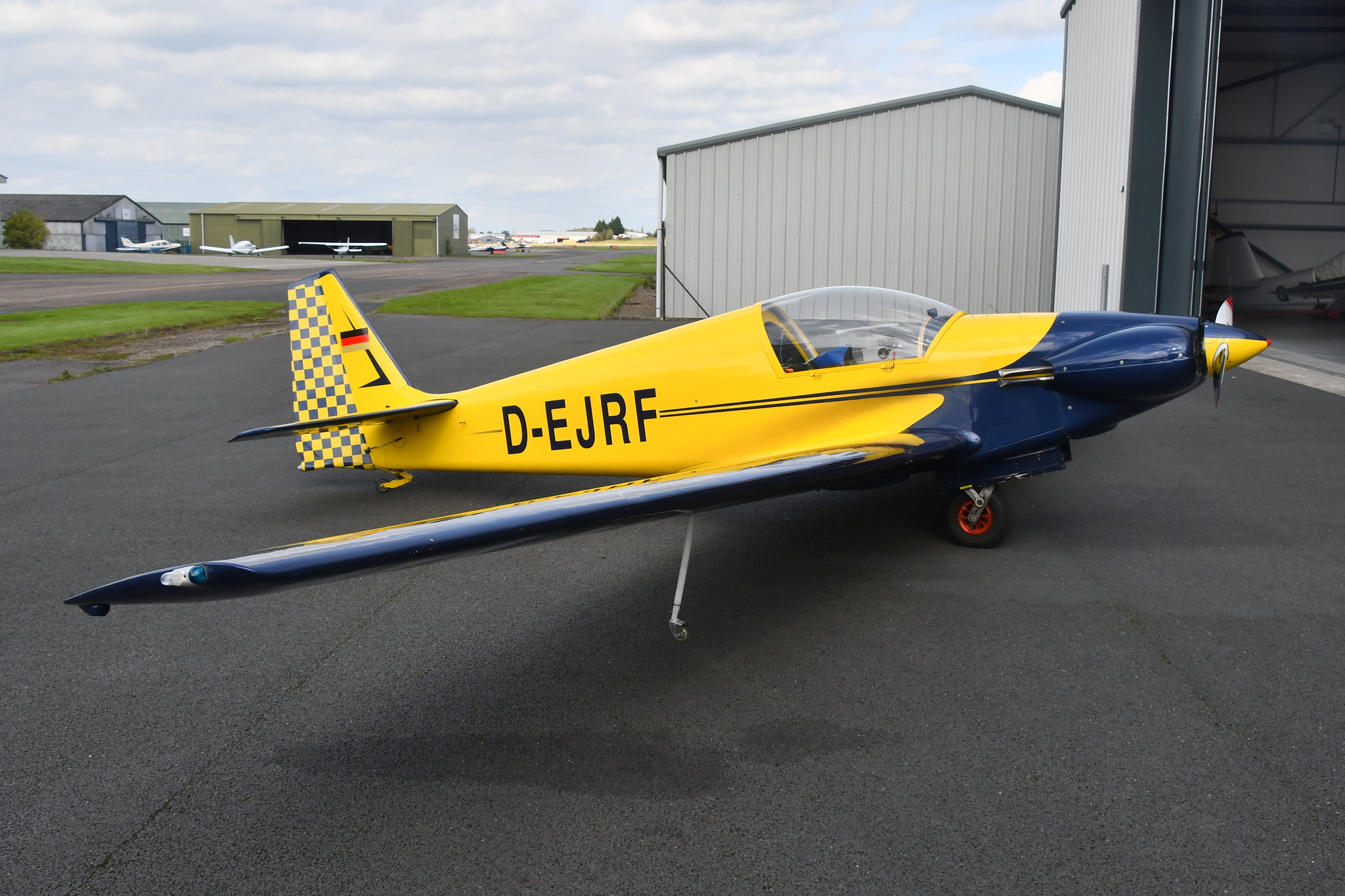
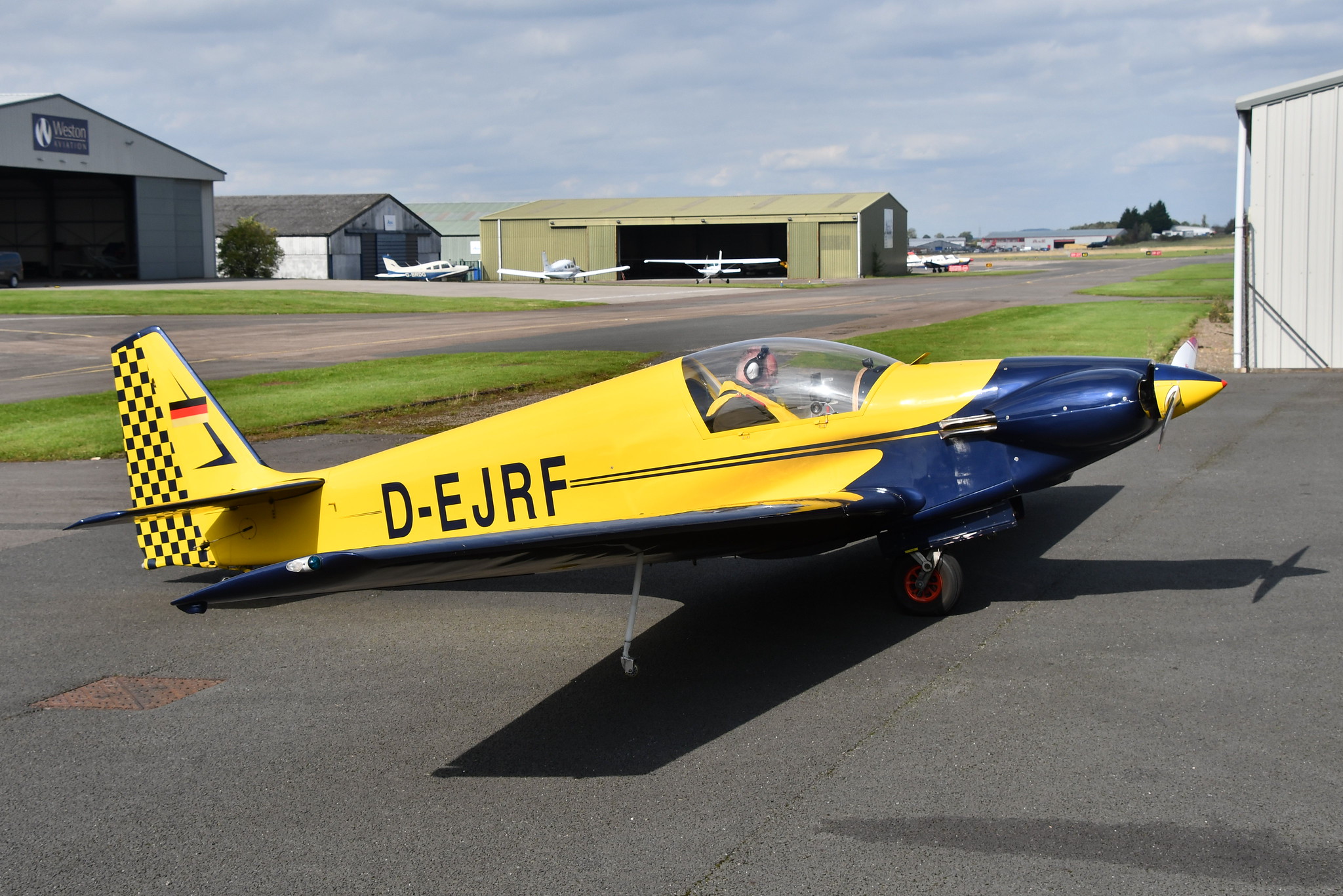
Certification was refused anyway. The RF7's 60hp Volkswagen-derived engine, though sound, didn't have the dual ignition system that certification standards of the day required. The prototype, registered F-WPXV, was shown at the 1970 Hanover Air Show the following month, where Flight International praised the quality of its finish despite its early-build status. By 1971 Sportavia-Pützer had abandoned series production and hoped to sell the design in kit form instead; by 1978 development had stopped entirely and the prototype was offered for sale. That prototype — serial no. 1, and the only RF7 built as a production aircraft rather than from a kit — went on to a long life in Britain: registered D-EHAP in Germany, then G-EHAP in the UK from 1979, photographed here at Leicester in 1980 and at Henstridge in 1982. It became G-LTRF in December 1997, keeping that mark for the yellow-and-purple scheme photographed at Cranfield in 2002. It later carried the German registration D-EJRF, in the yellow-and-navy scheme photographed at Staverton in October 2024, before returning to the UK register as G-EHAP, the mark it carries now while it is rebuilt. Correction: this page previously described D-EJRF as a separate, still-flying amateur-built example — that was wrong; it is the prototype itself, and photographs supplied since confirm the sequence above. Two other RF7s were built from kits rather than as production aircraft: F-PSIR, photographed in the gallery below, and serial no. 3, F-PYPL, photographed at Brienne in 1984.
Have a correction, a source, or a first-hand account of this type? The Articles Articles section and the contact page are both open for contributions.
Every individual Fournier deserves a history of its own. This type page is the starting point; verified registration, restoration and ownership milestones can be added as the archive grows.
| On the UK register · under rebuild |
|---|
| G-EHAP (was G-LTRF) · Rebuild project → |
Registered June 1979 as G-EHAP; re-registered G-LTRF in December 1997 — same airframe (msn 7001) throughout. It is now G-EHAP and is being rebuilt — see the restoration project. Registrations from the club's UK list revised 13 September 2026 — not a live feed. Check CAA G-INFO for current status.
The prototype through its life and marks — G-EHAP, G-LTRF, D-EJRF and back to G-EHAP — plus the two separate amateur-built look-alikes, F-PSIR and F-PYPL.
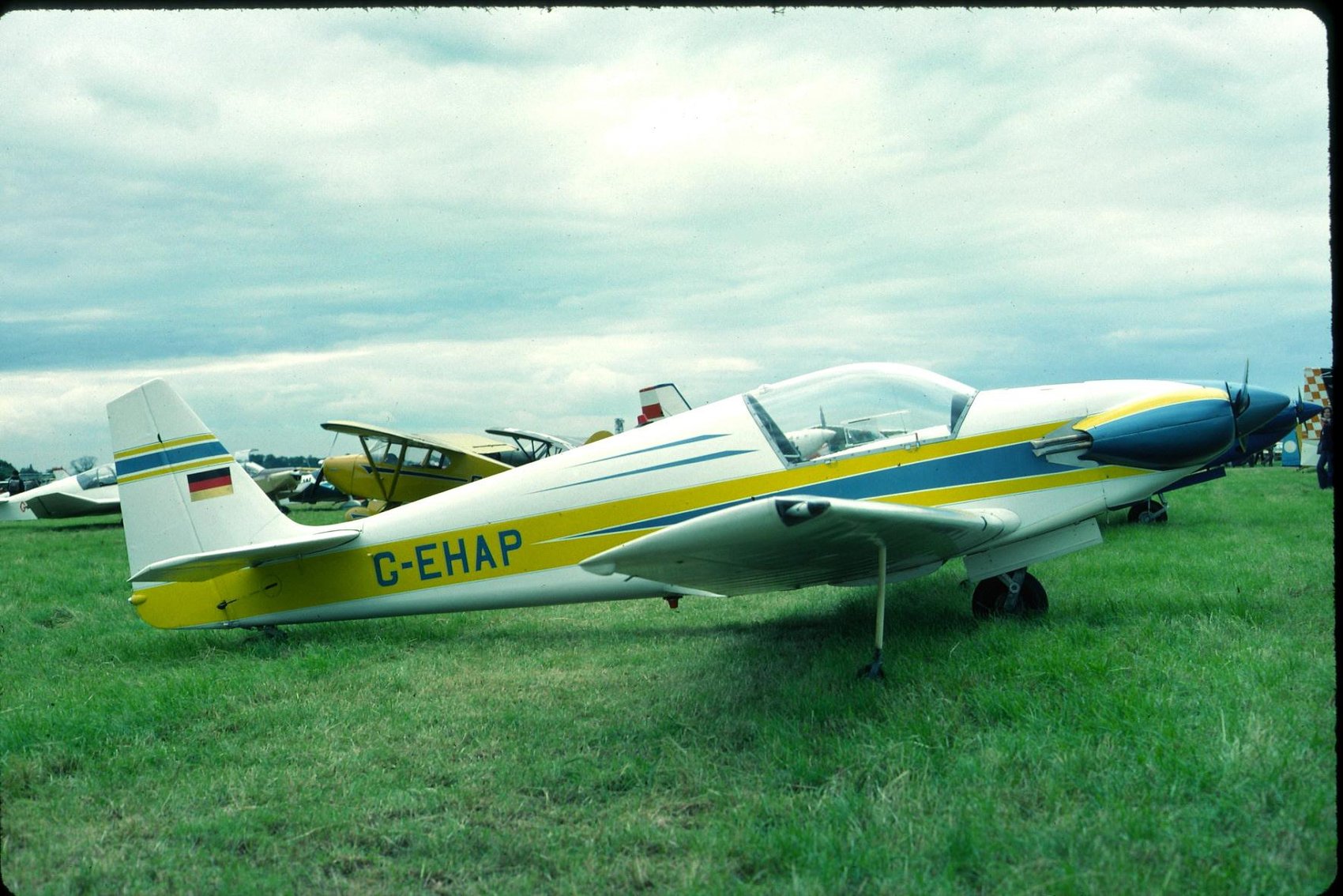
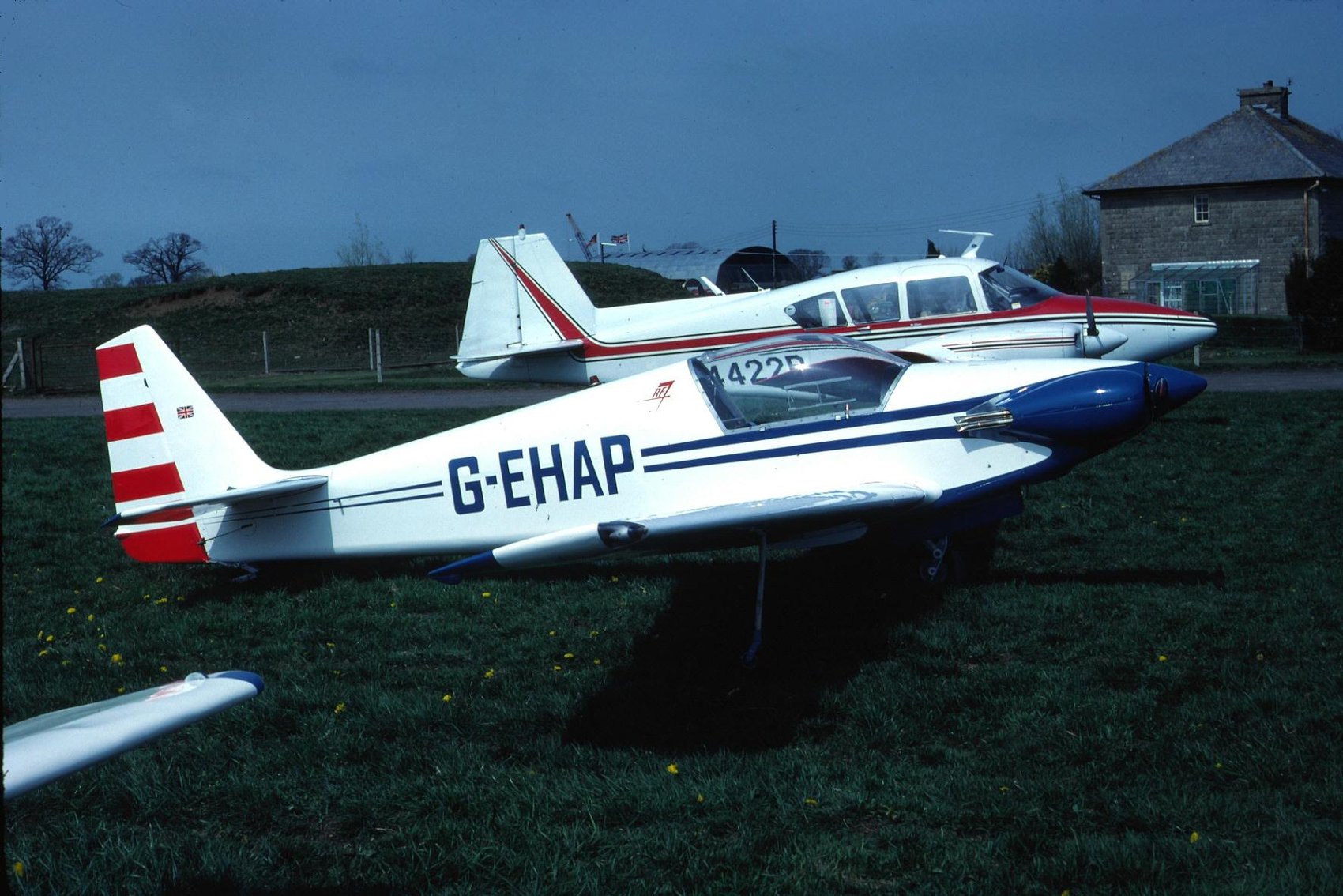
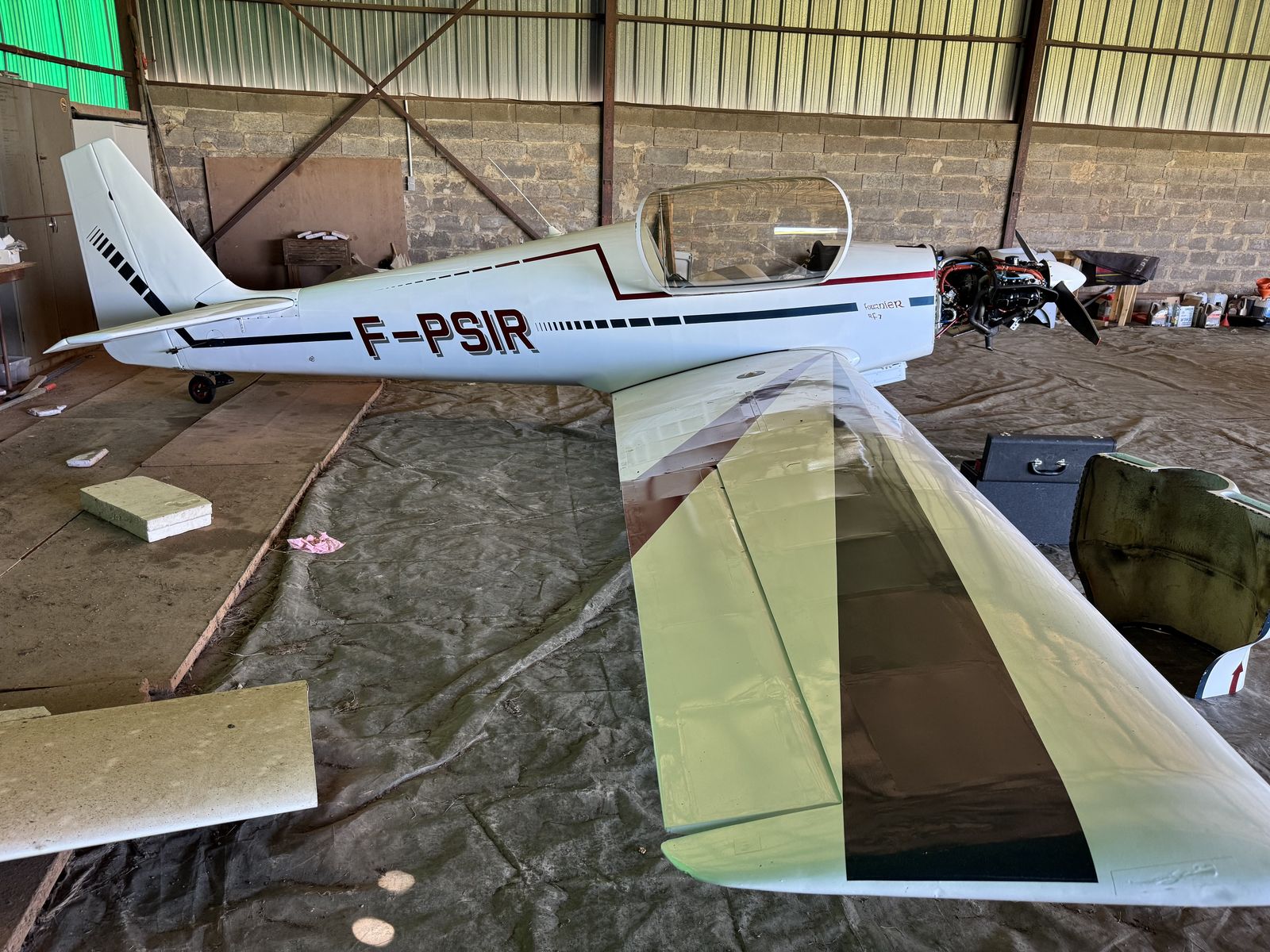
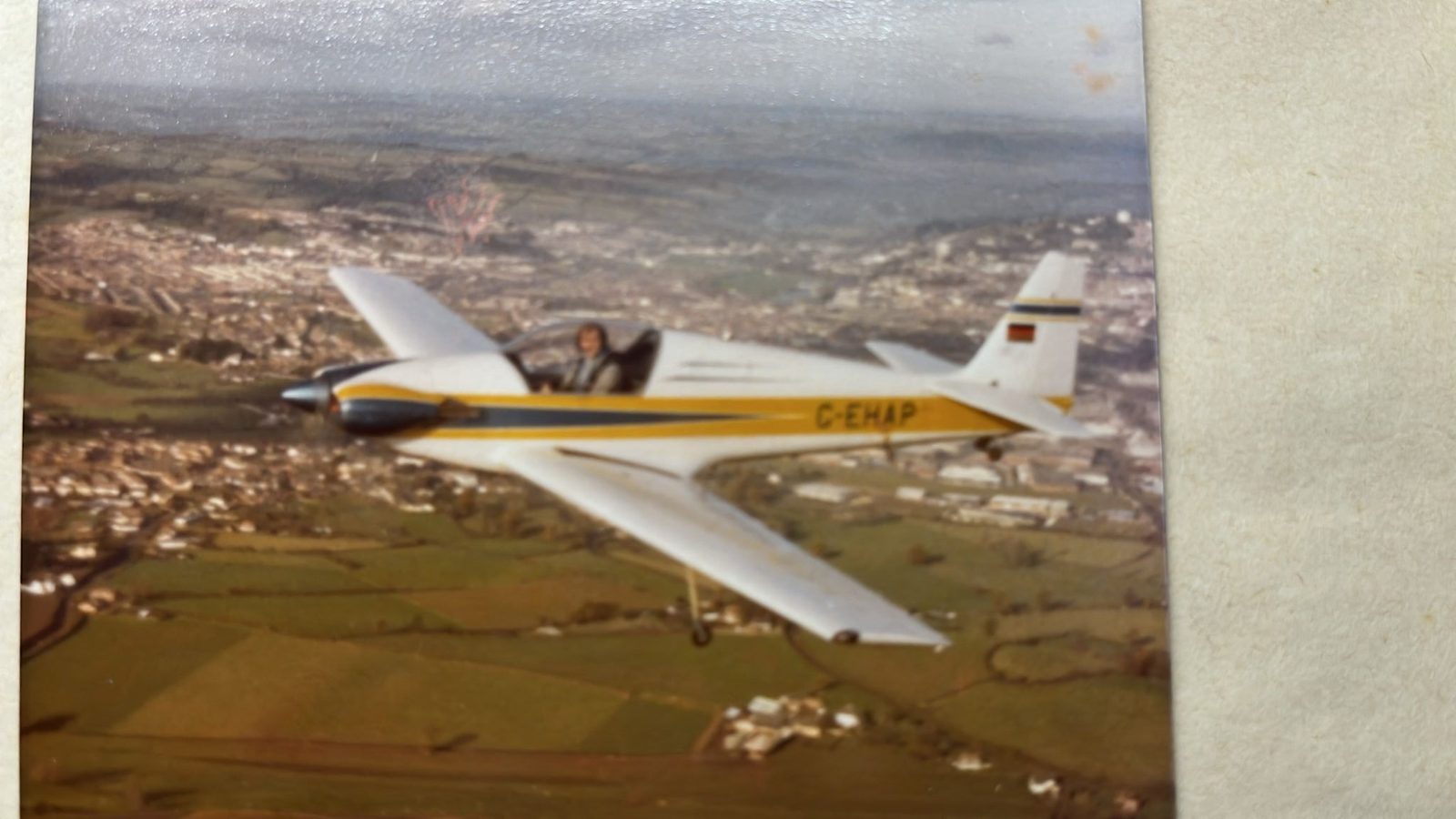
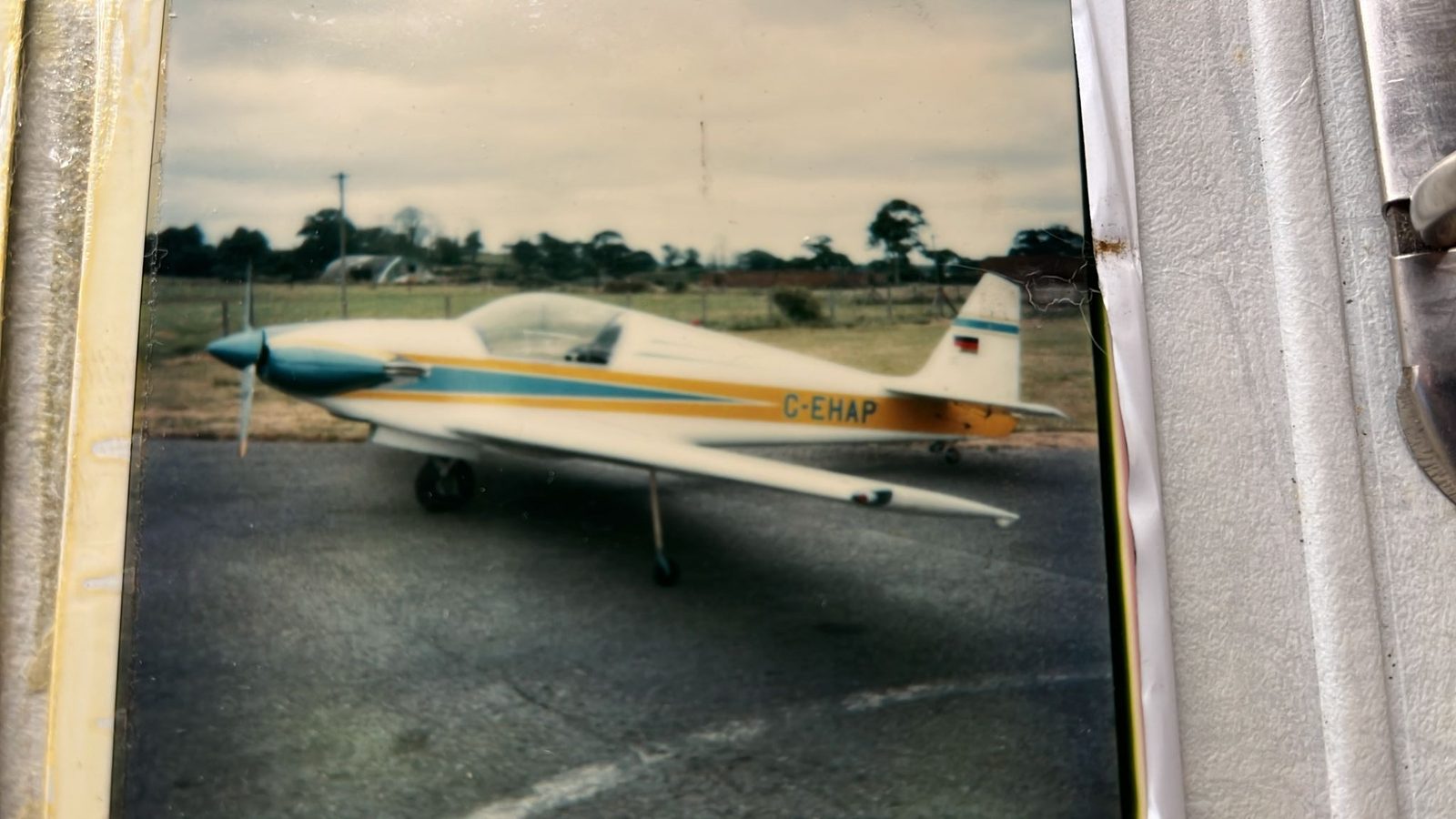
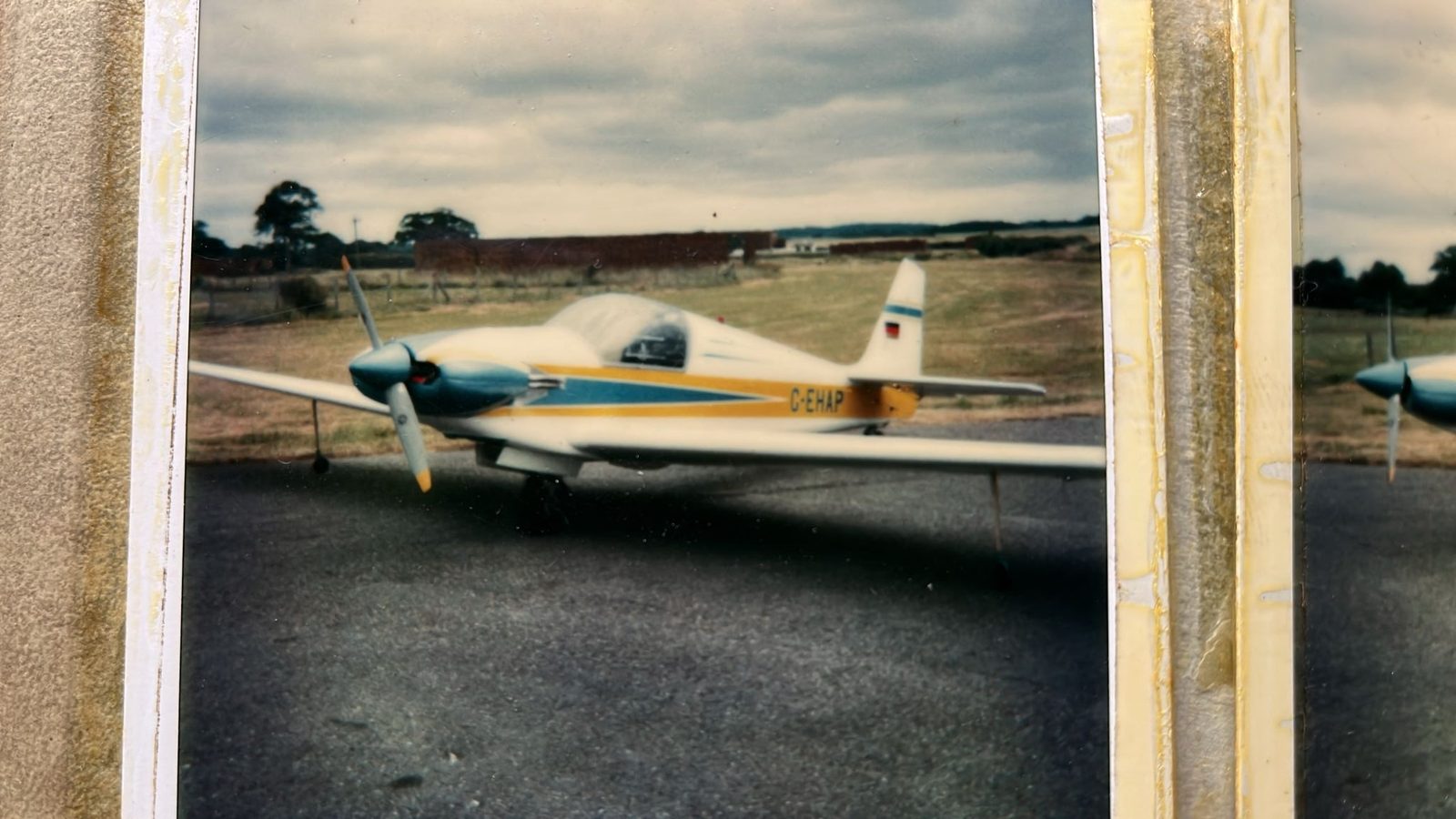
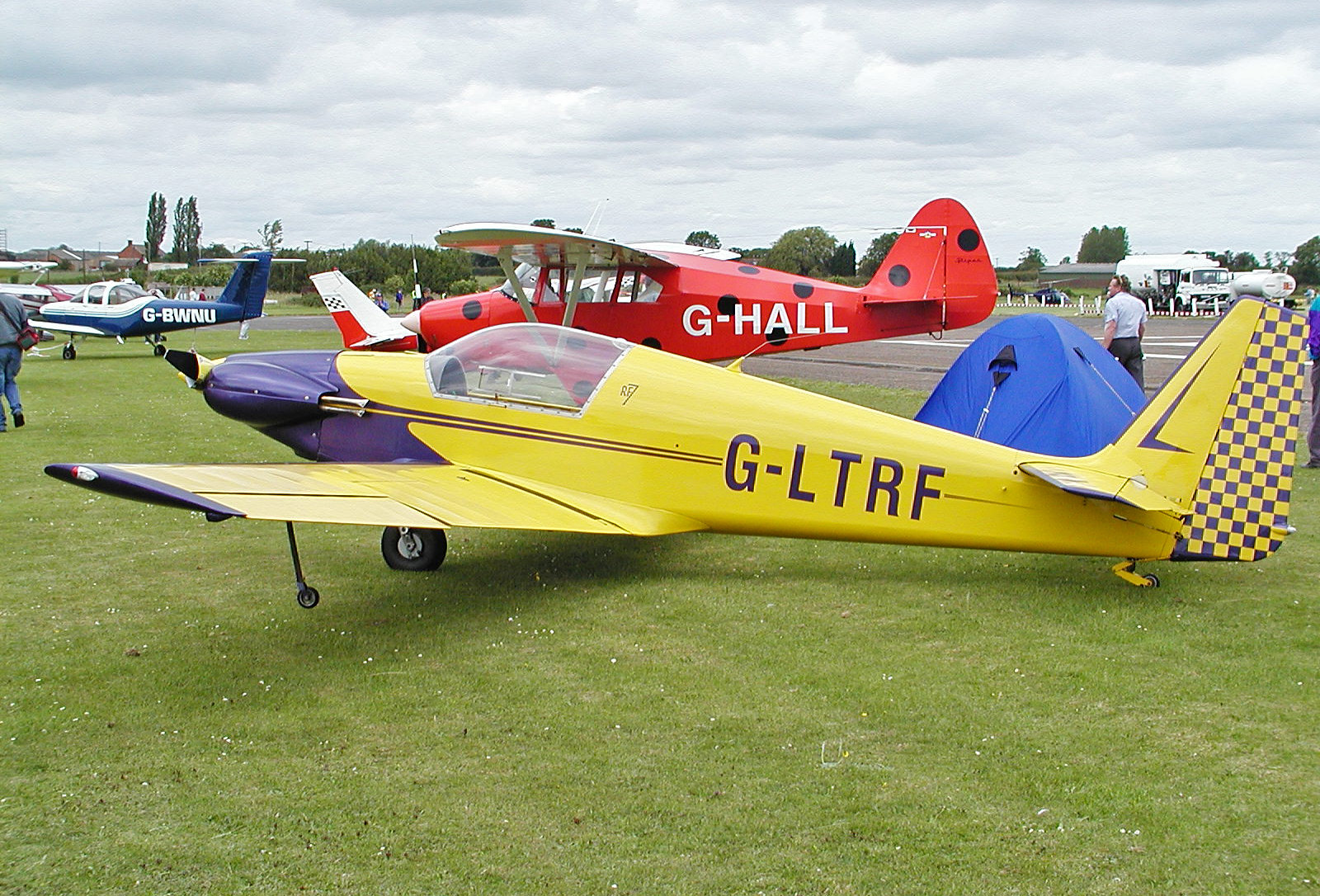
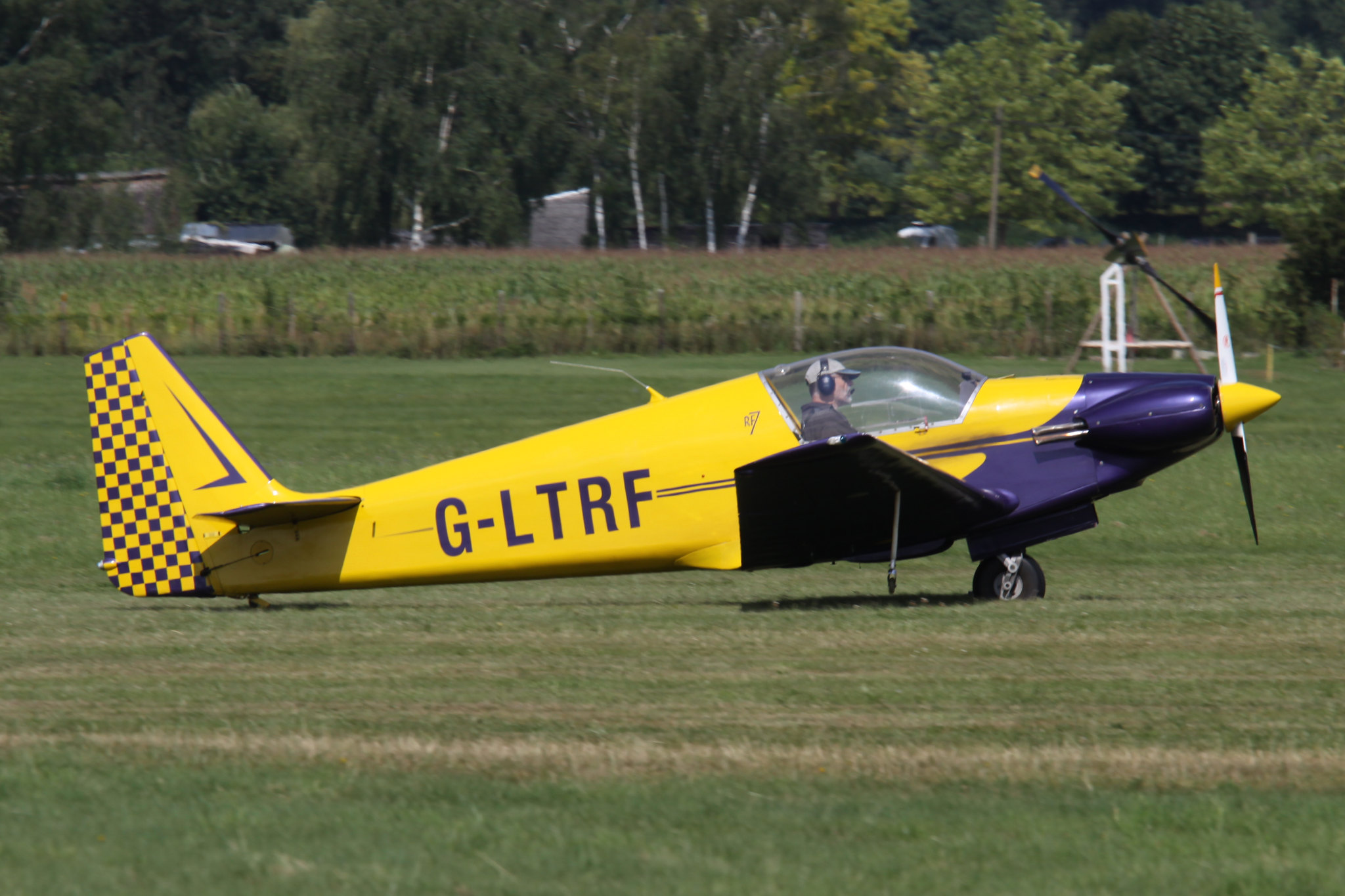
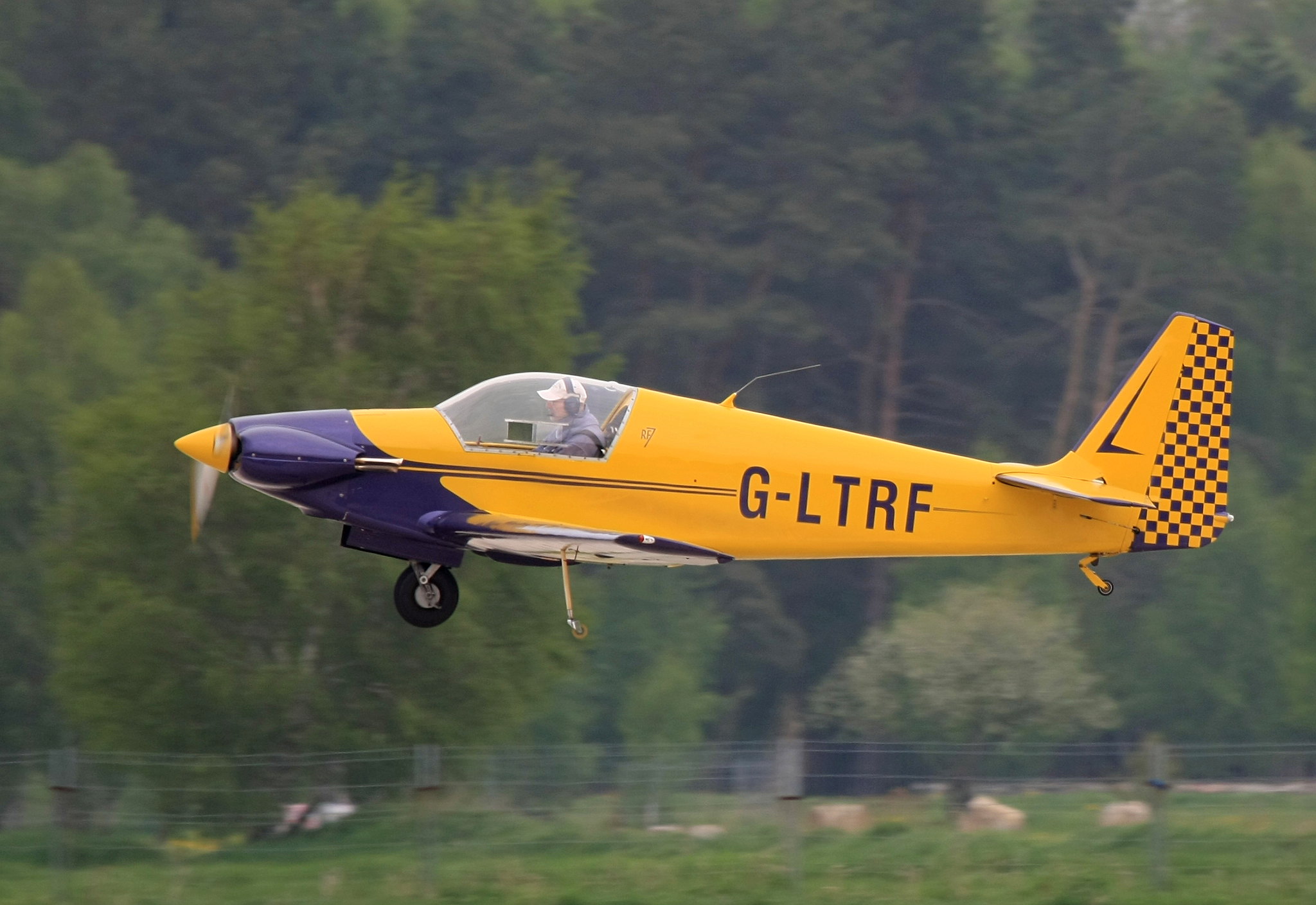
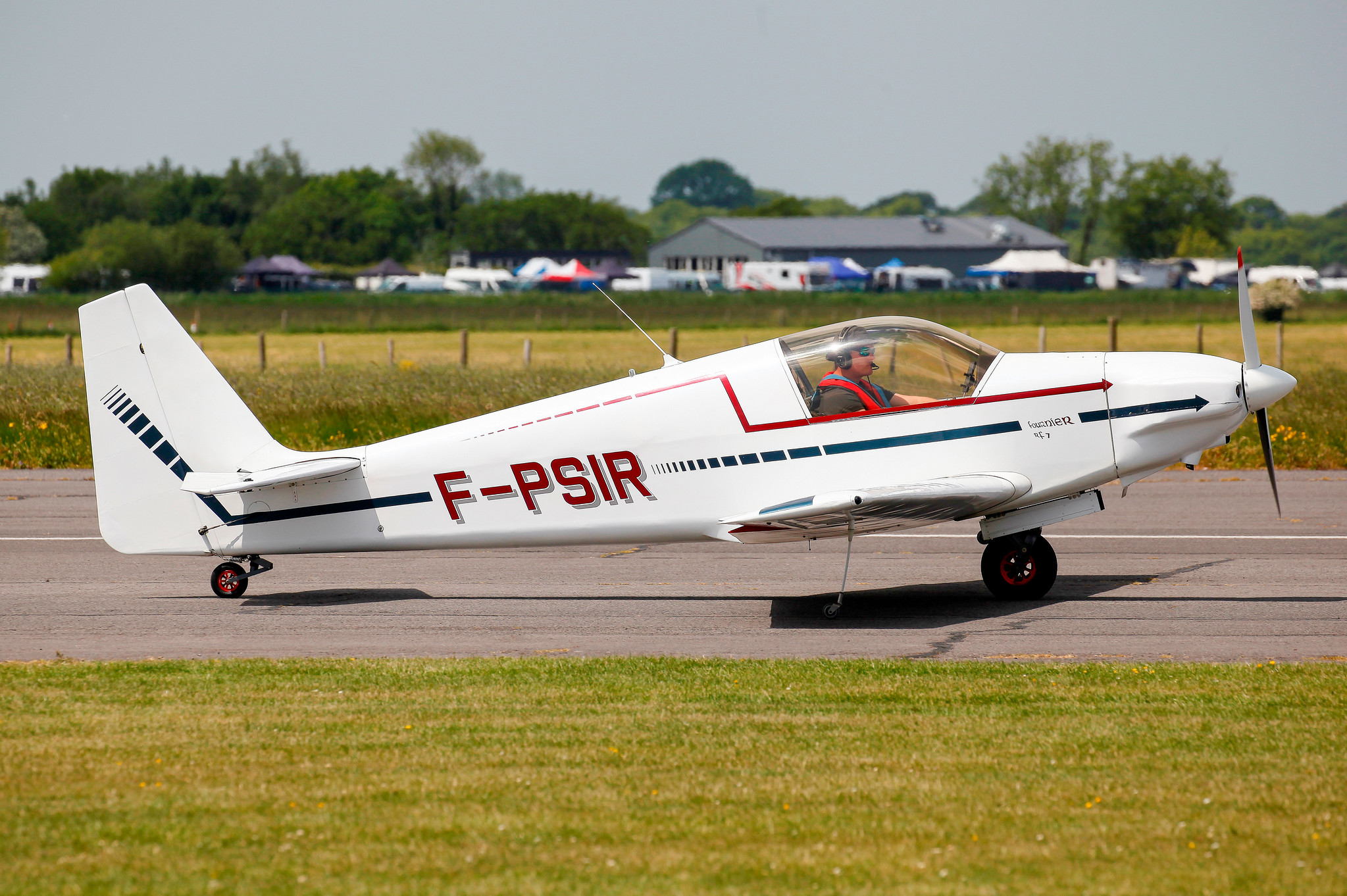
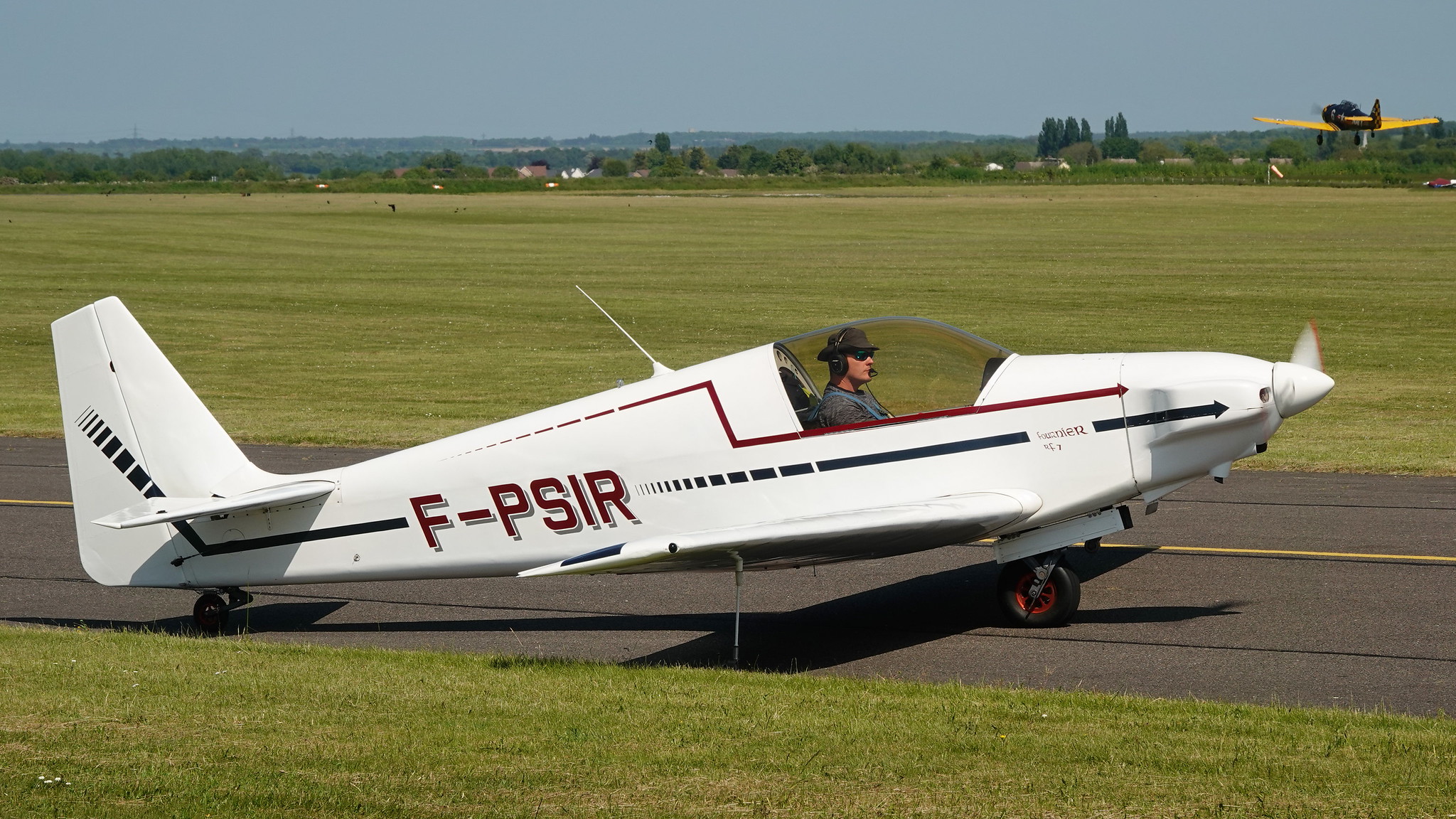
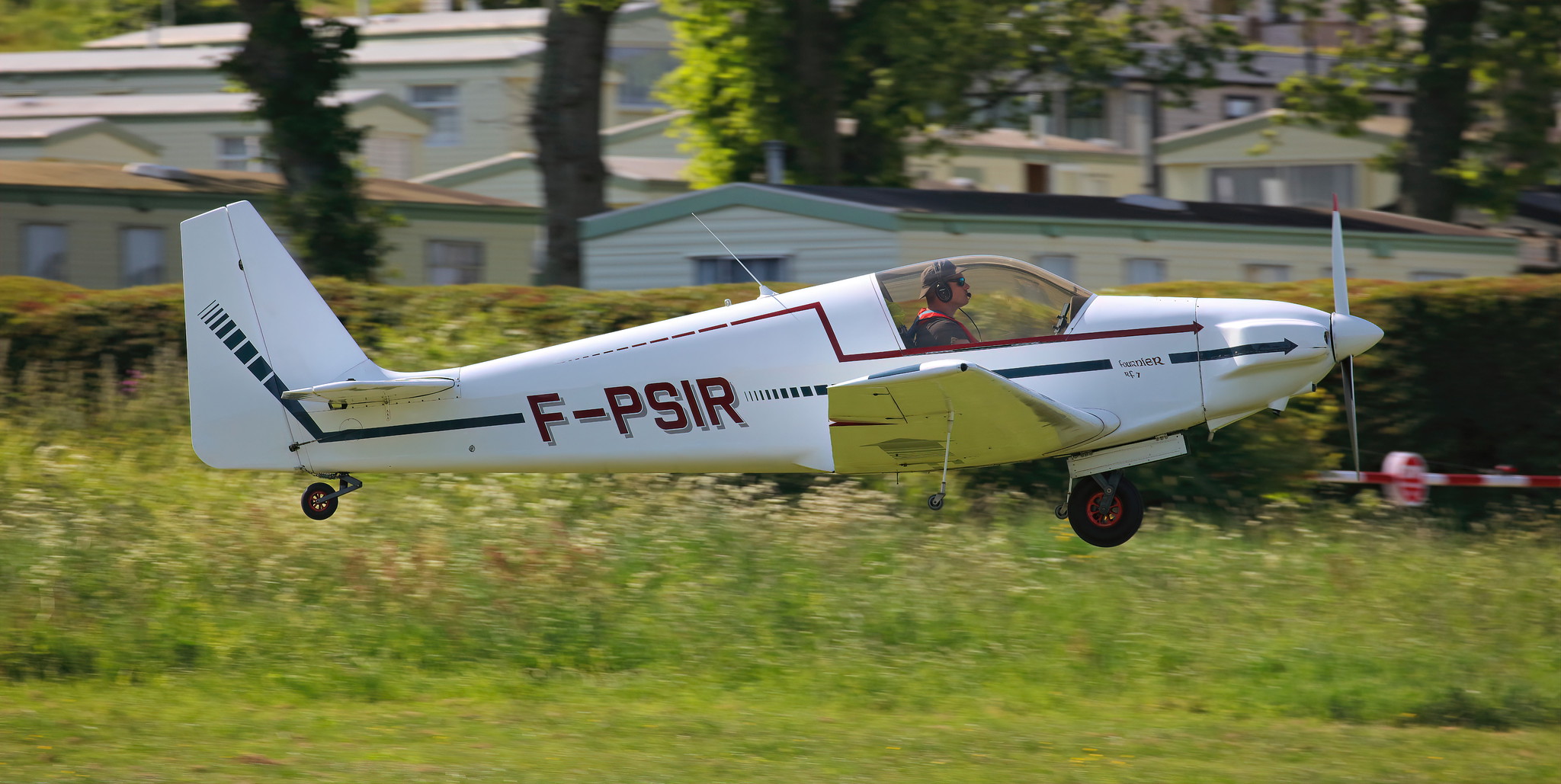
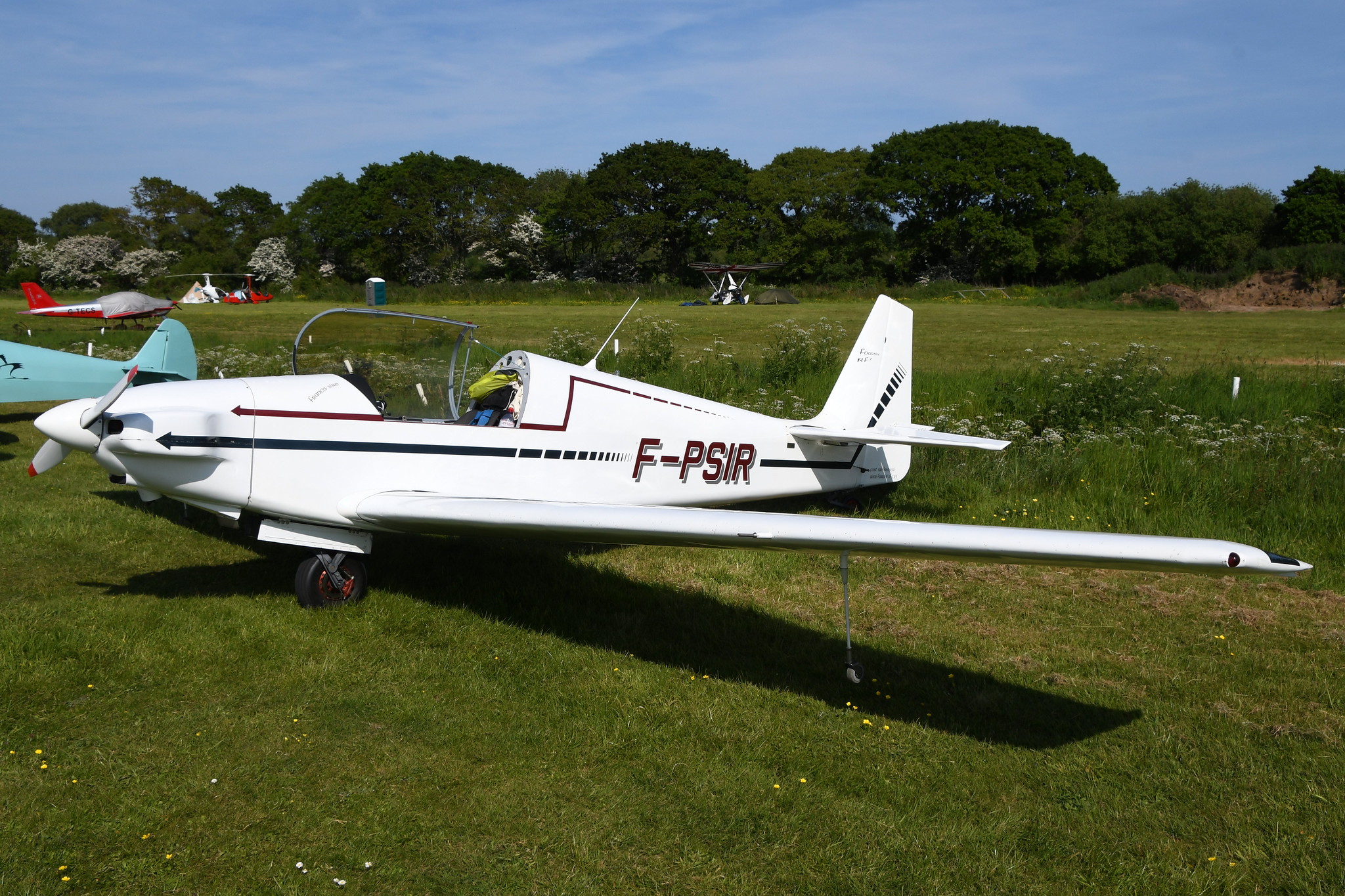
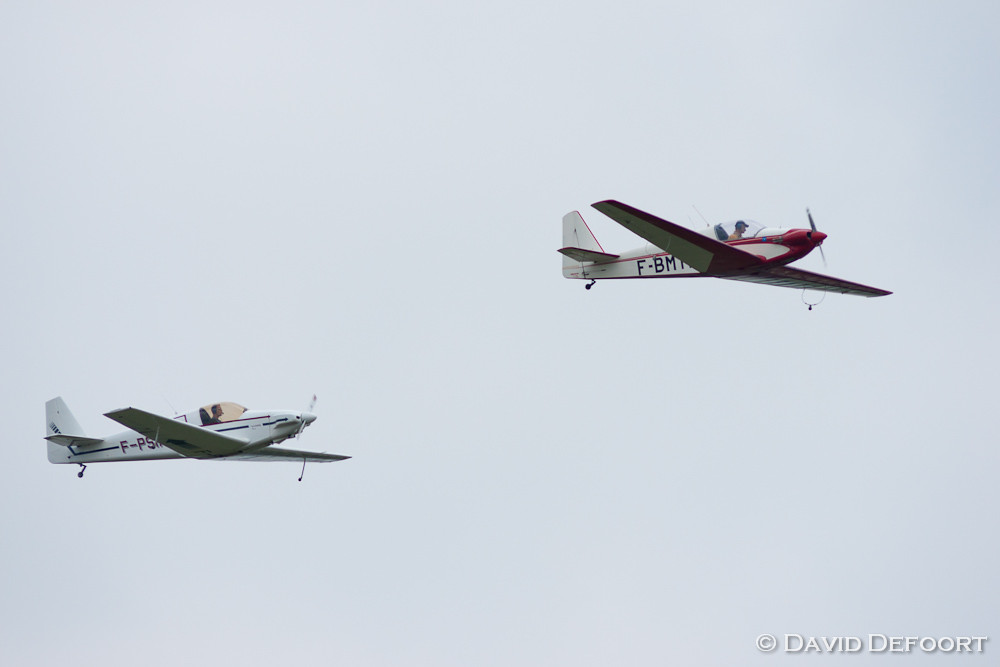
Own or fly a RF7? Given how rare the type is, this gallery is curated by hand — email us a photo and we'll add it here directly.
RF7 photographs: contributed to the UK Fournier Club archive.